
You’ve probably noticed the cracks getting wider each winter. Water finds its way in, freezes, expands, and tears apart whatever’s underneath. That’s not a surface problem—it’s a base problem.
When your driveway sinks near the garage or water pools in the same spot after every rain, you’re looking at drainage and foundation issues that patching won’t fix. The base is compromised. The grading is off. And every freeze-thaw cycle makes it worse.
A proper driveway installation in West Babylon, NY starts below the surface. We excavate down to stable soil, install the right base materials for Long Island’s clay conditions, and grade everything so water moves away from your foundation—not toward it. Whether you’re replacing cracked concrete, installing pavers, or rebuilding a sinking section, the work has to account for how this area behaves through the seasons.
You get a driveway that doesn’t need constant attention. No more standing water. No more cracks that turn into potholes by spring. Just a solid surface that does its job for the next 20 to 30 years.
Ageless Chimney started with two childhood friends—Bobby Bruno and Sherwood Adams—who wanted to build something that lasted. Nearly 20 years later, we’re still here, still owner-managed, and still showing up to every job ourselves.
We’re licensed and insured across Suffolk County and Nassau County. We’ve earned an A+ rating with the BBB and won awards with Angie’s List for six years running. But what matters more than the plaques is that we understand how West Babylon’s homes are built—and how Long Island weather tries to tear them apart.
Most of the homes here were built in the 1940s and 50s. The driveways have seen decades of freeze-thaw cycles, settling, and water damage. We know what fails and why. And we know how to fix it right the first time.
We start with a free estimate. You show us what’s going on—cracks, sinking sections, drainage problems—and we tell you what needs to happen. No upselling. No vague quotes. Just a clear breakdown of the work and the cost.
Once you’re ready to move forward, we pull permits if needed and schedule the work. Demo and excavation come first. We remove the old driveway, dig down to stable soil, and check for drainage issues that caused the original failure. If water’s been pooling or running toward your foundation, we fix the grading before anything else goes in.
Next is the base. For Long Island’s freeze-thaw conditions, this step matters more than the surface material. We install compacted gravel or stone in layers, making sure everything drains properly and won’t shift when the ground freezes. Then we install your surface—whether that’s concrete, asphalt, pavers, cobblestone aprons, or Belgian block borders.
The whole process usually takes a few days depending on size and complexity. You’ll know the timeline upfront. And one of us will be there managing it from start to finish.
Ready to get started?
Every driveway project we handle includes full excavation, base preparation, drainage correction, and surface installation. We’re not just laying material on top of what’s already there. We’re rebuilding the foundation so it actually lasts.
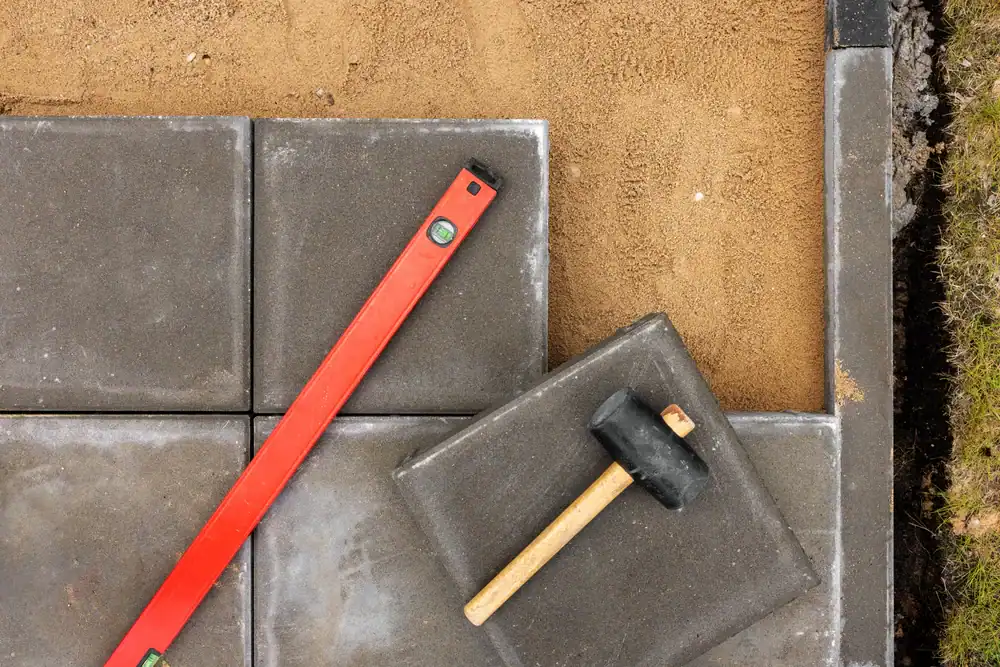
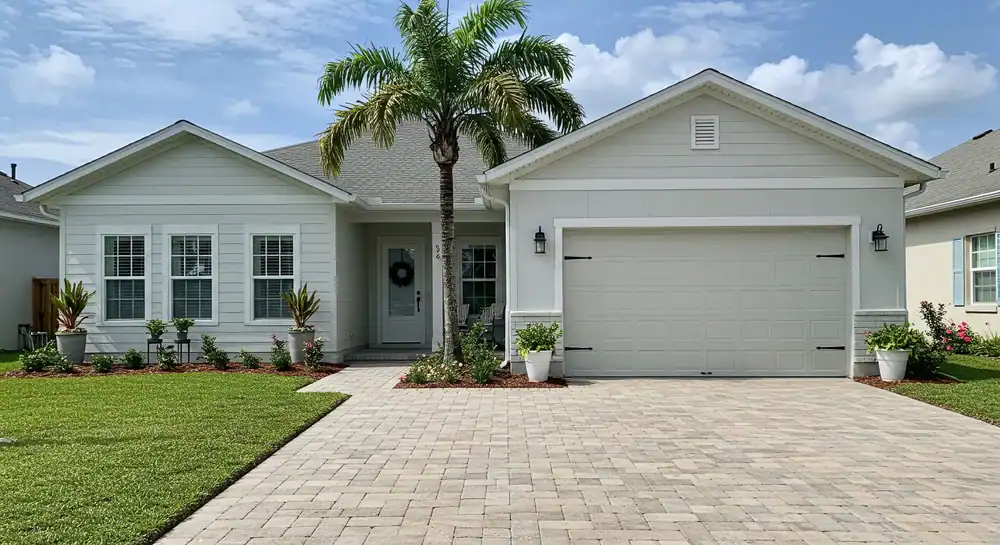
For concrete driveway installation in Suffolk County, that means proper thickness (usually 4 to 6 inches depending on use), control joints to manage cracking, and a finish that handles Long Island winters. For brick driveway replacement in West Babylon, NY, we set pavers on a compacted base with edge restraints and polymeric sand to keep everything locked in place. For cobblestone driveway aprons or Belgian block borders, we integrate them into the design so they’re structural—not decorative add-ons that shift over time.
If you’re dealing with sinking driveway repair in West Babylon, NY or fixing cracked concrete driveways, we assess whether a section can be lifted and stabilized or if it needs full replacement. We also install driveway drainage solutions on Long Island for properties where water runoff is threatening your foundation. French drains, channel drains, and regrading all fall under that umbrella.
You’re not just getting a new surface. You’re getting a system that moves water away from your home, supports vehicle weight without settling, and holds up through temperature swings from below freezing to over 90 degrees.
It depends on the material and how well it’s installed. Asphalt driveways typically last 15 to 20 years if they’re sealed every 3 to 5 years. Concrete driveways can go 25 to 30 years or longer if the base is done right and the surface is thick enough to handle freeze-thaw cycles.
Paver driveways last just as long as concrete—sometimes longer—because individual pavers can shift slightly without cracking. If one settles or breaks, you replace that paver instead of cutting out a whole section of concrete.
The real variable is the base. If the excavation isn’t deep enough, the gravel isn’t compacted properly, or the drainage is ignored, even the best surface material will fail early. That’s why we don’t cut corners on prep work. A driveway that lasts 30 years costs the same to install as one that fails in 10—the difference is how it’s built.
Water and freeze-thaw cycles are the main culprits. Long Island gets cold enough in winter for the ground to freeze, and when water trapped in the soil or base material freezes, it expands. That expansion pushes everything upward. When it thaws, everything settles back down—but not always evenly.
Over time, that cycle creates voids under the driveway. Sections lose support and start to sink. Cracks form where the surface is stressed. Water seeps into those cracks, freezes again, and makes them worse. It’s a cycle that accelerates every year if it’s not addressed.
The other issue is poor drainage. If water pools on your driveway or runs toward your foundation, it’s saturating the base material. That turns stable gravel into mush. Once the base fails, the surface follows. Fixing it means regrading, adding drainage, and rebuilding the base so water moves away from the problem areas.
Sometimes, but not usually. If your existing driveway is sinking, cracking, or has drainage problems, repaving over it just hides the issue for a year or two. The same problems will come back because the base hasn’t been fixed.
Repaving works if the surface is worn but the base is still solid and draining properly. That’s rare. Most driveways that need replacement have underlying issues—settling, poor compaction, inadequate drainage, or a base that was never thick enough to begin with.
We’ll tell you during the estimate whether your driveway can be overlaid or if it needs full replacement. If the base is compromised, there’s no shortcut. Tearing it out and rebuilding it is the only way to get a driveway that lasts. Anything else is just kicking the problem down the road.
For a standard two-car driveway, you’re looking at $8,600 to $11,000 for brick pavers, $4,200 to $7,800 for concrete, and slightly less for asphalt. Those ranges depend on size, material choice, site conditions, and how much prep work is needed.
If we’re fixing drainage issues, excavating deeper than usual, or removing a lot of old material, that adds to the cost. Same goes for decorative borders, cobblestone aprons, or custom paver patterns. But the base work—excavation, grading, compaction—that’s non-negotiable. Skimping there just means you’ll be replacing the driveway again in 10 years.
We give you a written estimate that breaks down labor, materials, and any site-specific work. No surprises. And we’ll beat any written estimate you get from another licensed contractor. If someone’s quoting you significantly less, ask what they’re leaving out—because it’s usually the prep work that makes or breaks the job.
Usually, yes. Most towns in Suffolk County and Nassau County require permits for driveway replacement, especially if you’re changing the size, material, or drainage. The permit process ensures the work meets local codes for setbacks, runoff, and structural requirements.
We handle the permit application as part of the job. It’s not complicated, but it does add a week or two to the timeline depending on how backed up the building department is. Some towns also require inspections at different stages—after excavation, after the base is in, and after the final surface is installed.
Skipping the permit might seem like a shortcut, but it can cause problems if you ever sell your home. Unpermitted work shows up in title searches and home inspections. Buyers get nervous. Lenders sometimes refuse to close. It’s not worth the risk. We pull permits, do the work to code, and make sure everything’s documented properly.
There’s no single “best” material—it depends on your budget, how long you plan to stay in the house, and how much maintenance you’re willing to do. Concrete lasts the longest with the least maintenance. It handles freeze-thaw cycles well if it’s poured thick enough and has proper control joints. Expect 25 to 30 years or more.
Pavers cost more upfront but give you flexibility. If a section settles or a paver cracks, you replace just that piece. They also handle ground movement better than concrete because they’re not one solid slab. Maintenance is low—just occasional re-sanding of the joints.
Asphalt is the most affordable option and works fine if you’re diligent about sealing it every few years. But it needs more attention than concrete or pavers, and it typically needs replacement sooner. For Long Island’s climate, concrete or pavers are the better long-term investment. The installation cost is higher, but the lifespan and low maintenance make up for it.
Other Services we provide in West Babylon