I highly recommend these guys. (Bob/Christian)They came right on time and were extremely neat and professional. They did a great job at a reasonable price.
Tommy Glenn
I have been using Bobby and Sherwood for years. I highly recommend them. They did chimney repair and chimney sweep. Great work, great guys.
Ingrid V.
Highly recommend Ageless chimney. They were polite, professional and got the job done in one day, left my property as clean as they found it. Very happy!
Brian Nolin
Outstanding work, great service, and extremely reliable!!
Backyard Patio Pavers East Quogue
Your Outdoor Space Actually Works
You get a patio that drains properly instead of pooling water after every storm. Individual pavers that can be lifted and reset if needed, not concrete that cracks in one massive slab when East Quogue’s freeze-thaw cycles hit.
Your investment lasts because we handle the base preparation that coastal conditions demand. Deeper excavation, proper drainage, and materials that resist salt air breakdown.
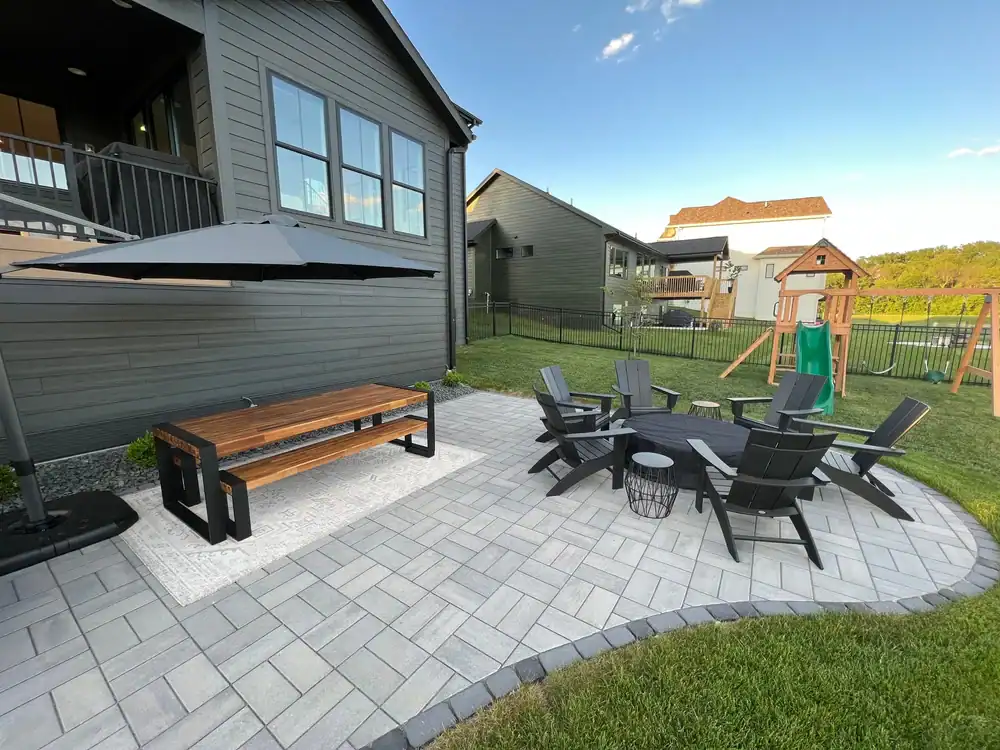
No more avoiding your backyard because the space doesn’t work for entertaining or relaxing. You get the outdoor living area you actually wanted.
Patio Contractors Long Island NY
We Know East Quogue's Soil
We’ve been handling Long Island masonry projects since 2006. We understand what sandy coastal soil does to patio installations and how to build for it.
Every project gets owner oversight, not just crew supervision. We’re licensed, insured, and bonded because this work matters to your property value and family safety.
East Quogue homeowners choose us because we explain what’s happening with your specific site conditions, not generic solutions that fail in three years.
Patio Design Installation East Quogue
The Process That Actually Works
We start by walking your property and testing soil conditions. You get specific recommendations for your drainage challenges, not cookie-cutter pricing.
Excavation typically goes 8-10 inches deep, sometimes more when we hit soft spots or old fill dirt. We remove everything that shouldn’t be there and install geotextile fabric to separate your new base from questionable soil below.
Base preparation uses crushed stone installed in lifts, compacting each layer until it meets manufacturer specifications. Then bedding sand, paver installation, and polymeric joint sand. Edge restraints lock everything in place when freeze-thaw cycles try to shift things around.
Most residential patio projects take 3-5 days from excavation to final cleanup, assuming good weather and no unexpected site conditions.
Your patio installation includes proper grading with minimum 1/4 inch per foot slope away from your home. In areas where natural drainage is compromised, we install subsurface drainage systems to handle water that penetrates through joints.
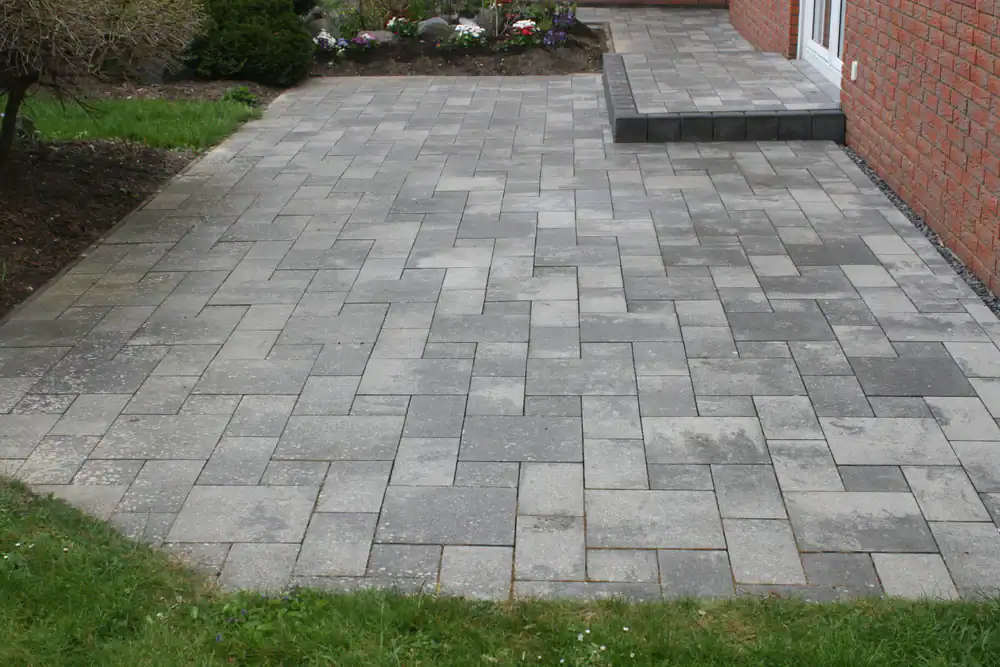
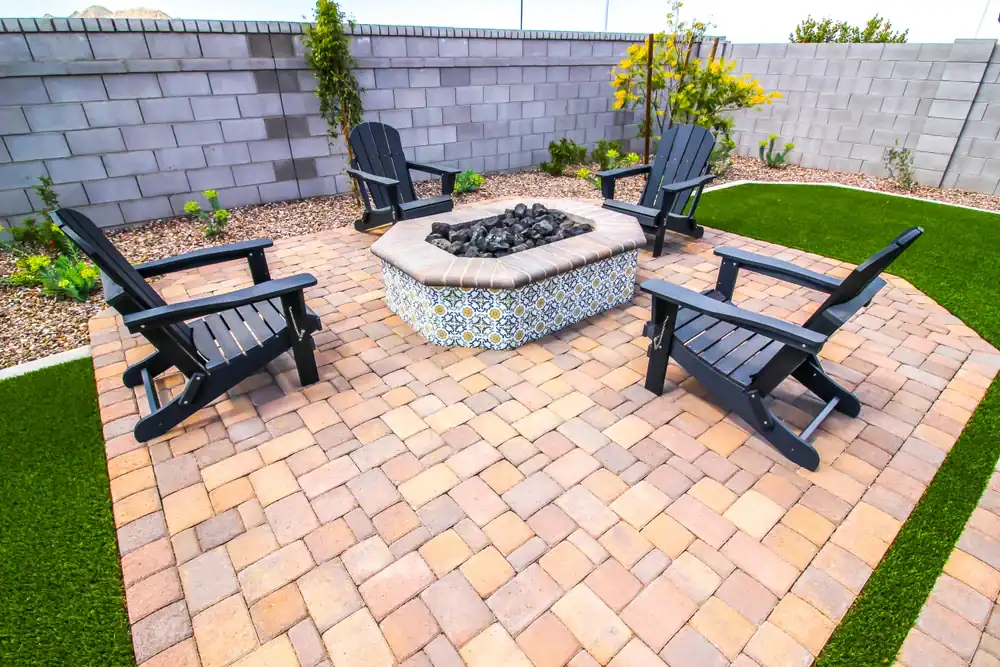
We work with stone-look pavers, permeable options for water management, and mixed-material designs that complement your home’s architecture. Pool patios get slip-resistant surfaces, while driveway connections and pergola integration create cohesive outdoor living spaces.
East Quogue’s coastal location means we select materials that resist salt air breakdown and UV damage. Your color choices and pattern options depend on your home’s style and intended use, with guidance on what works best for local conditions.
Why do patio pavers cost more than concrete in East Quogue?
Patio pavers require more complex installation but offer significant advantages in East Quogue’s coastal environment. The initial investment covers deeper excavation needed for sandy soil, specialized base preparation, and materials that resist salt air breakdown.
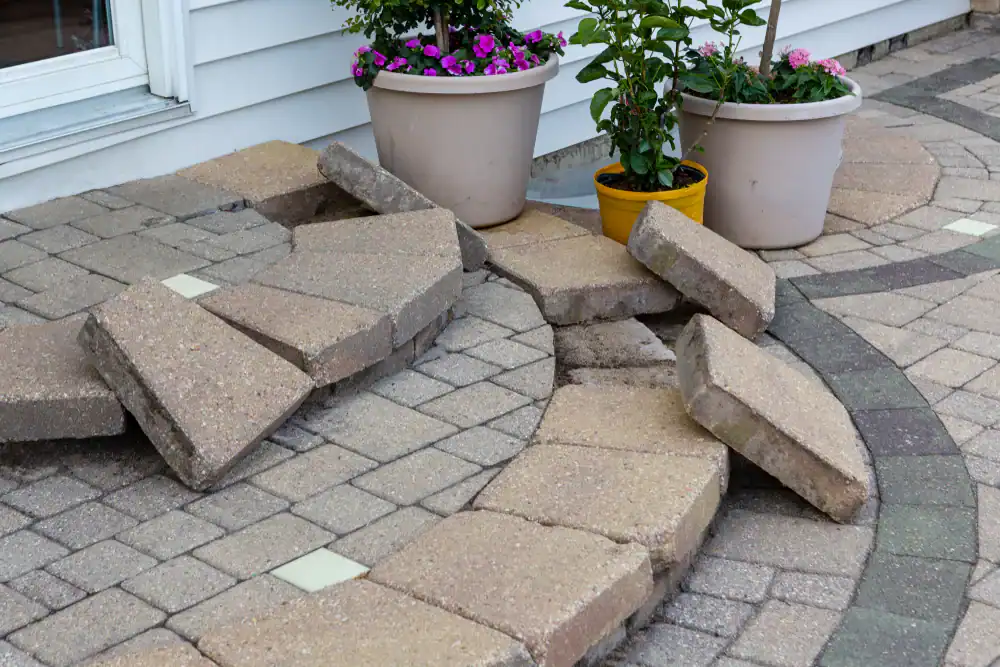
Unlike concrete that cracks as one large slab during freeze-thaw cycles, individual pavers can be lifted and reset if settling occurs. You’re paying for flexibility that saves money on repairs and a surface that maintains its appearance longer in coastal conditions.
The cost difference often balances out over time when you factor in concrete’s repair needs and limited design options compared to pavers’ durability and aesthetic flexibility.
How deep do you excavate for patios in East Quogue's sandy soil?
We typically excavate 8-10 inches below the finished paver surface, but East Quogue’s sandy soil often requires going deeper. If we encounter soft spots, old fill dirt, or areas that “pump” when walked on, we continue digging until we reach stable material.
Sandy soil drains well but doesn’t provide the stability that clay soils offer. We compensate with deeper excavation and more substantial base preparation, including 4-6 inches of compacted stone base, 1-2 inches of bedding sand, plus paver thickness.
This extra depth and preparation prevent the settling and shifting problems that plague rushed jobs. Skipping this step to save money upfront guarantees expensive repairs when sections start settling unevenly.
What drainage solutions work best for East Quogue patio installations?
East Quogue’s coastal location creates unique drainage challenges that require specific solutions. We grade all patios with minimum 1/4 inch per foot slope away from your home and install geotextile fabric to prevent fine particle migration.
In areas where natural drainage is compromised, we install subsurface drainage systems or French drains to handle water that penetrates through paver joints. The key is preventing water from pooling under your patio base where it can wash away particles and create voids.
Even though sandy soil drains better than clay, trapped water combined with salt air and freeze-thaw cycles can still cause settling. Our base preparation addresses these specific coastal conditions that generic installations miss.
Can you integrate pool patios with driveways and pergola areas?
Yes, we design integrated outdoor living spaces where your patio connects seamlessly with pool areas, driveway extensions, and pergola installations. This creates a cohesive look while addressing the different functional requirements of each area.
Pool patios require slip-resistant surfaces and proper drainage around water features. Driveway connections need materials that handle vehicle loads, while pergola areas focus on aesthetics and entertaining functionality.
We select complementary paver styles and colors that work across all applications, ensuring your outdoor space feels intentionally designed rather than pieced together. The base preparation remains consistent to prevent settling differences between connected areas.
How long do patio pavers last in East Quogue's coastal environment?
Properly installed patio pavers can last 20-30 years or more in East Quogue’s coastal conditions when the right materials and installation methods are used. The key is selecting pavers that resist salt air breakdown and UV damage while ensuring proper base preparation.
We use materials specifically rated for coastal environments and install them with techniques that account for sand migration, drainage challenges, and freeze-thaw cycles. Regular maintenance like joint sand replenishment and occasional cleaning extends their lifespan significantly.
The modular nature of pavers means individual units can be replaced if damaged, unlike concrete that requires complete section replacement. This repairability is especially valuable in coastal areas where storms and salt exposure can cause isolated damage.
What's the timeline for patio installation in East Quogue weather conditions?
Most residential patio installations take 3-5 days from excavation to final cleanup, assuming good weather and no unexpected site conditions. East Quogue’s coastal weather can be unpredictable, so we build buffer time into our schedules.
We won’t install pavers on frozen ground or during active rain, as both compromise base stability. Weather delays are more common during winter months, but proper scheduling and preparation minimize disruptions to your timeline.
Larger projects with multiple elevations, built-in features like fire pits, or challenging access can extend the timeline to a week or more. During your initial consultation, you’ll receive a realistic timeline that accounts for your specific project requirements and seasonal weather patterns.