
Choosing the right patio pavers for Nassau County means understanding how materials perform in salt air and freeze-thaw cycles—and why installation quality matters more than price.
Share:
Your backyard has potential you’re not using. That concrete slab isn’t cutting it anymore—cracked, stained, or just plain boring. You want an outdoor space that actually works for your life, handles Long Island weather without constant repairs, and looks good enough that you’ll use it.
Patio pavers offer what poured concrete can’t: flexibility, repairability, and design options that match how you live. But the material you choose and how it’s installed determine whether you get decades of use or deal with problems by year three. Here’s what actually matters when you’re planning a paver patio in Nassau County, NY.
Not every paver material handles Nassau County’s environment the same way. Salt air, freeze-thaw cycles, and coastal moisture eliminate options that work fine elsewhere.
The materials that last here share specific characteristics: low water absorption, resistance to salt penetration, and the ability to handle ground movement without cracking. Concrete pavers, natural stone, and porcelain each bring different strengths to these challenges. Your choice affects maintenance requirements, lifespan, and how your patio ages over the next 20 years.
Concrete pavers dominate Long Island installations for good reason. Modern concrete pavers engineered for coastal use include additives that resist salt penetration and reduce water absorption. Brands like Cambridge Pavingstones with ArmorTec and Nicolock (manufactured right here on Long Island) design their products specifically for freeze-thaw resistance.
These pavers handle moisture penetration and temperature fluctuations without the cracking you see in poured concrete. The key difference lies in engineering—not just mixing cement and aggregate, but creating a product that performs in your specific environment. Concrete pavers typically offer the most versatility and value, with consistent sizing that makes installation predictable and costs that fit most budgets.
Natural stone brings a different set of advantages. Bluestone, granite, and quality limestone offer superior durability in coastal conditions when properly selected. Dense stones resist freeze-thaw cycling and salt air exposure without deteriorating. The mineral composition affects hardness, porosity, and slip resistance—which is why not all natural stone performs equally.
Bluestone and granite stand out for Long Island applications. They resist abrasion, handle freeze-thaw cycles, and develop a natural patina that many homeowners prefer over manufactured uniformity. The trade-off comes in cost and installation complexity. Natural stone typically runs higher per square foot, and the irregular shapes require more skilled installation work.
Travertine deserves special mention for pool areas. Its naturally porous texture stays cooler underfoot than other materials—a real advantage during summer months. The surface provides slip resistance even when wet. But that porosity means proper sealing becomes critical in freeze-thaw climates. Unsealed travertine can absorb water that expands when frozen, leading to surface damage.
The decision between concrete and natural stone often comes down to budget, aesthetic preference, and intended use. Pool decks benefit from travertine’s heat resistance. High-traffic patios perform well with engineered concrete pavers. Traditional homes might call for the timeless look of bluestone. Understanding how each material behaves in Nassau County’s climate helps you choose based on performance, not just appearance.
Large format pavers represent one of the biggest design shifts happening in 2026. Units measuring 24×24 inches or larger create cleaner visual lines with fewer joints. The result feels more modern, more open, and frankly, more intentional than busy patterns with hundreds of small pieces.
Fewer joints mean less maintenance over time. There are fewer areas for sand to wash out, fewer spots for weeds to emerge, and less surface area where water can penetrate. Large format concrete pavers and porcelain slabs work particularly well for this application, offering the structural strength to support bigger dimensions without cracking.
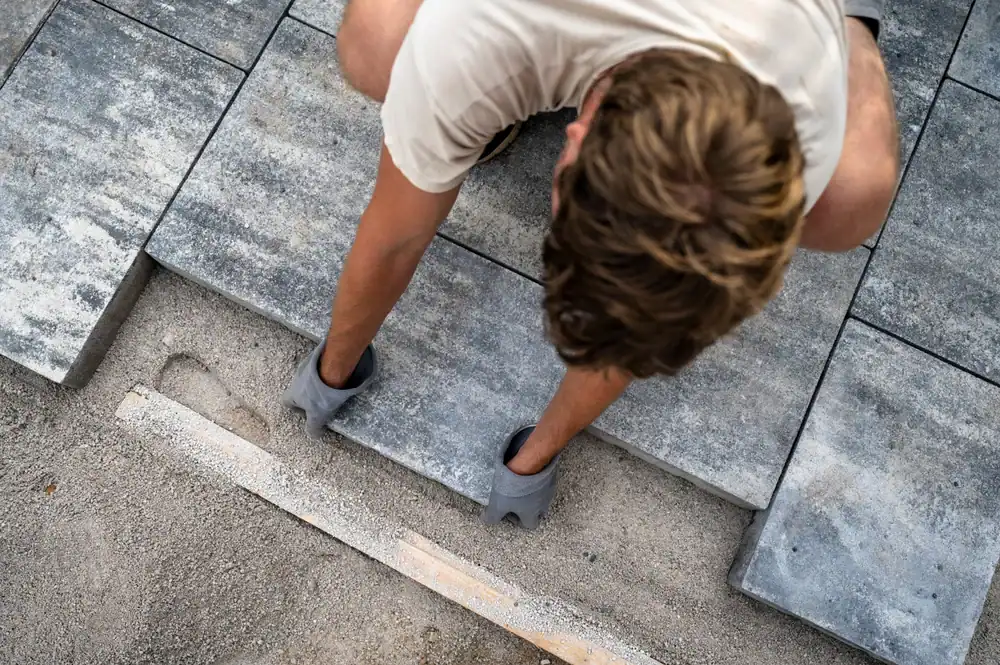
Installation requires more precision. Each large unit needs proper support across its entire surface. Any voids in the base layer become stress points that can cause cracking. This is where professional installation separates itself from DIY attempts—the base preparation has to be perfect, not just “good enough.”
The aesthetic payoff is significant. A 20×20 patio using 24×24 pavers creates a grid pattern with strong horizontal lines that make the space feel larger. Pair that with a contrasting border, and you’ve defined your outdoor room without overwhelming it with pattern complexity. Modern homes especially benefit from this clean, structured approach.
Cost considerations matter here. Large format pavers often carry higher material costs per unit, and installation takes more time because positioning each piece correctly becomes critical. But you’re also covering more area per piece, which can offset some labor costs. The real value shows up years later when you’re not constantly refilling joints or replacing shifted pavers.
Porcelain pavers in large formats offer additional benefits for Long Island applications. They resist salt damage better than concrete, handle freeze-thaw cycles without sealing, and maintain color without fading under UV exposure. The material is essentially waterproof, which eliminates the moisture absorption that causes problems in coastal climates. If budget allows, porcelain delivers performance that reduces long-term maintenance.
Concrete architectural pavers in large formats provide a middle ground. They offer the clean look of porcelain with costs closer to traditional concrete pavers. Modern manufacturing creates surfaces that mimic natural stone textures while maintaining the engineering benefits of concrete. For homeowners who want the large format aesthetic without premium material costs, these represent a practical solution.
The pavers you see are only half the story. What’s underneath determines whether your patio lasts 30 years or needs repairs by year five. Base preparation accounts for 40-50% of project success, yet it’s the area where shortcuts cause the most problems.
Proper installation starts with excavation to the correct depth—typically 7-8 inches for residential patios. The ground gets compacted to create a stable foundation that won’t settle. Then comes the base layer: 4-6 inches of crushed concrete aggregate, added in 2-3 inch lifts and compacted after each layer. This creates the stable platform that prevents settling and handles freeze-thaw movement.
Natural stone installation requires different techniques than concrete pavers. Limestone paving and other natural materials come with variations in thickness and surface texture that demand more skilled handling. Each piece needs individual attention to ensure it sits level with its neighbors.
The base preparation remains critical—perhaps more so with natural stone. Limestone’s porosity means moisture management becomes essential. Proper drainage prevents water from pooling under stones where freeze-thaw cycles can cause heaving. The base needs to allow water to move through and away from the patio surface.
Limestone offers particular advantages for Nassau County homes. The material’s natural texture provides slip resistance, and its earth tones complement Long Island’s architectural styles. Quality limestone develops a patina over time that many homeowners prefer to the unchanging appearance of manufactured pavers. The key is selecting dense limestone from reputable quarries—not all limestone performs equally in freeze-thaw conditions.
Installation costs run higher for natural stone because the work takes longer. Each piece requires individual fitting, and cuts need more precision than with uniform concrete pavers. You’re paying for craftsmanship that accounts for natural variations while maintaining level surfaces and consistent joint spacing. This labor-intensive process is why natural stone installations typically cost $35-60 per square foot installed, compared to $20-35 for concrete pavers.
Sealing becomes more important with porous natural stones. A quality sealer protects against water infiltration, reduces staining from organic debris, and helps maintain color consistency. In Nassau County’s climate, plan on sealing every 3-5 years depending on exposure and traffic patterns. Shaded areas or spots near trees may need annual cleaning due to increased organic debris and moisture retention.
The longevity justifies the investment for many homeowners. Quality limestone properly installed can last 50-100+ years. Compare that to the 15-20 year typical lifespan of poured concrete in freeze-thaw climates, and the value proposition becomes clearer. You’re not just buying materials—you’re investing in decades of use without replacement cycles.
Pool deck pavers face unique challenges. Constant moisture exposure, chemical exposure from pool water, and the need for slip resistance when wet all factor into material selection. The wrong choice creates safety hazards and accelerates deterioration.
Travertine stands out as a top performer for pool applications. Its naturally porous structure absorbs water quickly, preventing slippery surfaces after rain or pool splashes. The material stays cooler underfoot than concrete or darker stones—a real advantage when you’re walking barefoot on summer afternoons. Travertine’s natural texture provides grip even when wet, making it ideal for pool coping and deck surfaces.
Proper installation around pools requires additional drainage considerations. Water needs to move away from both the pool and your home’s foundation. This means creating slopes that direct runoff to appropriate drainage points. In Nassau County, where heavy rains can dump significant water in short periods, this drainage design prevents flooding and protects your investment.
Concrete pavers designed for pool use offer an alternative to natural stone. Modern pool pavers include textured finishes that provide slip resistance and lighter colors that stay cooler in direct sun. Brands like Cambridge and Techo-Bloc manufacture specific pool paver lines engineered for wet area performance. These typically cost less than travertine while offering good durability and safety characteristics.
Porcelain pavers represent the premium option for pool decks. The material resists chlorine and salt water exposure without degrading. It won’t absorb water, which eliminates freeze-thaw concerns in three-season pool areas. Porcelain maintains its color without fading from UV exposure or chemical contact. The trade-off is cost—porcelain pool pavers typically run $30-50+ per square foot installed.
Edge details matter significantly around pools. The transition from pool coping to deck surface needs proper integration to prevent water from getting behind coping stones. Professional installation addresses these details with appropriate materials and techniques that DIY projects often miss. This is where hiring experienced pool deck contractors pays off—we understand the waterproofing and drainage requirements that prevent expensive repairs later.
The pattern you choose affects both aesthetics and structural performance. Some layouts provide better interlock, which helps prevent shifting under traffic. Others create visual interest that defines your outdoor space. Understanding how pattern choice impacts long-term performance helps you make decisions that balance looks with durability.
Herringbone patterns remain popular because they provide excellent structural interlock. The angled placement creates a pattern where pavers support each other, resisting shifting even under heavy use. This makes herringbone ideal for paver driveways and high-traffic patio areas. The trade-off is installation complexity—herringbone requires more cuts and takes longer to install than simpler patterns. Pairing your new patio with features like custom pergolas extends how much you can enjoy the space year-round.
Article details:
Share:
Continue learning: