Essential masonry chimney repair guidance for Long Island homeowners facing mortar cracks, spalling bricks, and freeze-thaw damage.
Share:
Freeze-thaw cycles are the primary enemy of chimney masonry Long Island and in Nassau, Suffolk, and Queens counties. Water seeping into porous brick freezes and expands in cold weather, exerting internal pressures that can detach layers or fragments from the surface when it thaws. Repeated freeze-thaw cycles intensify deterioration.
When water in mortar freezes, it creates destructive volume changes causing mortar expansion. If mortar contains more than 6 percent water, the expansion due to freezing will be great enough to crack the mortar. This is why you see more damage after particularly harsh winters.
The process accelerates once it starts. Spalled bricks can cause other bricks around them to get weak because they’re not doing their jobs—it’s like a domino effect.
Long Island’s winter temperatures create perfect conditions for mortar failure. Mortar needs to stay above 40 degrees to be structurally sound when dry. If it begins to fall below 40 degrees F, take extra precautions to keep your mortar from freezing, which could delay your project and threaten its structural integrity by weakening the mortar mix.
Here’s what happens during a typical winter cycle: When water seeps into cracks in your masonry and freezes, it expands. This expands brick, disintegrates mortar joints, and surfaces become weakened over time. As temperatures rise again, the ice melts, and more water finds its way in, only to be replicated by the next drop in temperature.
Cold weather slows the hydration of mortar. This means any repair work you attempt during cold months will cure improperly, leading to premature failure. The mortar simply can’t develop the chemical bonds it needs when temperatures drop.
Since chimneys are fully exposed to the elements, they’re usually the first section of a home to exhibit signs of winter damage. Your chimney takes the brunt of weather from all directions—wind-driven rain, temperature swings, and direct exposure to freeze-thaw cycles that protected walls might avoid.
The location matters too. If you live near the water in areas like Massapequa or other coastal Long Island communities, you’ll typically see more severe damage. The combination of moisture from the ocean and temperature fluctuations creates an even more aggressive environment for masonry deterioration.
Spalling refers to the face of your chimney brick crumbling from the walls due to extreme moisture. It’s one of the most visible signs that your chimney needs immediate attention, but many homeowners don’t recognize it until significant damage has occurred.
Early spalling looks like small chips or flakes coming off the brick face. You might notice powdery residue around the base of your chimney or small pieces of brick in your gutters after storms. Upon freezing, water expands, causing spall, a force that fragments or flakes the outer surface of the brick. As this cycle repeats the brick repeatedly undergoes “spalling”, resulting in weathering.
Softer, permeable bricks readily suffer freeze-thaw and moisture damage. This is particularly common in older homes where brick quality wasn’t as consistent as modern materials. If your home was built before 1970, pay extra attention to brick condition.
The progression follows a predictable pattern. The climate plays a huge part in spalling. Wet or freezing weather causes the mortar to swell and release. This compromise can put stress on bricks and cause trouble very easily. It’s the most common reason behind spalling in wet and cold climates.
What makes spalling particularly dangerous is how it compromises your chimney’s water resistance. The compromised bricks expose the porous interior which gives way to water damage that can eventually destroy your masonry. Once water penetrates deeper into the brick structure, the damage accelerates rapidly.
Don’t wait to address spalling. If you notice spalling, your chimney is in immediate need of tuckpointing to prevent it from weakening further or even causing a full chimney collapse. This isn’t an exaggeration—structural failure becomes a real possibility when spalling is left untreated.
Tuckpointing is the process of replacing mortar between your bricks, thus performing the brick repair. The mortar between those bricks is much more fragile. Over time, the mortar needs to be replaced to preserve the brickwork and ensure its structural integrity.
The key to successful tuckpointing lies in understanding that it’s not just about filling gaps. It involves removing damaged or deteriorated mortar between bricks and replacing it with new mortar that’s matched in strength, color, and texture to the original. Getting the mortar mix wrong can cause more damage than leaving the problem alone.
Professional tuckpointing addresses the root cause of deterioration while strengthening the entire structure. Mortar serves as the first line of defense against water infiltration. When it starts to crumble or wash away, bricks are left exposed, leading to costly problems like spalling or even structural cracking.
The surface of the mortar is what is exposed to rain, wind, freezing, thawing, and other weather-related traumas. Thus it is most susceptible to damage. With tuckpointing, we grind the outer layer of the mortar until we reach a stable point—usually about 3/8″ to 1/2″ in. After that, we fill in the gaps with new mortar that complements your bricks and the existing mortar lines. This restabilizes the brick and creates a waterproof joint that protects your home.
The depth of mortar removal is critical. Too shallow, and you’re just covering up the problem. Too deep, and you risk damaging the bricks themselves. Removing too much existing mortar or damaging the brick edges during raking out joints weakens the surface and leads to increased spalling. Harsh grinding methods also damage bricks.
Temperature control during tuckpointing can make or break your repair. Ideally, the temperature should be above 40 degrees Fahrenheit and rising for at least 24 hours before and after tuckpointing. This will ensure that the mortar has a chance to set properly and will not be compromised by freezing temperatures.
Mortar requires a certain level of moisture and temperature to set properly. If the temperature is too low, the mortar may freeze and not set correctly. This can result in weak or brittle mortar that may not be able to support the weight of the bricks or stones.
The curing process requires protection from the elements. Always cover newly laid masonry if you expect temperatures to fall below 40 degrees. Only lay mortar on cold days when rain is not expected; the dampness combined with the cold can increase the moisture content in the mortar, causing more damage if it freezes. A cold day with little wind is best, because the wind draws water out of the mortar too quickly, helping it freeze before it can create a bond.
Minor mortar touch-ups might seem manageable for experienced DIYers, but chimney work involves unique challenges that often require professional expertise. The average cost of a minor chimney masonry repair job ranges from $175 to $300. Compare this to the thousands you’d spend on a complete rebuild if repairs fail.
Many chimneys have been “ribbon pointed”—a temporary fix for deteriorating mortar. Instead of removing old, crumbling mortar, it is covered with new mortar. This is the most common DIY method. It may last for a few years but, eventually, your chimney will need to be repaired by tuckpointing.
Professional contractors bring specialized knowledge about mortar composition that’s crucial for Long Island’s climate. Insensitive repointing with overly hard or incompatible mortar compounds spalling over time. The wrong mortar mix can actually accelerate deterioration rather than prevent it.
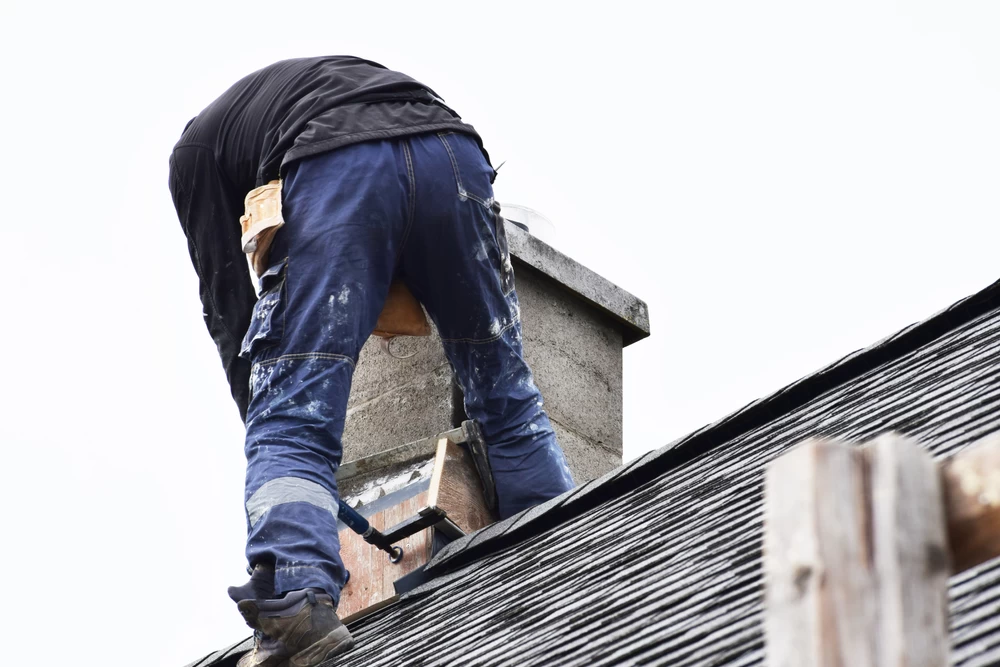
Height and safety considerations make chimney work particularly dangerous for homeowners. Professional contractors have the proper equipment and insurance to work safely at elevation. They also understand building codes and permit requirements that might apply to your specific situation.
Chimney mortar is especially vulnerable to deterioration due to stress from New York’s severe winter weather, along with the caustic exhaust and high temperatures from the fireplace. This combination of stresses requires expertise that goes beyond general masonry knowledge.
Consider professional help when you notice extensive spalling, structural movement, or if your chimney is over 30 years old. Homes with chimneys that are 30 to 50 years old are at the greatest risk. At this age, multiple systems often need attention simultaneously, making professional assessment valuable.
Your chimney’s masonry problems won’t improve on their own, and Long Island’s climate ensures they’ll worsen each winter. The freeze-thaw cycles that damage mortar and cause spalling are predictable and relentless. Early intervention through proper tuckpointing and brick repair can extend your chimney’s life by decades while protecting your home from water damage.
Tuckpointing is a wise investment when the mortar begins to show signs of weakening. It will improve your home’s curb appeal while preventing costly water damage and structural collapse. The key is acting before minor issues become major problems.
Remember that quality matters more than speed when it comes to masonry repair. Proper materials, correct techniques, and appropriate weather conditions all play crucial roles in successful repairs. When you’re ready to address your chimney’s masonry issues, we bring the expertise and local knowledge needed to restore your chimney’s strength and appearance for years to come.
Article details:
Share:
Continue learning: