

That crack you patched last spring is back, wider than before. The low spot that pools water after every storm is turning into a pothole. You’re tired of looking at it, and you know your neighbors are too.
Here’s what’s actually happening. Suffolk County’s sandy soil doesn’t provide the stable base that clay soils do in other regions. When contractors skip proper excavation or use inadequate base materials, your driveway settles unevenly. Water finds those low spots, seeps into the base, and when winter hits, it freezes and expands. That’s why the same cracks keep coming back.
A properly installed driveway starts 8-10 inches below the surface. The unstable soil gets removed completely. Multiple layers of compacted gravel create the foundation your driveway needs to resist settling. Proper drainage gets built in from the start, not added as an afterthought. When you drive home, you see a smooth surface that actually sheds water instead of collecting it.
We started as a masonry company, and driveway installation is core masonry work. We’re based in Hauppauge, NY, and every project gets handled by an owner, not a rotating crew you’ve never met.
We’re licensed, insured, and bonded. We hold an A+ rating with the BBB and multiple Angie’s List awards. But what matters more is that we understand Long Island conditions because we work here every day. We know how the salt air affects materials. We know what happens when you try to cut corners on base preparation in sandy soil.
You’ll get a free estimate, and we’ll beat any written quote you bring us. Not because we’re cheap, but because we know how to work efficiently without sacrificing the details that make a driveway last.
First, we handle the permits. Suffolk County has specific requirements, and we make sure everything’s compliant before we break ground.
Excavation goes 8-10 inches deep, sometimes more depending on your soil conditions. We remove all the unstable material that’s causing your current problems. Then we install the base in layers, compacting each one separately. This isn’t optional—it’s the difference between a driveway that lasts 20+ years and one that starts failing in five.
Drainage solutions get integrated during base installation, not added later. We grade everything to direct water away from your foundation and prevent pooling. If your property has drainage challenges, we address them now.
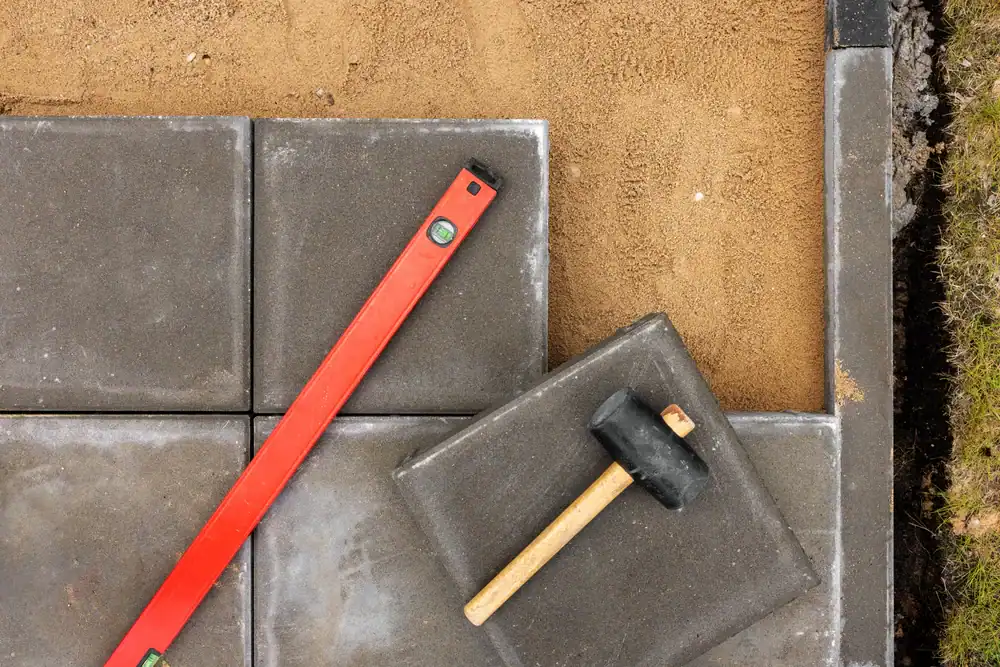
Material installation comes last. Whether you’re going with concrete, pavers, brick, or Belgian block, the installation technique matters as much as the material choice. We don’t rush this part. Proper spacing, level surfaces, and clean edges make the difference between a professional installation and one that looks amateur within a year.
Ready to get started?
Asphalt costs less upfront, typically $3-6 per square foot in Suffolk County. It needs resealing every few years and doesn’t handle our freeze-thaw cycles as well as other options. Expect a lifespan of 15-20 years with proper maintenance.
Concrete runs $8-12 per square foot and lasts 25-30 years. It handles temperature changes better than asphalt but can crack if the base isn’t prepared correctly. The marine environment here means you’ll see some surface weathering over time.
Pavers and brick cost more—$18-23 per square foot for brick driveway replacement in Hauppauge, NY. But individual pavers can be replaced if damaged, and they handle ground movement better than solid surfaces. They also offer better drainage options, which matters in areas with high water tables.
Cobblestone driveway aprons and Belgian block borders add visual interest and help with drainage at the street connection. These aren’t just decorative—they serve a functional purpose in managing water flow and defining edges.
The right choice depends on your budget, how long you plan to stay in the house, and what kind of maintenance you’re willing to do. We’ll walk through the real costs and tradeoffs during your estimate.
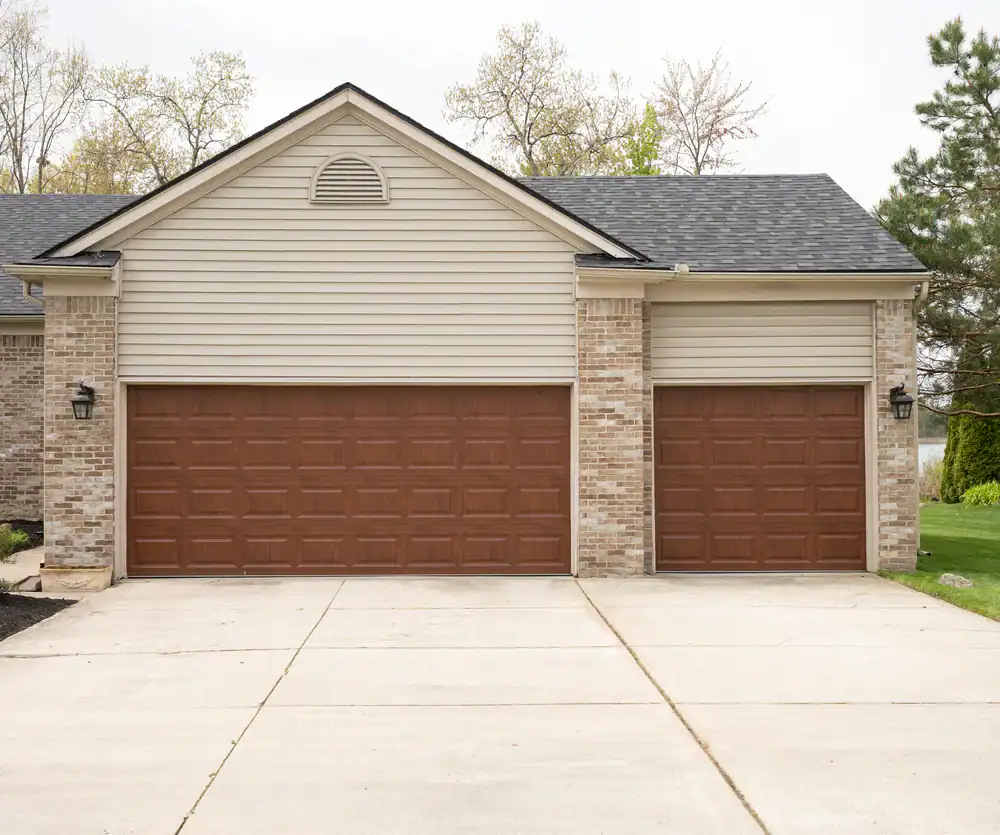
A standard two-car driveway takes 3-5 days from excavation to final installation, assuming good weather. Day one is excavation and base preparation. Days two and three involve base compaction and drainage work. Final material installation happens on days four and five.
Weather affects this timeline significantly. We can’t pour concrete or install pavers in the rain, and we won’t compact base materials when the ground is saturated. Spring and fall sometimes mean weather delays. Summer offers the most predictable conditions.
If your project involves complex drainage solutions or requires significant grading work, add 1-2 days. If we’re connecting to existing hardscaping or coordinating with other contractors, that affects timing too. We’ll give you a realistic timeline during the estimate, not an optimistic one that sets false expectations.
Sandy soil is the main culprit. Unlike clay soils that provide natural stability, sand shifts and settles under weight. When contractors don’t excavate deep enough or skip proper base compaction, you get uneven settling. That creates the cracks and low spots you’re seeing.
Water makes everything worse. Suffolk County’s high water table means moisture is always present. When water saturates the base materials, they lose their load-bearing capacity. Add freeze-thaw cycles, and that water expands when frozen, pushing everything apart. This is why drainage solutions aren’t optional here—they’re essential.
Poor installation techniques accelerate failure. Thin base layers, inadequate compaction, and missing drainage all lead to premature cracking. A driveway that looks fine for the first year or two can start failing quickly once water finds its way into a compromised base. Fixing these issues means removing the existing surface and rebuilding the foundation properly.
If your driveway is over 20 years old and showing multiple problem areas, replacement usually makes more sense than ongoing repairs. Patching cracks and filling potholes becomes a cycle that never ends when the underlying base has failed.
Look at the extent of damage. A few isolated cracks might be worth repairing if the rest of the surface is solid. But if you’re seeing widespread cracking, multiple sunken areas, or drainage problems, those are signs of base failure. No amount of surface patching fixes that.
Consider what you’ve already spent on repairs. If you’re calling someone out every year or two for fixes, those costs add up. A proper replacement with correct base preparation costs more upfront but ends the repair cycle. You’ll also add value to your property with a driveway that actually looks maintained instead of repeatedly patched.
There’s no single “best” material—each has tradeoffs. Concrete handles freeze-thaw cycles better than asphalt and lasts longer, but it costs more upfront. Asphalt is cheaper initially but needs more maintenance and has a shorter lifespan in our climate.
Pavers and brick offer the best performance in unstable soil conditions because they move independently. When ground settles slightly, individual pavers adjust without cracking. They also provide better drainage options, which matters in areas with heavy rain or high water tables. The higher cost gets offset by longer lifespan and easier repairs.
What matters more than material choice is installation quality. A properly installed asphalt driveway with correct base preparation will outlast a poorly installed paver driveway every time. The excavation depth, base materials, compaction technique, and drainage solutions determine how long your driveway lasts, regardless of what surface material you choose.
Yes, and here’s why. Suffolk County’s sandy soil drains quickly on the surface but our high water table means moisture is always present below. Without proper drainage design, water pools on your driveway surface and saturates the base materials underneath.
Drainage solutions start with proper grading. Your driveway needs to slope away from your foundation and direct water toward appropriate drainage areas. Sometimes that means installing channel drains or catch basins. In areas with poor natural drainage, we might recommend permeable pavers that let water pass through instead of running off.
Ignoring drainage leads to accelerated failure. Water that pools on the surface works its way into any small crack or joint. When it freezes, it expands and creates bigger cracks. Water that saturates the base reduces its load-bearing capacity, leading to settling and uneven surfaces. Proper drainage isn’t an expensive add-on—it’s the difference between a driveway that lasts decades and one that needs replacement in ten years.
For a standard 480 square foot two-car driveway, expect $1,440-2,880 for asphalt, $3,840-5,760 for concrete, or $8,640-11,040 for brick or pavers. These ranges reflect professional installation with proper base preparation and drainage, not the cheapest possible price.
Several factors affect cost. Excavation depth depends on your soil conditions—some properties need more base material than others. Drainage solutions add cost but prevent expensive problems later. Material choice obviously impacts price, but so does site access, existing surface removal, and permit requirements.
The lowest bid isn’t always the best value. Contractors who quote significantly below market rates are cutting corners somewhere—usually on base preparation, material quality, or proper drainage. Those savings disappear when you’re calling for repairs within a few years. Get multiple estimates, but pay attention to what’s actually included in each quote, not just the bottom line number.
Other Services we provide in Hauppauge