
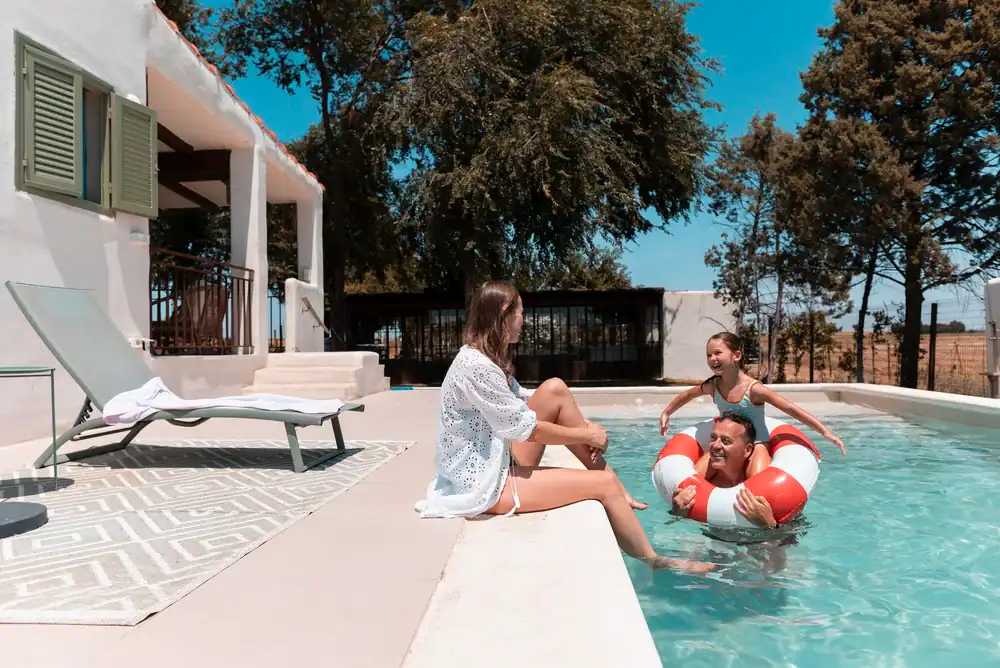

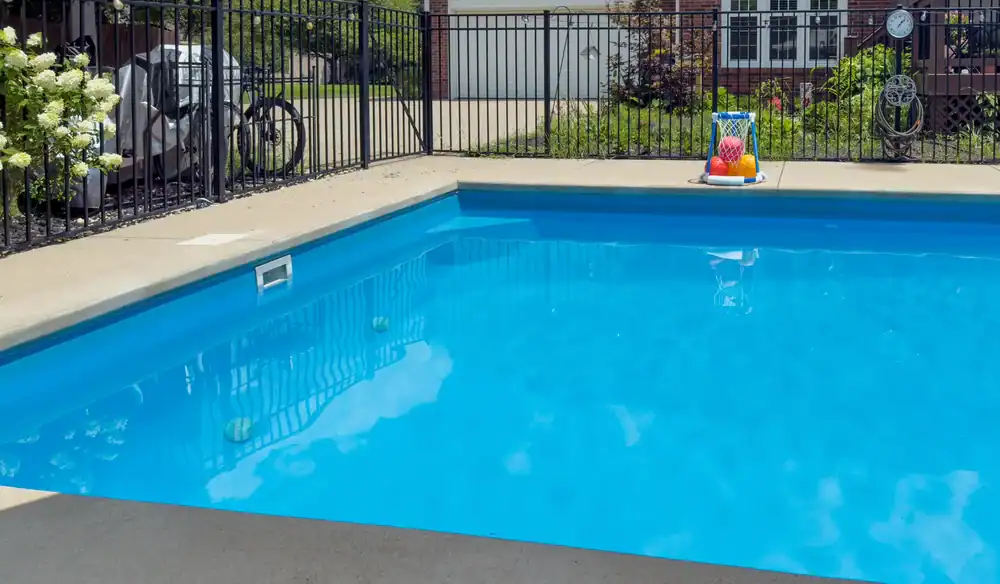
You’re not just getting a hole filled with water. You’re getting a backyard that becomes the reason your family stays home on summer weekends instead of fighting beach traffic. A space where your kids actually want to hang out instead of being glued to screens.
The right pool increases your property value between 7-15%. But only if it’s built correctly from the start. That means proper excavation for Long Island’s sandy soil. Gunite construction that handles freeze-thaw cycles. Pool coping and tile work that doesn’t crack when the ground shifts.
Most pool companies learn about Long Island’s coastal challenges the hard way—after the job’s done and the problems start. We’ve been handling these conditions since 2006. We know what fails here and why.
Ageless started with masonry and outdoor construction work across Nassau County and Suffolk County. We’ve spent nearly two decades learning how Long Island’s humidity, salt air, and soil conditions affect outdoor structures. That experience matters when you’re putting a 20,000-gallon pool in your backyard.
We’re not the biggest pool company on Long Island. We’re the one where the owner shows up to your job. Every project gets the same attention whether it’s a basic rectangular pool or a complete backyard poolscape with custom coping, retaining walls, and integrated patios.
Oceanside homeowners deal with specific challenges—properties near the water, higher water tables, stricter local codes. We handle the permits, the engineering, and the actual construction. You get one point of contact who knows your name and answers when you call.
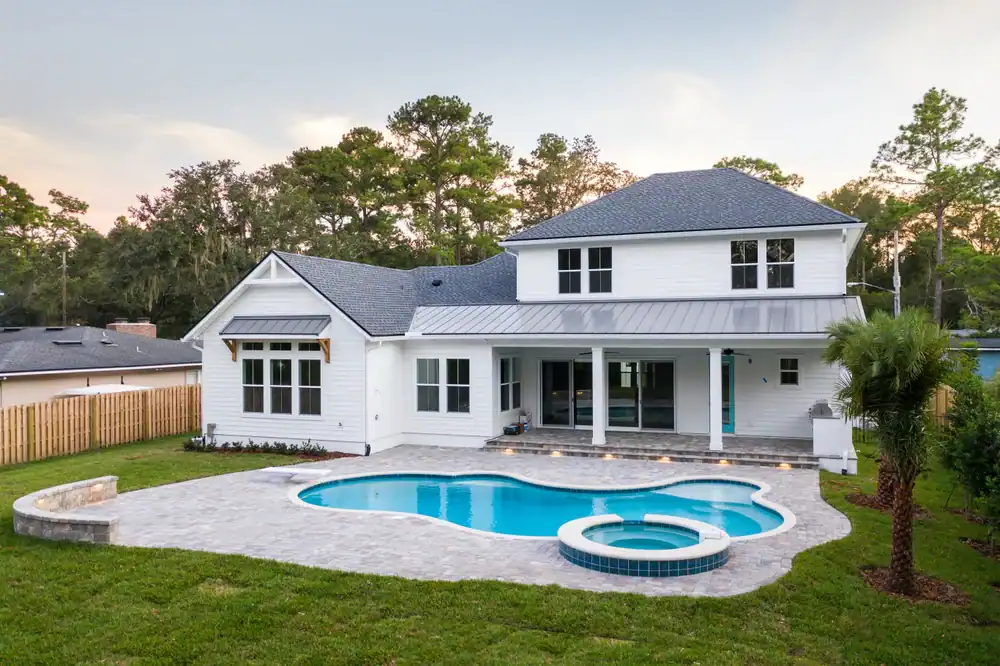
First, we come out to look at your property. We’re checking soil conditions, drainage, access for equipment, and how your yard’s layout affects the pool design. This isn’t a sales pitch—it’s an actual assessment of whether your property works for the pool you want.
Once you approve the design, we handle all permits and engineering requirements for Oceanside and Nassau County. Then excavation starts. We’re digging based on soil reports, not guesswork. The hole gets shaped, plumbing goes in, and rebar gets laid out for structural support.
Gunite application comes next—that’s the concrete mixture that forms your pool shell. It’s sprayed in one continuous application to avoid weak points. After it cures, we install your custom pool coping and tile work. Then comes the pool patio masonry, any concrete pool surrounds you want, and the final grading work.
Your pool gets filled, the equipment gets programmed, and we walk you through everything. The whole process typically takes 8-12 weeks depending on weather and permit timing.
Ready to get started?
You’re getting the full scope—design, permits, excavation, gunite construction, and all finishing work. That includes custom pool coping and tile in materials that match your home’s style. Natural stone, pavers, or poured concrete for your pool patio masonry. Proper grading so water drains away from your house and pool.
If your yard needs retaining walls to level the space or create separation, that’s part of the conversation from day one. Same with any concrete pool surrounds, steps, or integrated seating areas. We’re building complete backyard poolscapes in Suffolk County and Nassau County, not just dropping a pool in your yard and calling it done.
Long Island properties often need additional work most pool companies don’t mention upfront. Tree removal for equipment access. Soil replacement if you’ve got too much sand or clay. Reinforced coping if you’re near the water and dealing with settling. We price all of that in the estimate so you’re not hit with surprise costs halfway through construction.
The equipment package includes filtration, heating options, and automation systems if you want app control for lights and temperature. We install what makes sense for your usage, not whatever we get the best commission on.
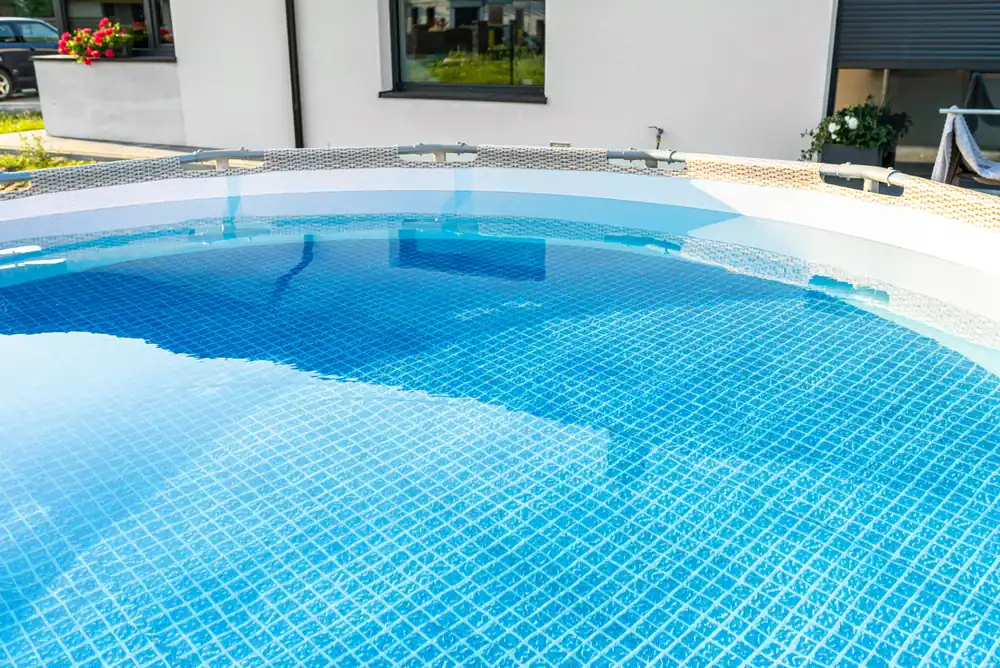
A properly built gunite pool should last 50+ years in Oceanside. The shell itself is incredibly durable when it’s constructed correctly for local conditions. What fails sooner is usually the finish, equipment, and surrounding masonry—but those are designed to be replaced.
Your pool’s plaster or tile finish typically needs resurfacing every 10-15 years depending on water chemistry and usage. Pumps and heaters last 8-12 years on average. Pool coping and patio pavers can last decades if they’re installed with proper base preparation, but Long Island’s freeze-thaw cycles are tough on any masonry that wasn’t built right.
The key is soil prep and structural engineering upfront. Oceanside has sandy soil that shifts with moisture changes. If your pool isn’t built with that in mind, you’ll see cracks in the deck, separation in the coping, and potential shell issues within the first five years. That’s why soil analysis and proper excavation matter more here than in other parts of the country.
Basic gunite pool construction in Nassau County starts around $65,000-$75,000 for a simple rectangular design with standard finishes. That gets you the pool, basic equipment, and minimal decking. Most homeowners end up in the $80,000-$120,000 range once they add custom shapes, upgraded coping and tile, proper patio space, and decent automation.
If you want a complete backyard poolscape with natural stone coping, extensive paver patios, retaining walls, outdoor kitchens, or integrated water features, you’re looking at $150,000+. The scope varies wildly based on your property’s existing conditions and what you’re trying to create.
Here’s what drives cost up: difficult access requiring smaller equipment and more labor, significant grading or soil work, high-end finishes like natural stone throughout, complex shapes with multiple depth levels, and premium automation systems. Don’t let anyone give you a price over the phone—your property’s specific conditions affect the real number too much.
You need quality coping regardless of whether it’s “custom” or not. Pool coping is the finished edge that caps your pool shell—it’s not decorative. It prevents water from getting behind your pool shell, gives you a safe non-slip edge, and takes the impact when people grab it to pull themselves out.
Basic poured concrete coping works fine and costs less. It’s durable and functional. Custom coping using natural stone, pavers, or specialized materials gives you more design options and can better match your home’s existing hardscaping. Neither is wrong—it depends on your priorities and budget.
What matters more than the material is the installation. Coping needs to be set on a proper base with correct overhang and pitch for drainage. In Nassau County and Suffolk County, you’re dealing with ground movement from freeze-thaw cycles. If the coping isn’t installed to handle that movement, you’ll get cracking and separation regardless of whether you used basic concrete or expensive bluestone. We’ve repaired plenty of high-end stone coping that was installed incorrectly by companies that didn’t understand local conditions.
We pull all required permits through the Town of Hempstead building department and handle the inspection scheduling. Oceanside falls under Hempstead jurisdiction, which requires building permits, electrical permits for pool equipment, and often health department approval depending on your property’s specifics.
You’ll need a survey showing property lines and setbacks. The town requires specific distances from your pool to property lines, septic systems, and structures. If you’re in a flood zone near the water, there are additional engineering requirements. We handle the paperwork and coordinate with the building department, but you need to be aware the permit process typically adds 3-4 weeks before we can start digging.
Some homeowners try to skip permits to save money and time. That’s a mistake. Beyond the legal issues and fines if you’re caught, unpermitted pools create problems when you sell your house. They also void most equipment warranties and can affect your homeowner’s insurance coverage if there’s an accident. The permit cost is a small percentage of your total project—it’s not worth the risk.
Long Island’s sandy soil and high water tables create foundation challenges most other regions don’t deal with. Your pool needs proper compaction and often requires additional structural support to prevent settling. We frequently hit groundwater during excavation, which means dewatering systems and careful timing around weather.
The coastal climate is tough on materials. Salt air accelerates corrosion on metal components and degrades certain types of stone and concrete faster than inland areas. We use marine-grade equipment and materials rated for coastal exposure. Your pool’s chemistry also needs closer monitoring because of higher humidity and airborne salt affecting water balance.
Freeze-thaw cycles are more extreme here than people realize. Water gets into small cracks in concrete or masonry, freezes, expands, and creates bigger cracks. This destroys pool coping, patio pavers, and concrete pool surrounds that aren’t installed with proper drainage and expansion joints. Companies from other areas often underestimate this and build pools that develop problems within a few seasons. We’ve been repairing those mistakes since 2006—it’s why we build differently from the start.
Yes. We regularly upgrade pool patio masonry around existing pools in Suffolk County and Nassau County. Most older pools have basic concrete decks that are cracked, stained, or just outdated. We can remove the old concrete and install new paver patios, natural stone, or decorative concrete pool surrounds.
The challenge is matching elevations and ensuring proper drainage away from the pool and your house. We’re also checking the condition of your existing pool coping—if that’s failing, it makes sense to replace it at the same time as the patio work. Otherwise you’re tearing up new pavers in a few years when the coping needs replacement.
Timing matters if you’re doing this work. We need to protect your pool during demolition and construction. That usually means doing the work in spring or fall when you’re not using the pool heavily. The project typically takes 1-2 weeks depending on the scope. You can still use your pool during construction in most cases, but access is limited and there’s dust and noise to deal with.
Other Services we provide in Oceanside