
Buying or selling in Nassau County? Level 2 chimney inspections provide the lender-ready documentation you need to close on time without surprises.
Share:
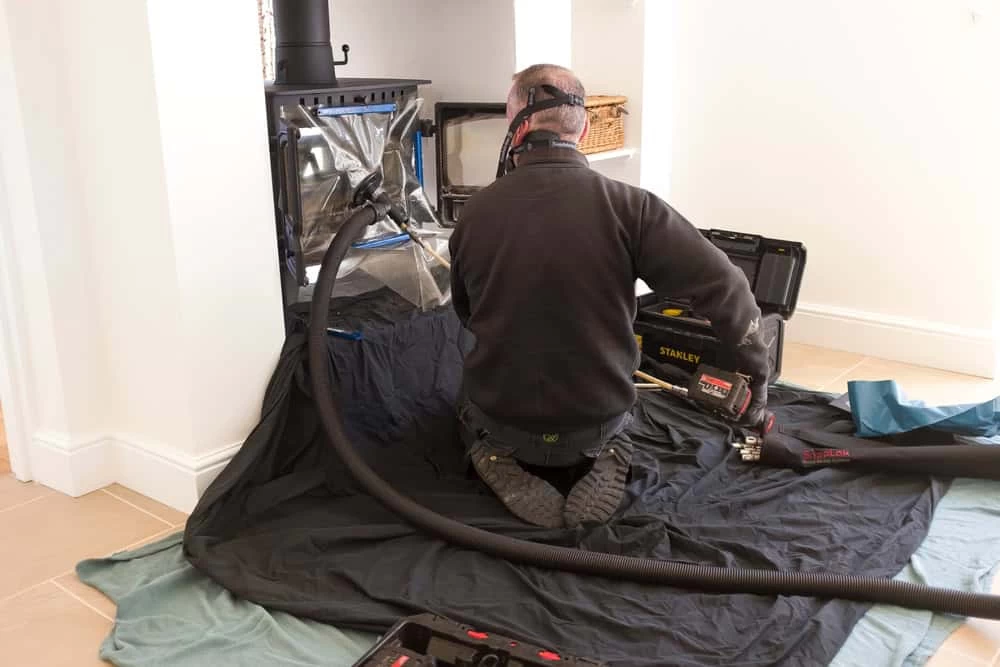
Your offer got accepted. The home inspection came back clean. Then your lender asks for chimney documentation, and suddenly you’re scrambling to understand what a Level 2 inspection actually is and why it matters for closing.
Here’s what most Nassau County buyers and sellers don’t realize until they’re already under contract: general home inspectors can’t see inside your chimney flue. They don’t have the equipment, and they’re not required to provide the detailed documentation that mortgage underwriters increasingly demand for homes with fireplaces or oil heating systems.
A Level 2 chimney inspection fills that gap. It’s the NFPA 211-mandated evaluation for property transfers that uses video cameras to document what’s happening inside your flue—the cracks, deterioration, or hidden damage that could derail your closing or cost you thousands in repairs you didn’t budget for. Let’s break down exactly what these inspections cover and when you actually need one.
A Level 2 chimney inspection is a comprehensive evaluation of your entire chimney system, required whenever a property changes ownership. According to NFPA 211—the national standard for chimney safety—this inspection level includes everything from a basic Level 1 inspection plus video scanning of your flue interior and examination of accessible areas in attics, crawl spaces, and basements.
The distinction matters because your general home inspector typically performs what amounts to a visual check of readily accessible chimney components. They’re looking at your firebox, checking for obvious damage to the chimney exterior, and making sure your cap isn’t missing. That’s helpful, but it doesn’t tell you what’s happening inside the flue where most serious problems develop.
Level 2 inspections use specialized cameras inserted into your chimney to capture real-time footage of the flue liner, joints, and interior surfaces. This reveals cracks in clay tile liners, evidence of previous chimney fires, displaced mortar joints, blockages, and structural deterioration that you simply cannot see from ground level or through a standard visual inspection. For Nassau County real estate transactions, this video documentation becomes the proof that satisfies lender underwriting requirements and protects both buyers and sellers from hidden liability.
NFPA 211 is explicit about when Level 2 inspections are required: any time a property undergoes transfer of ownership. This isn’t a suggestion—it’s the established safety standard that protects both buyers and sellers during real estate transactions.
For Nassau County, NY specifically, most lenders and insurance carriers either require or strongly recommend Level 2 chimney inspections as a condition of mortgage approval or policy issuance. While New York State doesn’t legally mandate chimney inspections for real estate transactions, the practical reality is that your lender’s underwriting department will likely ask for documentation, particularly if the home has a wood-burning fireplace, pellet stove, or oil heating system.
The inspection covers all accessible portions of your chimney’s exterior and interior, including areas that require you to access your attic or crawl space. We evaluate proper clearances from combustible materials—a critical safety issue that general home inspectors often miss. You’ll receive a written report with photographs and, crucially, video footage showing the interior condition of your flue.
This documentation serves multiple purposes in a real estate transaction. Buyers use it to verify they’re not inheriting hidden chimney damage that could cost $3,000 to $8,000 for liner replacement or crown repairs. Sellers benefit from having current documentation that prevents last-minute deal complications during attorney review—a stage where many Nassau County transactions get renegotiated or fall apart entirely. In Nassau County’s attorney-heavy closing process, having professional chimney documentation before you enter contract negotiations eliminates a common sticking point that delays closings or kills deals.
The timeline matters too. Nassau County’s real estate market moves fast, with homes going to pending status in roughly 26 days and selling at 100.4% of list price on average. You can’t afford to wait three weeks for a chimney company that’s backed up through fall. We offer same-week scheduling and same-day written reports that keep your transaction on track and prevent the delays that cost you money or even the deal itself.
Level 2 chimney inspections in Nassau County, NY typically run $275 to $475, depending on your chimney’s height, the number of flues, and accessibility factors. That’s higher than the national average of around $250 to $400, but Long Island’s cost of living, labor rates, and the expertise required to handle coastal climate challenges all factor into pricing.
The cost includes the video camera examination of your full flue interior, evaluation of all accessible chimney components, documentation of any deficiencies, and a written report with photos suitable for lender review. We schedule these within 48 to 72 hours and deliver reports the same day or within 24 hours—critical for keeping real estate transactions moving forward.
Here’s the value calculation that matters: spending $300 to $450 on a Level 2 inspection before closing can identify issues while they’re still the seller’s responsibility to address or negotiate. Skip that inspection, and you might discover a cracked flue liner requiring $5,000 to $7,000 in repairs after you’ve already closed and taken ownership. At that point, it’s your problem and your expense.
For sellers, having a pre-listing Level 2 inspection done before you put your home on the market identifies issues before they become buyer negotiation leverage. You can address repairs on your timeline and budget, or price the home accordingly with full disclosure. Either approach is better than discovering problems during the buyer’s inspection period when you’re under pressure and have limited options.
The inspection cost also needs to be weighed against what it prevents. Common findings in Nassau County include cracked clay tile liners that require stainless steel liner upgrades, failed chimney crowns allowing water infiltration, corroded flashing, and creosote buildup that creates fire hazards. Addressing these issues before they’re discovered by a buyer’s inspector or, worse, after you’ve moved in, saves both money and stress. When you consider that chimney liner replacement can run $1,500 to $8,000 and crown rebuilding costs $700 to $2,200, a $400 inspection that identifies these issues early is cheap insurance.
Understanding the difference between Level 1 and Level 2 chimney inspections matters because the wrong inspection level either wastes money or leaves you without the documentation lenders require for closing.
A Level 1 chimney inspection is the basic annual checkup recommended for chimneys in continued service under the same conditions. The technician examines readily accessible portions of your chimney exterior and interior, checks for obstructions and combustible deposits like creosote, and verifies basic structural soundness. No special equipment is required—it’s primarily a visual assessment of what can be seen without cameras or accessing concealed areas. If you’re just maintaining your chimney year to year with no changes to your heating system and no plans to sell, Level 1 is typically sufficient.
Level 2 inspections include everything from Level 1 plus the video scanning component and examination of accessible attic, crawl space, and basement areas connected to your chimney. This level is specifically required when a property changes ownership, when you’ve made changes to your heating system (like switching from oil to gas), after a chimney fire or weather event that could have caused damage, or when you’re experiencing operational problems like smoke backing into your home.
The NFPA 211 standard outlines specific scenarios that trigger the need for a Level 2 inspection. Property transfer is the most common—any time a home changes ownership, this inspection level is required to document the chimney’s condition for both the buyer and the lender. This applies whether you’re buying a newly listed home in Garden City or a decades-old property in Levittown.
You also need a Level 2 inspection when you’ve made changes to your chimney or venting system. This includes installing a new appliance with a different efficiency rating, changing fuel types (wood to gas, oil to gas, etc.), or relining your flue. These modifications can affect how your chimney performs, and the inspection verifies that everything is functioning safely under the new conditions.
After operational malfunctions or external events, Level 2 inspections become necessary. If you’ve had a chimney fire—even a small one—the intense heat can crack your flue liner in ways that aren’t visible from a standard inspection. Weather events like nor’easters, severe storms, or lightning strikes can also cause hidden damage that requires video scanning to identify.
For Nassau County, NY homeowners specifically, coastal climate factors make Level 2 inspections particularly valuable. Salt air accelerates corrosion on chimney caps , flashing, and metal liners. The freeze-thaw cycles common in Long Island winters crack masonry and deteriorate mortar joints. These issues develop gradually and often aren’t visible during a basic visual inspection, but they show up clearly on video camera scans of your flue interior.
If you’re buying a home in Nassau County that’s been on the market for a while or hasn’t had recent chimney maintenance, a Level 2 inspection gives you the full picture before you commit to the purchase. If you’re selling, having current Level 2 documentation available for potential buyers demonstrates that your home has been properly maintained and removes a common objection during negotiations. In a market where buyers are paying above asking price and competition remains fierce despite 2026’s slower growth, eliminating inspection contingencies can be the difference between your offer getting accepted or losing out to another buyer.
A proper Level 2 chimney inspection examines every accessible component of your chimney system, both inside and out. The process starts with everything included in a Level 1 inspection—visual examination of your firebox, damper, smoke chamber, chimney exterior, crown, cap, and flashing. We check for proper clearances from combustible materials and verify that your chimney structure is sound.
Then comes the distinguishing feature of Level 2 inspections: the video camera examination. A specialized camera is inserted into your flue from either the top or bottom, capturing real-time footage of the entire interior surface. This reveals the condition of your flue liner, any cracks or gaps in mortar joints, evidence of previous chimney fires (which leave distinctive patterns), blockages from debris or animal nests, and structural issues that develop inside the chimney where you can’t see them.
The inspection also includes accessible portions of your attic, crawl space, and basement where the chimney passes through. We’re checking for proper clearances, signs of heat damage to nearby combustible materials, and any evidence of water infiltration or structural movement. These concealed areas often reveal problems that aren’t apparent from examining just the visible portions of your chimney.
You receive a detailed written report documenting all findings, including photographs of exterior components and video footage from inside your flue. The report identifies any deficiencies, explains their significance, and typically includes recommendations for repairs if issues are found. For real estate transactions, this documentation is formatted to meet lender requirements and provides clear evidence of your chimney’s condition at the time of inspection.
If problems are discovered, we provide repair quotes on-site before leaving your property. This eliminates the need for a second visit and gives buyers and sellers everything needed to negotiate repair costs, request seller credits, or schedule repairs before closing. Common findings include cracked clay tile liners, deteriorated chimney crowns, corroded or missing caps, flashing that’s separated from the roofline, and creosote buildup that creates fire hazards. For Nassau County homes specifically, we frequently find salt air corrosion on metal components and freeze-thaw damage to masonry—issues that develop faster in Long Island’s coastal climate than in inland properties.
If you’re buying or selling a home in Nassau County, NY, getting your Level 2 chimney inspection scheduled early in the process protects your timeline and your investment. For buyers, ordering the inspection during your due diligence period—ideally within the first week after your offer is accepted—gives you time to address any issues discovered before you’re committed to closing.
Sellers benefit from pre-listing inspections that identify problems while you still have control over how and when they’re addressed. Having current Level 2 documentation available when you list your home demonstrates transparency and often speeds up negotiations because buyers don’t have to wonder about chimney condition.
The inspection itself typically takes one to two hours, depending on your chimney’s size and complexity. You’ll receive a written report with photos and video footage, usually delivered the same day or within 24 hours. That documentation satisfies lender requirements, provides legal protection for both parties, and gives you the information you need to make confident decisions about your real estate transaction. We provide Level 2 inspections throughout Nassau County with the fast turnaround and professional documentation that keeps your closing on schedule.
Article details:
Share:
Continue learning: