Not sure if your chimney leak is coming from the chase cover or the flashing? This guide breaks down the differences and helps Nassau County homeowners stop water damage for good.
Share:
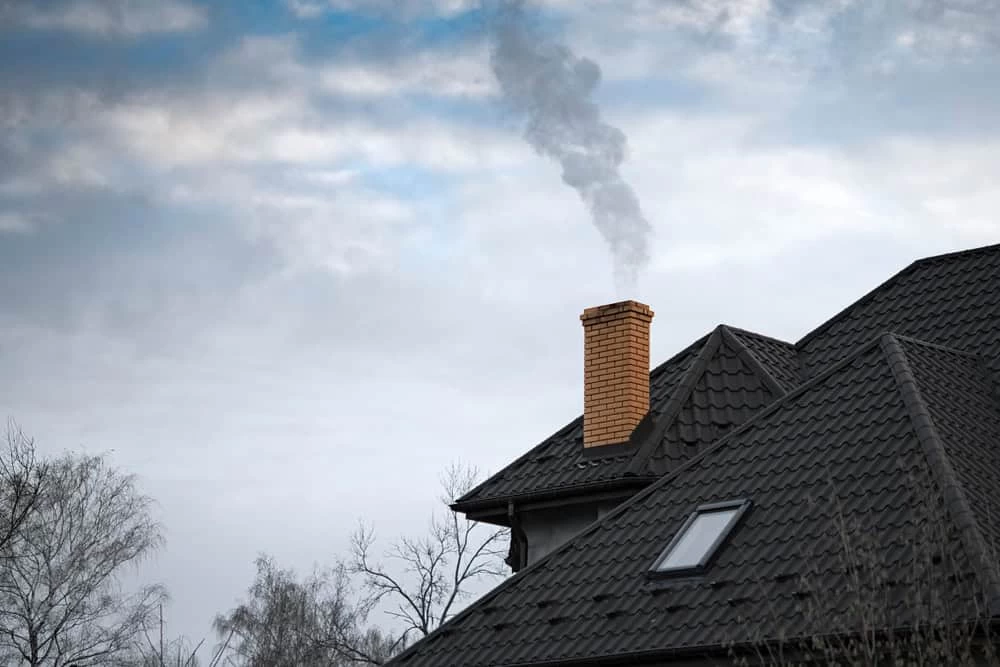
Water staining your ceiling near the chimney? Hearing drips inside the fireplace when it rains? You’re not alone. Chimney leaks are one of the most common—and most misdiagnosed—problems Nassau County homeowners face. The frustrating part isn’t just the water. It’s figuring out where it’s actually coming from. Is it the chase cover? The flashing? Something else entirely? Get the diagnosis wrong, and you’ll pay for a repair that doesn’t stop the leak. This guide cuts through the confusion. You’ll learn what causes chimney leaks in heavy rain, how chase covers and flashing differ, and which fix your chimney actually needs.
When water shows up inside your home near the chimney, the source isn’t always obvious. The leak you see on your ceiling could be coming from the top of the chimney, the point where it meets your roof, or even through the masonry itself.
Most Nassau County homeowners assume all chimney leaks are the same. They’re not. A chase cover problem requires a completely different fix than a flashing issue. Hire someone who misdiagnoses the source, and you’ll end up with a partial repair that doesn’t solve anything.
The challenge gets worse in coastal areas like Long Beach, Point Lookout, and Atlantic Beach. Salt air corrodes metal components faster. Freeze-thaw cycles crack masonry. Nor’easters drive rain sideways into spots that normal weather wouldn’t touch. Water finds every weakness, and Nassau County’s climate creates more weaknesses than most places.
Light rain might not cause any issues. But when a heavy storm rolls through Nassau County, that’s when leaks show up. Why? Because heavy rain overwhelms compromised seals and finds gaps that light moisture never reaches.
Wind-driven rain is the real problem. Coastal storms don’t just drop water straight down. They push it sideways and even upward, testing every seal around your chimney. A small crack in your chase cover might be fine during a drizzle. During a nor’easter, water pours through.
Homeowners often notice the leak for the first time during or right after a major storm. You see water stains on the ceiling. You hear dripping inside the chimney. Maybe you spot rust stains running down the siding. These aren’t new problems—they’re old problems that heavy rain finally made visible.
The issue compounds over time. Water that gets into your chimney doesn’t just disappear when the rain stops. It sits in the masonry, the wood framing, or the metal components. Freeze-thaw cycles expand that moisture, cracking masonry and warping metal. Mold starts growing in damp spaces. What began as a small leak during heavy rain becomes structural damage that costs thousands to repair.
Nassau County’s location makes this worse. You’re dealing with salt-laden air that corrodes metal 3 to 5 times faster than inland areas. Maritime moisture keeps everything damp even between storms. Your chimney components don’t get the chance to fully dry out before the next weather event hits.
Ignoring leaks after heavy rain isn’t an option. Water damage spreads. The longer you wait, the more expensive the fix becomes. A $500 chase cover replacement now prevents a $5,000 repair bill later when water has rotted framing and damaged interior finishes.
Figuring out where chimney water is actually entering requires understanding the different components at play. Each one serves a specific purpose, and each one fails in different ways.
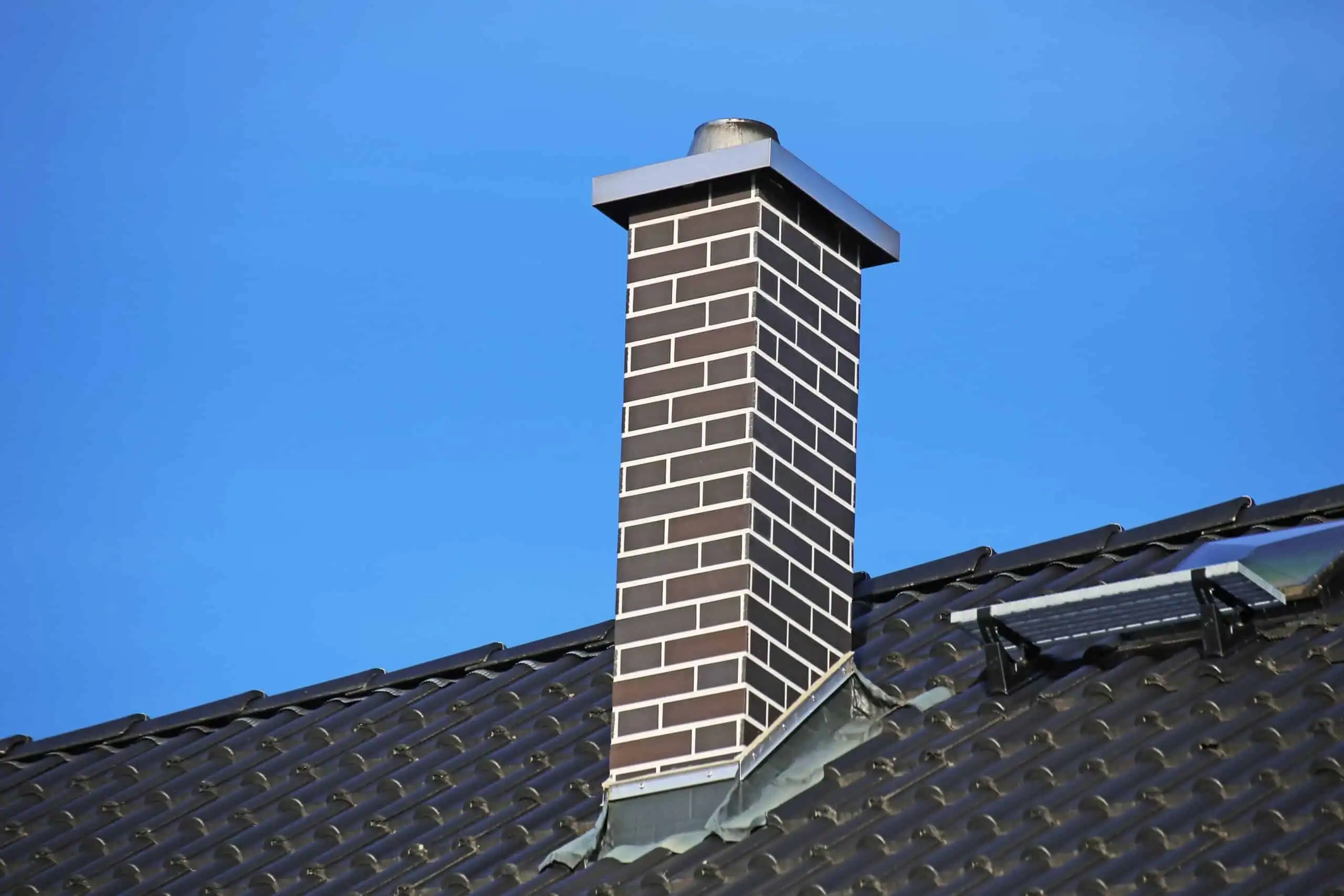
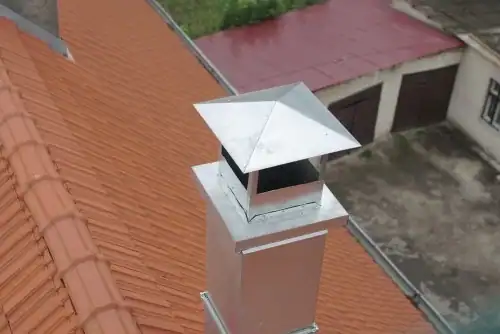
The chase cover sits on top of prefabricated chimneys—the kind with wood framing and siding. Think of it like a metal lid that seals the entire top of the chimney structure. When chase covers rust or develop holes, water pours directly into the chimney chase. You’ll often see rust stains running down the siding as a telltale sign. Galvanized steel chase covers are the usual culprit. They rust quickly, especially in salt air. Stainless steel lasts longer but costs more upfront.
Flashing is the metal barrier where your chimney meets the roof. It’s designed to direct water away from that junction and into your gutters. Flashing fails when it’s improperly installed, pulls away from the roof over time, or corrodes. Nassau County’s freeze-thaw cycles and coastal conditions accelerate this deterioration. Failed flashing is one of the most common causes of chimney leaks on Long Island. Water sneaks in where the chimney and roof meet, then travels along the roofline before showing up as a ceiling stain far from the actual entry point.
The chimney crown is the concrete or mortar top on masonry chimneys. It’s supposed to shed water away from the flue and protect the masonry below. Cracks develop from weather exposure and settling. Once water gets into those cracks, freeze-thaw cycles make them worse. A cracked crown lets water into the chimney structure, where it damages bricks, mortar, and the flue liner.
Chimney caps sit directly on top of the flue opening. They’re like little metal umbrellas that keep rain, animals, and debris out of the flue itself. A missing or damaged cap allows water straight down the flue. You’ll notice water in the firebox or rust on the damper.
Masonry damage—cracked bricks, deteriorated mortar joints—also lets water in. Brick and mortar are porous. When mortar fails or bricks start spalling (flaking apart), water penetrates the chimney structure. This is especially common in coastal Nassau County, where salt accelerates masonry breakdown.
The tricky part is that leaks often have multiple causes working together. Your chase cover might be rusted AND your flashing might be failing. Fixing just one doesn’t solve the problem. That’s why accurate diagnosis matters. You need someone who inspects the entire system, identifies all the failure points, and addresses them together.
Chase covers are specific to prefabricated or factory-built chimneys—the ones with wood framing covered in siding. If your chimney isn’t solid masonry all the way up, you likely have a chase cover.
Most chase covers installed during original construction are made from galvanized steel. Builders use it because it’s cheap. The problem is that galvanized steel rusts, especially in Nassau County’s salt air. Within 10 to 15 years, you’ll see rust stains streaking down the siding. Eventually, the cover rusts through completely, letting water pour into the chimney chase.
A rusted chase cover isn’t a cosmetic issue. Water entering the chase damages the wood framing, rots the structure, and creates conditions for mold growth. If your chimney has a prefabricated metal fireplace inside, water can create dangerous fire hazards by compromising the clearances and damaging components.
When you’re replacing a chase cover, material choice matters more than you might think. This isn’t a decision you want to get wrong, because you’ll be living with it for the next 20 to 30 years.
Galvanized steel is the budget option. It’s cheaper upfront, which is why builders use it. But galvanized steel has a fatal flaw in coastal environments—it rusts. The zinc coating that’s supposed to protect the steel breaks down under constant exposure to salt air and moisture. Once that coating fails, rust takes over fast. You might get 10 to 15 years out of a galvanized chase cover in Nassau County if you’re lucky. Waterfront homes? Cut that timeline in half.
Stainless steel costs more upfront but lasts significantly longer. It doesn’t rust, even in salt air. A properly installed stainless steel chase cover can last 30+ years without the rust stains, holes, and failures that plague galvanized options. For Nassau County homeowners, especially those in coastal communities, stainless steel is the only material that makes financial sense long-term.
Copper is another option. It’s durable, won’t rust, and develops a distinctive patina over time. Copper chase covers are typically the most expensive choice, but they offer excellent longevity and can add a visual element if aesthetics matter to you. Most homeowners stick with stainless steel for the balance of performance and cost.
The other critical factor is fabrication quality. Chase covers should be custom-fabricated to fit your specific chimney dimensions. They need cross-breaks or a dome shape so water drains off instead of pooling. They need a welded, sealed collar where the flue pipe passes through. They need a drip edge to direct water away from the siding. Cheap, flat chase covers create pooling water that accelerates rust and leaks.
When you’re comparing quotes for chase cover replacement, don’t just look at the bottom-line price. Ask what material they’re using. Ask if it’s custom-fabricated or hand-bent on site. Ask about the gauge thickness (24-gauge minimum for durability). A $400 galvanized cover that rusts in 8 years isn’t a better deal than a $750 stainless cover that lasts 30.
Chase cover replacement in Nassau County typically runs between $500 and $1,500. That’s a wide range, and understanding what drives the cost helps you evaluate quotes and avoid overpaying.
Material is the biggest factor. Galvanized steel is the cheapest option, usually on the lower end of that range. Stainless steel costs more—expect to pay $600 to $1,200 for a quality stainless chase cover. Copper is the premium choice, often pushing toward the higher end or even beyond $1,500 depending on size and complexity.
Size matters. A small, simple chase cover for a standard prefab fireplace costs less than a large, complex cover for an oversized chimney. Custom fabrication adds to the cost but delivers a better fit and longer-lasting performance than generic, hand-bent covers.
Accessibility affects pricing too. If your chimney is on a steep roof, multiple stories high, or difficult to reach, labor costs increase. We need more time, additional safety equipment, and sometimes extra crew members to complete the job safely.
Some quotes include removal of the old chase cover and disposal. Others charge separately for that. Make sure you’re comparing apples to apples when you’re evaluating different contractors.
The real cost comparison isn’t between one contractor’s quote and another’s. It’s between fixing the problem now versus waiting. A $750 chase cover replacement today prevents $3,000 to $5,000 in water damage repairs later. Water doesn’t stop at the chase cover. It rots framing, damages drywall, creates mold, and compromises the structural integrity of your chimney. The longer you wait, the more expensive the total repair becomes.
For Nassau County homeowners, especially those in coastal areas, investing in stainless steel makes sense even if it costs $200 to $300 more than galvanized. You’re not replacing it again in 10 years. You’re not dealing with rust stains on your siding. You’re getting a permanent solution that handles salt air and coastal weather without failing.
Flashing is the metal barrier installed where your chimney meets your roof. Its job is simple—keep water from sneaking into that junction and getting into your home. When flashing fails, water finds its way in, often traveling along the roofline before appearing as a ceiling stain far from the actual entry point.
Flashing problems are one of the most common causes of chimney leaks on Long Island. Why? Because flashing is constantly exposed to extreme conditions. It expands and contracts with temperature swings. It’s battered by wind, rain, and snow. In Nassau County, salt air accelerates corrosion. Freeze-thaw cycles loosen connections. Over time, even properly installed flashing can fail.
Flashing typically consists of multiple components working together. Step flashing alternates with shingles along the sides of the chimney. Counter flashing embeds into the chimney’s mortar joints and overlaps the step flashing. Base flashing covers the bottom intersection. When any of these components fail, water gets in.
Article details:
Share:
Continue learning: