Water dripping from your fireplace during heavy rain isn't normal. Learn the emergency steps to take and how to stop chimney leaks before they damage your Nassau County home.
Share:
You’re hearing dripping sounds during the storm. Water’s pooling in your firebox. Maybe you’ve spotted stains on the ceiling near your chimney, and they’re getting worse with every heavy rain.
When water comes down your chimney, it’s not just annoying—it’s actively damaging your home. The longer water sits in your chimney system, the more it spreads to your ceiling, walls, attic, and the masonry itself. In Nassau County’s coastal climate, these problems accelerate faster than you’d expect.
Here’s what’s actually happening when your chimney leaks during storms, what you need to do right now if water’s actively coming in, and how to fix the problem before it costs you thousands in emergency repairs.
Your chimney isn’t supposed to let water in. When it does, something’s failed—and it’s usually one of five components designed specifically to keep water out.
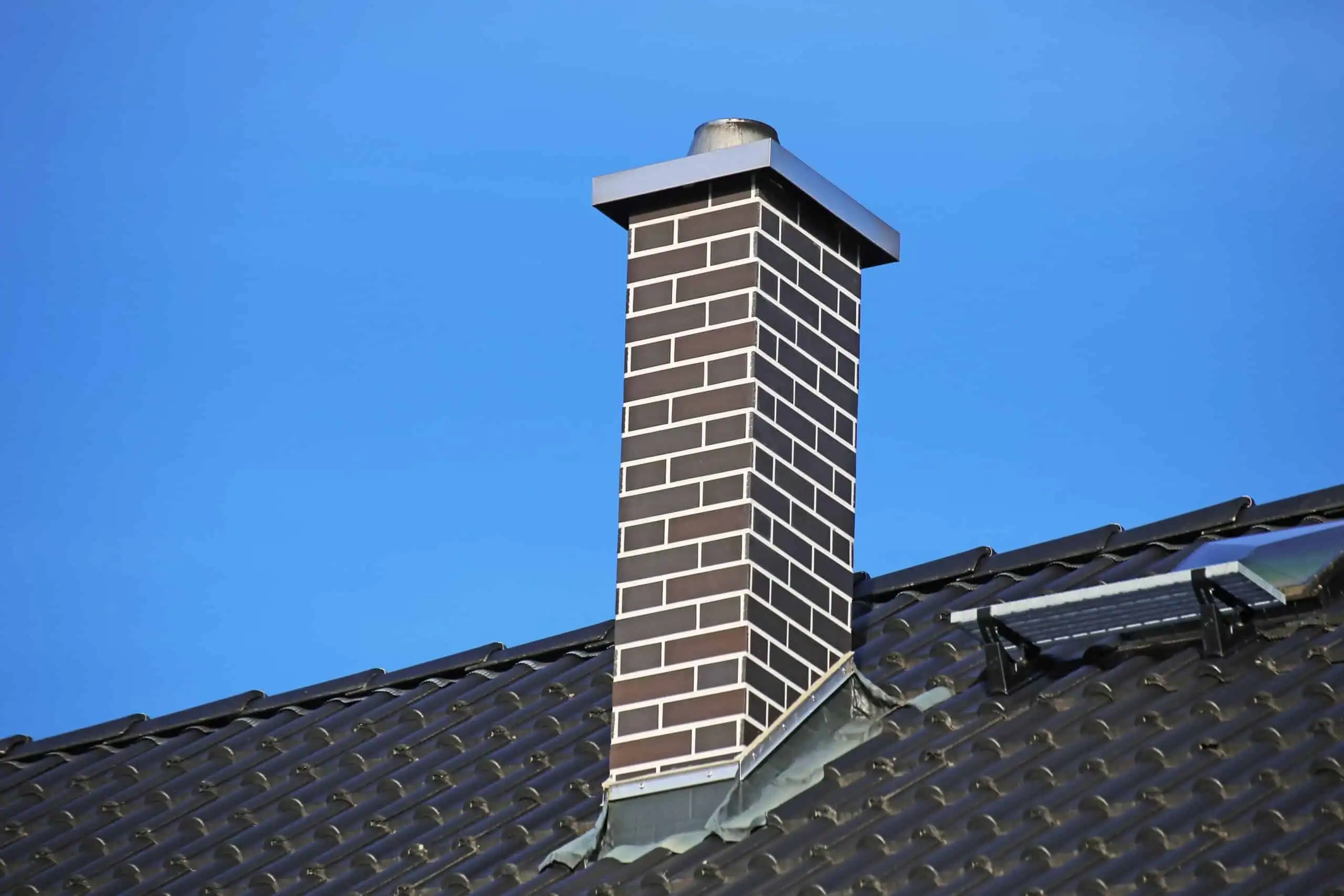
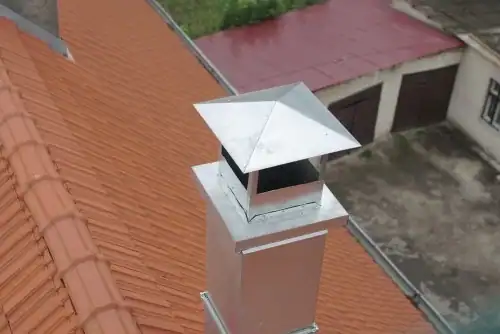
The chimney cap sits at the very top and acts like an umbrella over your flue opening. Without it, rain pours straight down into your chimney. The crown is the concrete slab that seals the top of your chimney masonry. Cracks in the crown let water seep between your flue liner and the bricks. Flashing is the metal seal where your chimney meets your roof—when it fails, water runs down the outside of your chimney and into your attic or walls.
Then there’s the masonry itself. Brick and mortar are porous. In Nassau County’s coastal climate, salt air and maritime moisture make this worse. The bricks absorb water like a sponge, and when temperatures drop, that water freezes and expands, creating cracks that let even more water in during the next storm.
If water’s actively dripping or pouring into your fireplace right now, here’s what you need to do before calling anyone.
Don’t use your fireplace. Water and your heating system don’t mix, and if you’ve got a gas fireplace, moisture near the pilot light or gas lines creates safety risks. If you’re seeing water pool in the firebox, grab towels and soak it up. Standing water will rust your damper, corrode metal components, and seep into the mortar joints at the base of your firebox.
Check your attic if you can safely access it. Look for water stains, dampness, or actual dripping near where your chimney passes through the roofline. This tells you whether water’s coming down the inside of your flue or running down the outside and getting in through failed flashing. The location of the water damage helps us diagnose the problem faster.
Take photos of everything. Water stains on your ceiling, dampness in the firebox, visible damage to your chimney cap from ground level if you can see it safely. You’ll want this documentation for the repair company and potentially for insurance purposes if the damage is severe enough.
Now call a chimney specialist—not a roofer. Chimney water intrusion involves components that roofing companies don’t typically work with. You need someone who understands chimney caps, crowns, flue liners, and how coastal moisture affects masonry differently than it does standard roofing materials. In Nassau County, that coastal expertise matters. Salt air corrodes metal components at three to five times the rate of inland locations, and maritime moisture keeps masonry from fully drying between weather events.
The worst thing you can do is wait. Every storm that passes dumps more water into your chimney system. That water spreads to your roofline, soaks into your attic insulation, stains your ceilings, and weakens the mortar holding your chimney together. What starts as a $300 chimney cap replacement can turn into $3,000 to $5,000 in liner replacement, crown rebuilding, and masonry repairs if you let it go.
A missing or damaged chimney cap is behind most chimney leaks—and it’s often the easiest problem to fix if you catch it early.
The cap sits on top of your chimney and covers the flue opening. It’s usually made of metal with a mesh screen on the sides and a sloped top that sheds water away from the opening. When it’s working correctly, rain hits the cap and runs off the sides. The mesh keeps out debris, animals, and wind-driven rain while still letting smoke escape when you use your fireplace.
But chimney caps take a beating. They’re exposed to every storm, every freeze-thaw cycle, and in Nassau County, constant salt air that corrodes metal faster than you’d think. Caps rust through, especially if they’re made from galvanized steel instead of stainless steel. High winds during nor’easters can rip them off entirely. Sometimes the cap’s still there but the seal where it attaches to your chimney crown has failed, letting water run underneath and down into your flue.
Here’s how you know if your cap is the problem. If you’re seeing water directly in your firebox—not running down walls near your chimney but actually pooled inside the fireplace—your cap is probably missing or severely damaged. Water stains on your flue tiles visible when you look up into your chimney from the firebox also point to cap failure. And if you can safely look at your chimney from outside with binoculars, check whether the cap is even there, whether it’s rusted through, or whether it’s too small for your flue opening.
An undersized cap is almost as bad as no cap at all. Wind-driven rain during coastal storms doesn’t fall straight down—it comes in sideways. A cap that barely covers your flue opening won’t protect against that horizontal rain. You need a cap with a bonnet at least twice as large as your flue opening to provide real protection during the storms Nassau County gets hit with.
Replacing a chimney cap isn’t expensive compared to the damage it prevents. You’re looking at $190 to $650 depending on the material and size. Stainless steel costs more upfront but lasts significantly longer in salt air environments. For waterfront homes in Long Beach, Point Lookout, or Atlantic Beach, that marine-grade stainless steel isn’t optional—it’s the only thing that holds up against the accelerated corrosion those locations experience.
The cap replacement itself takes us about an hour. But the protection it provides is permanent, assuming you choose the right material for your location and have it properly sized and installed. That’s the catch—improper installation means the cap won’t seal correctly, and you’ll still get leaks even with a brand new cap in place.
Not all chimney leaks show up in your firebox. Sometimes water’s getting in around your chimney, and you won’t know it until you see stains on your ceiling or smell mold in your attic.
Flashing is the metal seal where your chimney penetrates your roof. It’s installed in layers—step flashing runs up the sides of your chimney in a stair-step pattern, and counter flashing tucks into the mortar joints and covers the top edge of the step flashing. When it’s working, water hits your roof, flows around your chimney, and continues down to your gutters without ever finding a gap.
When flashing fails, water runs straight into your house. The crown is the concrete slab at the top of your chimney that covers the masonry and leaves only the flue opening exposed. Cracks in the crown let water seep down between your flue liner and the brick walls of your chimney, where it spreads through the masonry and eventually shows up as dampness in your attic or stains on your walls.
The location of your water damage tells you what’s failed. This matters because flashing repairs and crown repairs are completely different jobs requiring different expertise and materials.
If you’re seeing water stains on the ceiling or walls adjacent to your chimney—not in the firebox itself but around the outside of the chimney structure—your flashing has probably failed. Water’s running down the outside of your chimney, getting under the flashing, and soaking into your roof deck and attic. You might also notice water stains that seem to travel across your ceiling before appearing. Water doesn’t always exit where it enters. It can run along roof rafters or across your attic floor before finding a path down to your living space.
Flashing fails for predictable reasons in Nassau County. The sealant that bonds the flashing to your chimney breaks down from constant temperature changes and UV exposure. Metal flashing corrodes, especially in salt air. Aluminum develops holes. Steel rusts through. Even copper, which resists corrosion better than other metals, can fail where it’s joined or where it enters the mortar. And coastal storms push water sideways and upward, testing every seal and finding weaknesses that normal rainfall wouldn’t exploit.
Crown damage shows up differently. If you’re seeing white, chalky deposits on the outside of your chimney bricks, that’s efflorescence—mineral deposits left behind when water evaporates through the masonry. It means water’s getting into your crown, soaking through the brick, and evaporating on the surface. You might also notice the concrete crown itself has visible cracks when you look at it from the roof or with binoculars from ground level.
Water entering through crown cracks doesn’t just damage your chimney—it damages your flue liner. Clay tile liners crack when water freezes inside them. Metal liners corrode. And once your liner is compromised, you’re looking at carbon monoxide risks and potential chimney fires, not just water damage. The repair costs jump from a few hundred dollars for crown sealing to $1,500 to $4,000 for liner replacement.
Here’s what makes Long Island crown damage worse than inland locations. The freeze-thaw cycle happens more frequently because of maritime moisture. Your crown might go through fifty to sixty-five freeze-thaw cycles in a single winter. Each cycle widens existing cracks. Salt from ocean spray accelerates the breakdown of concrete. And the constant humidity means your crown never fully dries out between storms, so it’s always absorbing more water.
Proper crown repair involves removing the damaged concrete and rebuilding it with rebar reinforcement and quality cement mix. Temporary fixes with elastomeric coatings might buy you a few years, but they break down from UV exposure and temperature extremes. For a permanent solution, you need the crown rebuilt correctly—sloped to shed water away from the flue, properly bonded to the chimney masonry, and sealed with materials that can handle coastal conditions.
Flashing repair is equally critical. Sometimes the existing flashing can be resealed if the metal itself is still sound. More often, especially on older chimneys or waterfront homes, the flashing needs complete replacement. That means removing the old flashing, installing new step flashing and counter flashing with proper overlap, and sealing everything with high-quality flashing sealant designed for the temperature extremes and weather exposure chimneys experience.
If you’ve noticed your chimney seems to deteriorate faster than your neighbor’s chimney a few towns inland, you’re not imagining it. Nassau County’s coastal location creates chimney maintenance demands that inland properties don’t face.
Salt air is the primary culprit. It corrodes metal components—caps, flashing, chase covers, dampers—at three to five times the rate of inland locations. That stainless steel chimney cap that might last twenty years in Pennsylvania will need replacement in seven to ten years in Long Beach. The salt also attacks mortar chemistry, breaking down the binder that holds your bricks together. You’ll see mortar deterioration and spalling bricks on coastal chimneys that are half the age of inland chimneys in similar condition.
Maritime moisture keeps brick saturated even during dry periods. The ambient humidity from the ocean and Long Island Sound means your chimney never fully dries out. When the next rain comes, that already-damp masonry absorbs even more water. During winter, that trapped moisture freezes and expands, creating internal pressure that cracks bricks and mortar from the inside out. You can’t see this damage happening, but you’ll see the results—crumbling mortar joints, bricks that have spalled and lost their face, and white efflorescence staining that indicates serious water penetration.
Wind loads stress coastal chimney stacks more aggressively than sheltered inland positions. Nor’easters deliver extreme wind and rain that test every seal and find weaknesses. Wind-driven rain doesn’t just fall on your chimney—it hits from the side, gets driven upward under caps and flashing, and penetrates gaps that normal rainfall would never reach.
For waterfront homes, annual metal component inspection isn’t optional—it’s necessary. You need marine-grade stainless steel for all replacements, not standard galvanized steel. Waterproofing should happen every three to five years instead of the five to seven year interval that works inland. And you need particular attention to flashing integrity because coastal wind-driven rain attacks from angles that inland homes never experience.
The diversity of Nassau County’s housing stock adds another layer of complexity. Gold Coast estates from the 1920s have massive ornamental chimneys with multi-flue configurations. Levittown Cape Cods from the 1950s have simpler masonry chimneys but often lack proper caps or have deteriorated crowns from decades of deferred maintenance. Modern construction might have factory-built chimneys with different maintenance requirements entirely.
We understand these local conditions and check for things that out-of-area contractors miss. We look for efflorescence that indicates moisture penetration. We examine rust on metal components and know whether it’s normal aging or accelerated coastal corrosion. We understand that mortar deterioration on a fifteen-year-old coastal chimney might be as severe as a thirty-year-old inland chimney.
This is why choosing a specialist with Nassau County experience matters. We know which materials hold up in salt air. We understand that waterfront homes need more frequent maintenance. We recognize the damage patterns that Long Island’s climate creates. And we won’t give you a generic solution that works in Pennsylvania but fails in Point Lookout.
Water in your chimney during heavy rain isn’t something you can ignore or put off. Every storm that passes dumps more water into a system that’s already compromised, spreading damage to your roofline, attic, and the chimney structure itself.
The immediate steps matter—don’t use your fireplace, document the damage, and call a chimney specialist who understands coastal conditions. But the long-term solution is addressing the actual failure point, whether that’s a missing cap, cracked crown, failed flashing, or porous masonry that’s absorbing water.
In Nassau County’s coastal climate, prevention costs less than emergency repairs. Annual inspections catch problems while they’re still affordable fixes. Marine-grade materials last longer than standard components. And working with specialists who understand salt air corrosion and maritime moisture means you get solutions that actually hold up against the conditions your chimney faces.
If you’re dealing with water coming down your chimney right now, or if you’ve noticed stains and dampness that get worse with every storm, we’ve been solving these exact problems for Nassau County homeowners since 2006. We offer same-day emergency service, coastal climate expertise, and solutions that protect your home for years to come.
Article details:
Share:
Continue learning: