Long Island properties face unique challenges—coastal weather, freeze-thaw cycles, and sloped terrain. The right hardscaping elements solve these problems while creating outdoor spaces you'll actually use year-round.
Share:
Your backyard has potential you’re not using. Maybe it’s that slope where nothing grows and you can’t safely walk. Or the patio area that floods after every storm. Perhaps you’re just tired of spending weekends maintaining a yard that never looks quite right.
Hardscaping solves these problems while creating outdoor spaces that actually work for Long Island’s climate. The right elements—retaining walls, walkways, patios, and outdoor living features—turn wasted space into functional areas you’ll use year-round. You’ll stop fighting your property’s natural challenges and start working with them. Here’s what makes the difference between hardscaping that lasts decades and installations that fail after a few harsh winters.
Hardscaping refers to the non-living elements in your outdoor space—patios, walkways, retaining walls, fire pits, and outdoor kitchens. These permanent features use materials like stone, pavers, concrete, and brick to create structure and function in your yard.
Think of hardscaping as the bones of your outdoor design. It defines where people walk, where they gather, and how water moves across your property. On Long Island, it also needs to handle freeze-thaw cycles, salt air, and the occasional nor’easter without cracking, shifting, or washing away.
The difference between hardscaping and landscaping is simple. Landscaping deals with living elements—grass, plants, trees, flowers. Hardscaping handles everything else. Both work together, but hardscape elements require far less maintenance once they’re properly installed. You’re not watering, mowing, or replacing them every season.
Long Island’s location creates specific challenges other regions don’t face. You deal with humid summers, cold winters, salt air from the coast, and soil that varies from sandy to clay-heavy depending on which part of Nassau County you’re in. Materials that work perfectly in other climates fail here within a few years.
Freeze-thaw cycles cause the most damage. Water seeps into small cracks, freezes, expands, and breaks apart weaker materials. This happens dozens of times each winter. Pavers designed for coastal climates use interlocking systems that flex slightly without cracking. Their design allows individual pieces to shift microscopically with temperature changes while maintaining overall stability.
Salt exposure from ocean breezes accelerates deterioration in many materials. Certain concretes crumble. Some natural stones develop surface pitting. Metal components rust unless they’re marine-grade stainless steel. Choosing materials specifically rated for coastal environments means your hardscape looks the same in year ten as it did on installation day.
Drainage matters more on Long Island than in drier climates. Spring storms and summer downpours dump water faster than many soils can absorb it. Proper hardscape design includes permeable surfaces where appropriate, grading that directs water away from foundations, and strategic placement of drainage channels. These aren’t optional features—they’re essential for preventing erosion, foundation damage, and standing water that breeds mosquitoes and kills plantings.
The sandy glacial soil common across much of Nassau County presents its own challenges. It drains well but doesn’t provide the same stable base that clay soils offer. Hardscape installations need deeper excavation, proper base preparation with compacted gravel, and sometimes additional stabilization. Skipping these steps leads to settling, shifting, and uneven surfaces within the first year.
Maintenance drives many decisions. Traditional landscaping requires weekly mowing, seasonal fertilizing, constant weeding, and regular watering. Hardscaped areas need occasional sweeping and maybe resealing every few years. The time difference is significant—hours every weekend versus a few hours annually.
Cost efficiency shows up over time rather than immediately. Initial hardscaping installation costs more than planting grass and flowers. But grass needs continuous investment in equipment, water, fertilizer, and either your time or a lawn service. Hardscaping costs concentrate at installation, then drop to nearly nothing. Most homeowners break even within three to five years, then enjoy decades of savings.
Property value increases measurably with quality hardscaping. Real estate data shows well-executed hardscaping can boost home value by fifteen to twenty percent. Features like patios, outdoor kitchens, fire pits, and quality walkways make properties more attractive to buyers who value functional outdoor space. Appraisers factor these improvements into valuations because they represent permanent upgrades that expand usable square footage.
Usability matters more as homeowners rethink how they use outdoor space. A traditional lawn offers one function—looking green. Hardscaped areas create outdoor rooms with specific purposes. You get a dining patio here, a fire pit conversation area there, a walkway that stays clean in all weather, a retaining wall that creates a level play area on what used to be an unusable slope.
Year-round functionality extends outdoor enjoyment beyond summer months. Landscaped areas look best for maybe six months in the Northeast, then go dormant or die back. Hardscaped patios, walkways, and outdoor living areas work in all four seasons. You can use a properly designed patio in January just as easily as July—add some outdoor heating and weather-resistant furniture, and you’ve gained functional space even in winter.
Every Long Island property faces specific challenges. Slopes limit where you can safely walk or place furniture. Poor drainage creates puddles that kill grass and breed mosquitoes. Undefined spaces feel awkward and unusable. The right hardscape elements solve these problems while adding functionality.
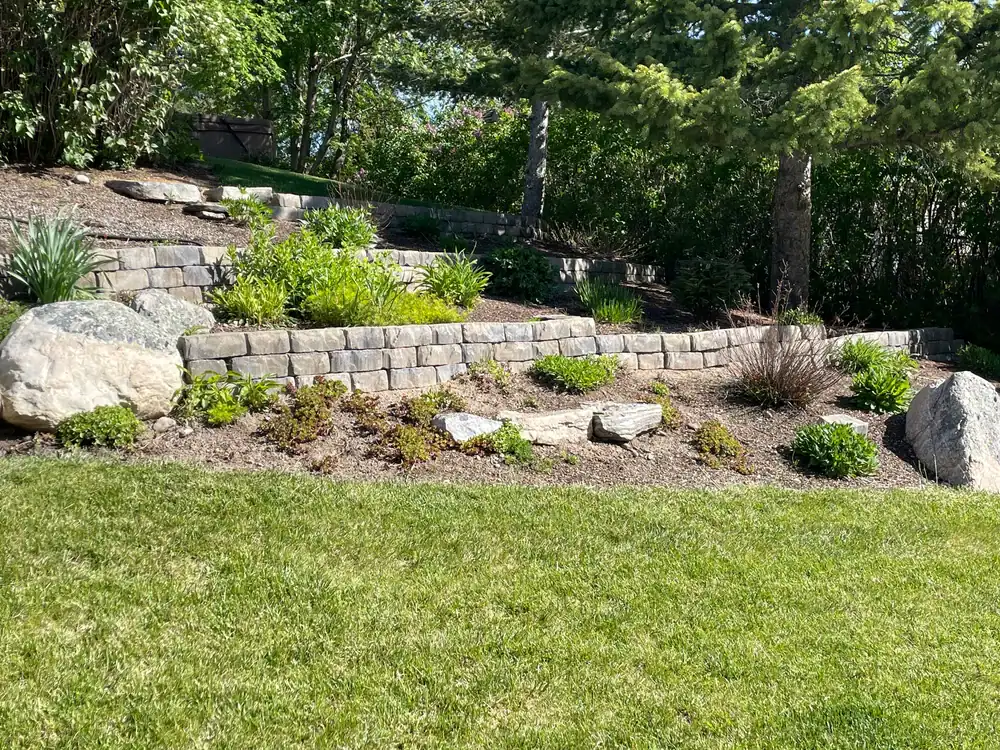
Retaining walls do more than hold back soil. They create level terraces on sloped properties, turning wasted hillside into usable patio space or garden beds. They prevent erosion that washes away topsoil and mulch every time it rains. They can incorporate seating, planters, or lighting to serve multiple functions simultaneously.
Walkways and pathways guide traffic flow while protecting your lawn from worn patches. They stay clean and dry in all weather, which matters during Long Island’s muddy spring months and snowy winters. Well-designed walkways also improve accessibility for family members or guests with mobility limitations—smooth, level surfaces beat navigating uneven grass or steps.
Sloped yards waste potential. That steep section where you can’t safely mow becomes a level terrace where you can install a patio, plant a garden, or create an outdoor kitchen. Suddenly you have room for furniture, a fire pit, or a play area for kids. Retaining walls make this transformation possible.
The engineering matters as much as the aesthetics. Walls holding back significant amounts of soil need proper drainage systems behind them, or water pressure will push them over within a few years. Geogrid reinforcement, landscape fabric, and drainage pipes aren’t visible in the finished product, but they determine whether your wall lasts five years or fifty.
Material selection depends on the wall’s height, location, and your aesthetic preferences. Segmental retaining wall blocks offer design flexibility and come in colors and textures that complement any architectural style. Natural stone provides organic beauty but requires skilled installation. Poured concrete works for taller walls requiring maximum strength. Each material has appropriate applications—matching the right material to your specific situation prevents problems down the road.
Terracing creates multiple level areas on steep properties. Instead of one tall retaining wall, you build several shorter walls creating a stepped effect. This approach looks more natural, provides better drainage, and allows you to create distinct outdoor rooms at different elevations. The upper terrace might hold a fire pit and seating. The middle level could be a dining patio. The lower area works as a garden or play space.
Integration with the surrounding landscape makes retaining walls feel intentional rather than added as an afterthought. Planting pockets built into the wall soften hard edges. Coordinating wall materials with existing hardscape—matching paver colors or stone textures—creates visual continuity. Lighting incorporated into wall caps or at the base extends usability into evening hours while highlighting the wall’s design.
Patios function as outdoor rooms, expanding your living space beyond four walls. They create defined areas for specific activities—dining, lounging, entertaining, or simply enjoying morning coffee. The key is designing them with the same intentionality you’d apply to an interior room, considering traffic flow, furniture placement, and how you’ll actually use the space.
Size matters more than most homeowners initially realize. A patio needs to accommodate furniture plus circulation space around it. Cramming a dining table and chairs onto a too-small patio creates an awkward, unusable space. Planning for the furniture you want, plus thirty inches of clearance on all sides for pulling out chairs and walking around, prevents this common mistake.
Material choices affect both aesthetics and functionality. Pavers offer design flexibility with countless colors, shapes, and patterns available. They’re also repairable—if one cracks, you replace that single paver rather than tearing out an entire section. Natural stone like bluestone provides timeless elegance and handles Long Island’s freeze-thaw cycles better than many alternatives. Stamped concrete offers the look of stone or brick at lower cost, though it requires more maintenance to prevent cracking.
Permeable paving systems address drainage while creating functional surfaces. These allow water to filter through the patio surface rather than running off, reducing puddles and helping recharge groundwater. They’re particularly useful in areas with heavy spring rains or properties where traditional drainage is challenging. The technology has improved significantly—modern permeable pavers look identical to standard pavers while providing superior drainage.
Outdoor kitchens transform patios into true entertaining spaces. Built-in grills, countertops, storage, and sometimes sinks or refrigerators create self-contained cooking areas. This keeps hosts engaged with guests rather than running back and forth to the indoor kitchen. The investment pays off in both increased property value and improved quality of life—outdoor kitchens can offer returns up to seventy to eighty percent of their cost.
Fire features extend patio season into cooler months. Fire pits create gathering spots that work from early spring through late fall. They provide warmth, ambiance, and a focal point for conversation. Built-in seating around the fire pit eliminates the need for separate furniture in that area. Wood-burning options offer traditional appeal and crackling sounds. Gas fire features provide convenience and cleaner burning with instant on-off control.
Your Long Island property faces challenges that demand thoughtful solutions. Coastal weather, freeze-thaw cycles, drainage issues, and sloped terrain all impact how you can use your outdoor space. The right hardscaping elements solve these problems while creating functional areas you’ll use year-round.
Quality matters more than speed. Installations done correctly—with proper base preparation, appropriate materials for the local climate, and attention to drainage—last decades with minimal maintenance. Shortcuts save money initially but cost far more in repairs and replacements down the road.
The best hardscape designs balance function with aesthetics. They solve practical problems like erosion and drainage while creating beautiful outdoor rooms that increase your property’s value and your enjoyment of it. Whether you’re dealing with a slope that limits usability, poor drainage that creates standing water, or simply want to expand your living space outdoors, hardscaping offers solutions that work specifically for Nassau County’s unique conditions.
When you’re ready to transform your outdoor space with hardscaping that’s built to last, we bring eighteen years of experience and comprehensive masonry expertise to every project across Long Island.
Article details:
Share:
Continue learning: