Choosing paver stones for Long Island means understanding which materials actually survive freeze-thaw cycles, coastal salt, and shifting soil—not just which ones look good in a showroom.
Share:
You’ve seen the patios in your neighborhood—the ones that looked incredible two summers ago and now have pavers shifting, cracking, or sinking into the ground. That’s not a material problem. That’s a mismatch between what Long Island’s climate demands and what someone thought would work.
Between freeze-thaw cycles that hit 30 to 40 times each winter, coastal salt that eats away at surfaces, and soil that shifts more than most regions, Nassau County requires paver stones that can actually handle the abuse. Not every material can. This guide breaks down which options survive here, which applications need specific materials, and what to look for when you’re comparing pavers for your outdoor project.
The paver you choose needs to handle more than foot traffic. Long Island throws freeze-thaw cycles, salt exposure from both coastal air and winter de-icing, heavy rainfall, and ground movement at your outdoor surfaces. Materials that work perfectly in Arizona or Florida fail here within a few seasons.
Paver stones fall into three main categories: concrete, natural stone, and porcelain. Each handles Long Island’s conditions differently. Concrete pavers offer versatility and affordability when they meet proper freeze-thaw standards. Natural stone brings durability and timeless appeal but varies widely in performance depending on density and porosity. Porcelain pavers provide nearly waterproof surfaces with exceptional freeze-thaw resistance but come at a higher price point.
The key isn’t finding the “best” material overall. It’s matching the right material to your specific application and understanding which properties actually matter in Nassau County’s climate.
Large-format concrete pavers, particularly 24×24 options, have become increasingly popular for Long Island patios and pool decks. These oversized pavers create clean, modern looks with fewer joint lines and faster installation compared to smaller formats.
The appeal of 24 x 24 pavers goes beyond aesthetics. Fewer joints mean less opportunity for water infiltration and weed growth. The larger surface area provides stability when installed over a properly prepared base. For contemporary outdoor designs, these pavers deliver the sleek appearance homeowners want without sacrificing the durability Long Island demands.
But size alone doesn’t guarantee performance. The concrete must meet ASTM C1645-16 standards for freeze-thaw resistance. Look for pavers with low water absorption rates and high compressive strength. Quality 24×24 concrete pavers should have a dense composition that resists moisture penetration—critical when water freezes and expands inside porous materials.
Installation requires attention to base preparation. The larger format means each paver covers more area, so any unevenness in the base shows up immediately. Proper excavation depth, compacted gravel base, and level bedding sand become even more important. When done correctly, large-format concrete pavers provide decades of service while maintaining their appearance through Long Island’s seasonal extremes.
These pavers work exceptionally well for patios, walkways, and pool surrounds where you want a contemporary aesthetic. They pair effectively with gravel, turf, or decorative stone accents to create unique landscape designs. The neutral gray tones common in concrete pavers complement most architectural styles, though colored options exist for homeowners seeking warmer or more distinctive looks.
Maintenance stays straightforward. Occasional cleaning with water and mild detergent keeps the surface looking fresh. Sealing every few years protects against stains and enhances color, though modern concrete pavers are less porous than older versions and don’t always require sealing depending on the specific product.
Limestone brings natural elegance to outdoor spaces with its soft, earthy tones ranging from cream and beige to light gray. As a sedimentary stone formed over millions of years, limestone offers a timeless aesthetic that complements both traditional and contemporary Long Island homes.
The material’s appeal extends beyond appearance. Limestone’s natural texture provides slip resistance, making it suitable for pool decks and high-traffic areas. The stone stays relatively cool underfoot even in direct sunlight, a significant advantage for barefoot areas around pools or patios. Its neutral color palette works with virtually any landscape design, from formal gardens to casual outdoor living spaces.
However, limestone requires understanding before installation in Long Island’s climate. The stone is more porous than granite or bluestone, which means water absorption becomes a consideration. In freeze-thaw conditions, absorbed water expands when frozen, potentially causing cracks or surface flaking. This doesn’t disqualify limestone for Nassau County projects, but it does mean proper sealing is essential.
High-density limestone pavers perform significantly better than softer, more porous varieties. When selecting limestone for Long Island applications, density matters more than appearance. Denser limestone absorbs less water, reducing freeze-thaw damage risk. Professional suppliers can provide absorption rate data—look for lower percentages.
Sealing limestone pavers protects against water infiltration while enhancing the stone’s natural color. Quality sealers designed for natural stone create a barrier that prevents moisture from penetrating while still allowing vapor to escape. This breathability is critical because trapped moisture inside the stone can cause damage from within during freeze cycles.
Limestone works beautifully for patios, walkways, and garden pathways where its organic appearance blends with landscaping. For pool decks, the stone’s heat-reflective properties and slip resistance make it functional as well as attractive. The material is less ideal for driveways with heavy vehicle traffic, where denser stones like granite provide better long-term performance.
Maintenance involves routine cleaning and periodic resealing every three to five years depending on exposure and traffic. The stone develops character over time, with natural weathering adding to its appeal rather than detracting from it. For homeowners who appreciate natural materials and are willing to invest in proper installation and maintenance, limestone paving delivers lasting beauty that actually improves with age.
Not every paver works for every application. A material that excels around a pool might fail on a driveway. Understanding which paver stones match specific uses prevents costly mistakes and ensures your investment performs as expected.
Pools demand slip resistance and heat management. Driveways need exceptional compressive strength to handle vehicle weight without cracking. Patios balance aesthetics with durability for foot traffic and furniture. Walkways require stability and weather resistance. Each application creates different stress on the pavers, which means material selection needs to account for actual use, not just appearance.
The installation approach also varies by application. Base depth, drainage requirements, and edge restraint methods all change depending on whether you’re building a pool deck or a driveway.
Pool areas create unique challenges for paver stones. Constant water exposure, chlorine or salt water splashing, bare feet, and the need for slip resistance all factor into material selection. Add Long Island’s freeze-thaw cycles and coastal humidity, and the requirements become even more specific.
Travertine ranks among the most popular pool paver choices for good reason. This limestone variety stays cool even in direct sunlight, making it comfortable for barefoot use. The stone’s natural texture provides excellent slip resistance when wet. Travertine’s porous surface actually works in your favor around pools—it absorbs water quickly, reducing standing puddles. However, this porosity requires proper sealing to protect against freeze-thaw damage in Long Island’s climate.
Bluestone offers another excellent pool deck option. This dense sandstone provides exceptional durability and natural slip resistance. Sourced from the Catskills and northeastern Pennsylvania, bluestone is already proven in northeastern climates similar to Long Island. Its blue-gray coloring complements water features naturally. The stone’s density means lower water absorption, which translates to better freeze-thaw performance without extensive sealing.
Porcelain pavers have gained popularity for pool decks in recent years. With water absorption rates below 0.5%, porcelain is virtually waterproof. The material resists chlorine and salt water without deterioration. Textured finishes provide slip resistance while the non-porous surface prevents algae growth. Porcelain’s main drawback is cost—it’s typically more expensive than natural stone or concrete options.
Concrete pavers designed specifically for pool applications work well when they meet proper standards. Look for textured finishes rather than smooth surfaces. The concrete should be rated for freeze-thaw resistance and low water absorption. Modern concrete pavers can mimic the appearance of natural stone at a fraction of the cost, making them attractive for budget-conscious projects.
Installation around pools requires careful attention to drainage. Pool decks need a slight slope away from the pool and away from your home to direct water appropriately. The base preparation must account for the constant moisture exposure—proper compaction and drainage layers prevent the base from becoming saturated and losing stability.
Edge details matter around pools. The transition from pool coping to deck pavers needs proper planning to ensure water drains correctly and the aesthetic flows seamlessly. Many homeowners choose matching or complementary materials for coping and deck pavers to create visual continuity.
Safety considerations go beyond slip resistance. Avoid dark-colored pavers that absorb heat and become uncomfortably hot. Ensure the surface remains relatively level to prevent tripping hazards, especially important around pools where running and horseplay are common. Rounded edges on pavers reduce injury risk compared to sharp corners.
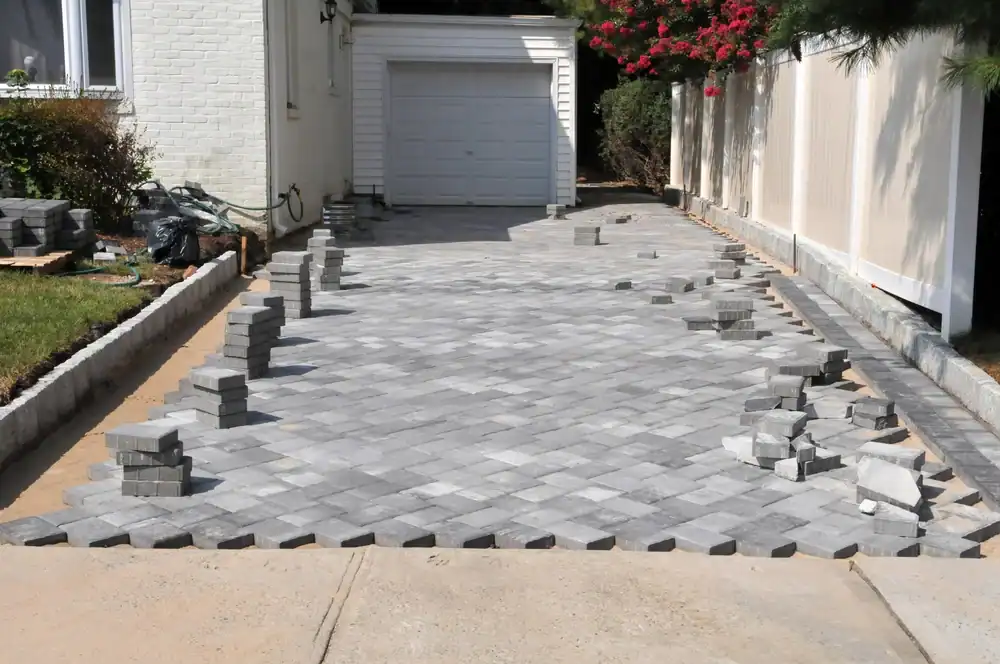
Driveways demand more from paver stones than any other residential application. Vehicle weight, constant traffic, oil and fluid exposure, freeze-thaw cycling, and de-icing salt all test material limits. Choosing pavers for driveways means prioritizing strength and stability over aesthetics, though modern options deliver both.
Interlocking concrete pavers specifically designed for driveways provide the best performance-to-cost ratio for most Long Island homes. These pavers feature higher compressive strength than standard patio pavers, typically rated at 8,000 PSI or higher. The interlocking design distributes weight across multiple pavers rather than concentrating stress on individual units. This flexibility actually works better than solid concrete in freeze-thaw conditions—individual pavers can move slightly with ground shifts without cracking.
Natural stone options for driveways center on granite and bluestone. Granite’s exceptional hardness makes it nearly indestructible under vehicle traffic. The stone won’t crack under load and resists oil stains better than more porous materials. Granite pavers cost significantly more than concrete but can last generations with minimal maintenance. Bluestone offers similar durability at a somewhat lower price point, though it’s still a premium option compared to concrete.
Base preparation becomes critical for driveway applications. Long Island driveways need a minimum of 12 inches of compacted base material—significantly more than the 6-8 inches required for walkways or patios. This deep base distributes vehicle weight over a larger area and prevents the pavers from sinking or shifting. Shortcuts on base depth guarantee problems within a few years, especially given Nassau County’s sandy soil conditions.
Edge restraints for driveways must be heavy-duty. The weight and movement of vehicles create outward pressure that can push pavers apart over time. Professional installations use commercial-grade edge restraints anchored with spikes driven deep into the compacted base. These restraints keep the entire paver system locked together, maintaining the interlock that provides strength.
Drainage planning for driveways requires careful attention. The surface needs proper slope to move water away from your home and prevent pooling. In Long Island’s freeze-thaw climate, standing water on a driveway leads to ice formation and accelerated deterioration. Many professional installations include drainage channels or permeable paver sections to manage heavy rainfall.
Pattern selection affects driveway performance. Herringbone patterns provide the strongest interlock for vehicle traffic, distributing weight more effectively than running bond or basketweave patterns. The 45-degree or 90-degree herringbone layout prevents pavers from shifting under the rolling motion of tires.
Maintenance for driveway pavers includes regular cleaning to remove oil stains and debris. Reapplying joint sand every few years keeps pavers locked together. Sealing protects against oil penetration and makes cleaning easier, though it’s not always necessary for the pavers themselves—it’s more about maintaining appearance and making maintenance simpler.
Color considerations for driveways lean toward practical choices. Lighter colors show tire marks and oil stains more readily, while very dark colors can become uncomfortably hot in summer. Mid-tone grays and earth tones provide the best balance of appearance and practicality for most Long Island homes.
Choosing paver stones for Nassau County comes down to matching materials to your specific application while accounting for Long Island’s demanding climate. Freeze-thaw cycles, coastal exposure, and soil conditions eliminate options that work perfectly in other regions. The pavers that succeed here share common traits: low water absorption, proper density, and installation that respects the climate’s requirements.
Large-format options like 24×24 concrete pavers deliver modern aesthetics with practical benefits. Natural stone choices like limestone bring timeless appeal when properly sealed and maintained. Pool applications demand slip resistance and heat management. Driveways require exceptional strength and proper base preparation. Understanding these distinctions prevents expensive mistakes and ensures your investment performs for decades.
The installation matters as much as the material. Proper base depth, mechanical compaction, drainage planning, and edge restraints separate successful projects from ones that fail within a few seasons. For homeowners in Nassau County planning outdoor paver projects, working with contractors who understand Long Island’s specific challenges makes the difference between a surface that lasts and one that requires costly repairs. We bring that local expertise to every hardscaping project, ensuring your paver installation is built to handle everything Long Island’s climate can deliver.
Article details:
Share:
Continue learning: