


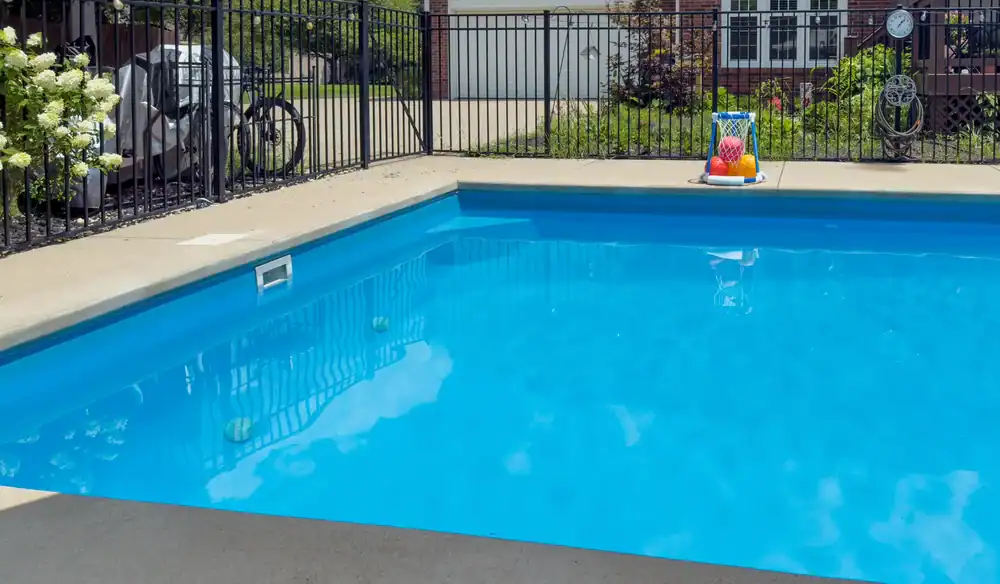
You’re not getting a cookie-cutter pool dropped into your yard. Every property in Baiting Hollow has its own quirks—soil composition, drainage patterns, elevation changes. The pool design accounts for all of it.
The goal is a backyard you’ll actually use. That means thinking through sight lines from your house, how the sun moves across your property, where kids will run, and how the whole space flows. Not just where the pool fits, but how everything around it works together.
You end up with a complete backyard poolscape in Suffolk County that makes sense for how you live. The pool, the patio, the retaining walls if you need them—it all gets planned as one project. That’s how you avoid the patchwork look that happens when three different contractors show up at different times with different ideas.
We’ve been working in Baiting Hollow and throughout Suffolk County long enough to know what works here and what doesn’t. The soil conditions on the North Fork aren’t the same as the South Shore. The permit process in Riverhead Town has its own timeline. These details matter when you’re planning a project.
Our crews handle the masonry and the pool installation. You’re not coordinating between a pool company and a separate patio contractor. One team manages the excavation, the pool shell, the coping, the concrete surrounds, and any retaining walls your property needs.
That approach keeps the project moving and keeps the design consistent. When the same people are responsible for the entire job, things line up the way they should.
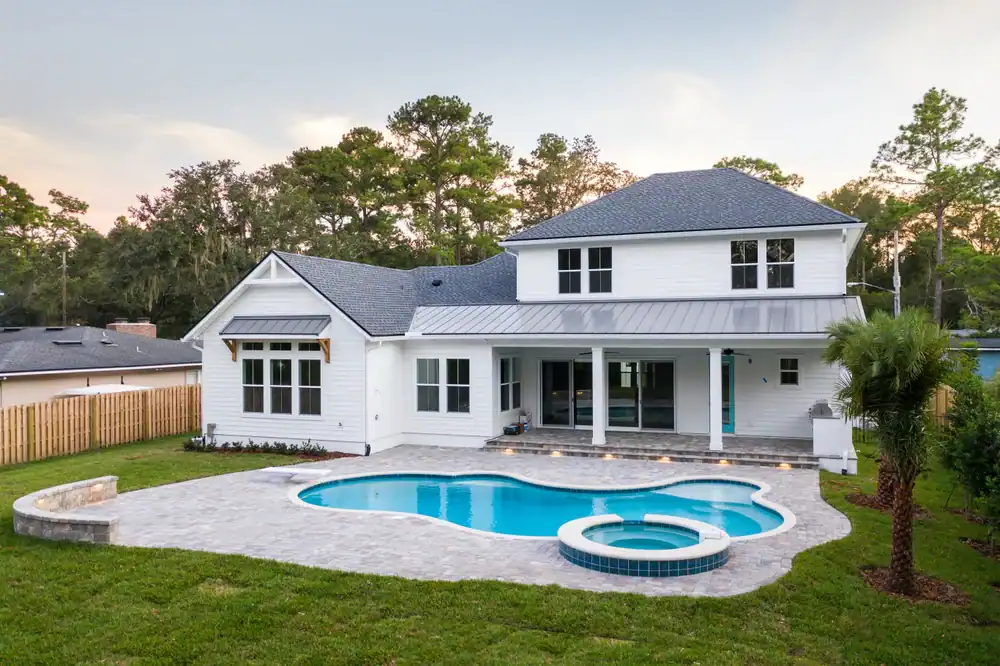
First, we look at your property. Not just measurements, but drainage, soil type, setback requirements, and how the pool will sit in relation to everything else. This is where most of the important decisions get made.
Then comes the permit process through Riverhead Town. Timeline varies—sometimes a few weeks, sometimes longer depending on their workload. We handle the submissions and engineering requirements. You don’t need to chase down the building department.
Once permits clear, excavation starts. For Baiting Hollow properties, we’re often dealing with sandy soil and decent drainage, but every site is different. The pool shell goes in, then we build out the surrounding masonry—custom pool coping and tile in Suffolk County that matches your design, concrete pool surrounds, any grading work or retaining walls your yard needs.
The whole process typically runs 8 to 12 weeks from permit to completion, weather permitting. You’ll know the timeline before we start, and we’ll tell you if something changes.
Ready to get started?
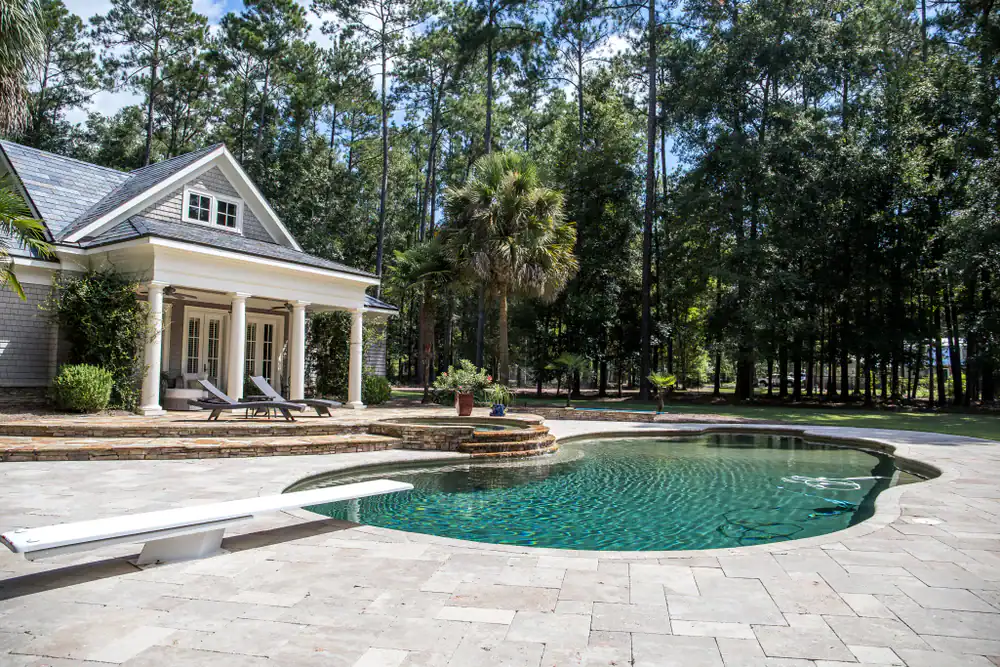
You’re getting the pool, obviously. But also the pool patio masonry in Suffolk County—the deck area where people will actually spend most of their time. That includes the coping around the pool edge, the patio surface material, and any steps or transitions between levels.
If your yard has elevation changes, retaining walls and grading get handled as part of the project. Same with any drainage concerns. Properties in Baiting Hollow generally drain well, but we’re not leaving that to chance. Everything gets graded properly so water moves away from the pool and your house.
The masonry work extends as far as your project needs—outdoor kitchens, fire pits, sitting walls, whatever makes the space functional for you. It’s all custom work, built to handle Long Island winters and salt air if you’re close to the Sound.
This is a complete backyard poolscape in Nassau County and Suffolk County. Not just a hole with water in it.
Most in-ground pool installations in Suffolk County run between $45,000 and $85,000, with the average landing around $65,000. But that number moves based on size, depth, materials, and how much masonry work your property needs.
A basic pool with standard coping and a simple patio costs less than a custom design with premium tile, extensive concrete surrounds, and retaining walls. Soil conditions matter too—if we hit ledge rock during excavation, that adds time and cost. Baiting Hollow properties usually have decent soil, but you never know until you dig.
The permit fees, engineering, and any required surveys add to the total. So does your timeline—if you want to be swimming by July, that’s a tighter schedule than planning for next season. Get a detailed estimate that breaks down what you’re actually paying for. That’s the only way to compare quotes that mean anything.
You need a building permit from Riverhead Town, which requires engineered plans, a site survey, and a soil test in most cases. The town wants to see setback distances from property lines, septic systems, and wells. They also review drainage plans to make sure runoff is handled properly.
If you’re in a flood zone or near wetlands, expect additional review from the planning department. Some properties need a variance if the pool doesn’t meet standard setback requirements. That adds weeks to the approval process.
The permit timeline in Riverhead typically runs four to eight weeks, but it varies based on how busy they are and whether your plans need revisions. We handle the submissions and coordinate with the building department. You’ll need to be available to sign documents, but you’re not making trips to Town Hall or tracking down engineers. That’s what you’re hiring us for.
Figure on 8 to 12 weeks from the day we break ground to the day you’re swimming. That assumes normal weather and no surprises during excavation. Permit approval time is separate—that happens before we start digging.
The excavation and pool shell installation take about two weeks. Then the plumbing, electrical, and masonry work happen over the next several weeks. Custom pool coping and tile in Suffolk County, concrete work, any retaining walls or grading—all of that is happening while the pool is curing.
Weather delays are real. We can’t pour concrete in freezing temperatures, and heavy rain stops excavation work. If you’re starting a project in April, you’re likely swimming by July. Start in June, and you’re looking at late August or September. The construction season on Long Island is shorter than people think. Winter planning for spring installation is the way to hit summer deadlines.
Soil conditions on the North Fork are generally better for pool installation than the South Shore. You’ve got sandier, better-draining soil and less groundwater to deal with. That usually means simpler excavation and fewer dewatering issues.
But you’re also dealing with wind exposure, especially if your property is open or near the water. That affects heating costs and evaporation rates. A pool in Baiting Hollow loses water faster than one tucked into a sheltered yard in Smithtown. Plan for a quality pool cover and realistic heating expectations.
Permit timelines through Riverhead Town run at their own pace. They’re not slower than other townships, but they’re not faster either. Local contractors who know the process and have relationships with the building department can move things along better than someone coming in from outside the area. That’s just how it works.
Gunite gives you complete design flexibility. Any shape, any depth, custom benches, beach entries—whatever you want. The pool is built on-site, so it’s truly custom. Gunite also holds up well to Long Island’s freeze-thaw cycles if it’s built correctly.
Fiberglass pools are pre-manufactured shells that get craned into your excavated hole. Installation is faster—sometimes just a few days for the pool itself. Maintenance is lower because the smooth surface doesn’t harbor algae like plaster can. And you’re not replacing a liner every seven years like you would with vinyl.
The tradeoff is size and shape limitations. You’re picking from available molds, not designing from scratch. For many Baiting Hollow properties with standard backyards, fiberglass works great. If you’ve got a unique space or specific design requirements, gunite makes more sense. Both are solid options. It comes down to what matters more to you—customization or speed and lower maintenance.
No, and you shouldn’t want one. When the pool installation company in Suffolk County also handles the masonry, everything gets coordinated properly. The elevations match, the drainage works together, and the design stays consistent.
Bringing in a separate patio contractor after the pool is installed means they’re working around someone else’s decisions. The coping might not integrate cleanly with the deck. The grading might not account for the patio drainage. You end up with a project that looks like two different jobs because that’s exactly what it is.
We handle pool patio masonry in Suffolk County as part of the complete project. The coping, the concrete surrounds, retaining walls if you need them, any outdoor kitchen or fire pit areas—it’s all planned and built by the same crew. That’s how you get a finished backyard that looks intentional instead of pieced together. One contract, one timeline, one crew responsible for the whole thing.
Other Services we provide in Baiting Hollow