
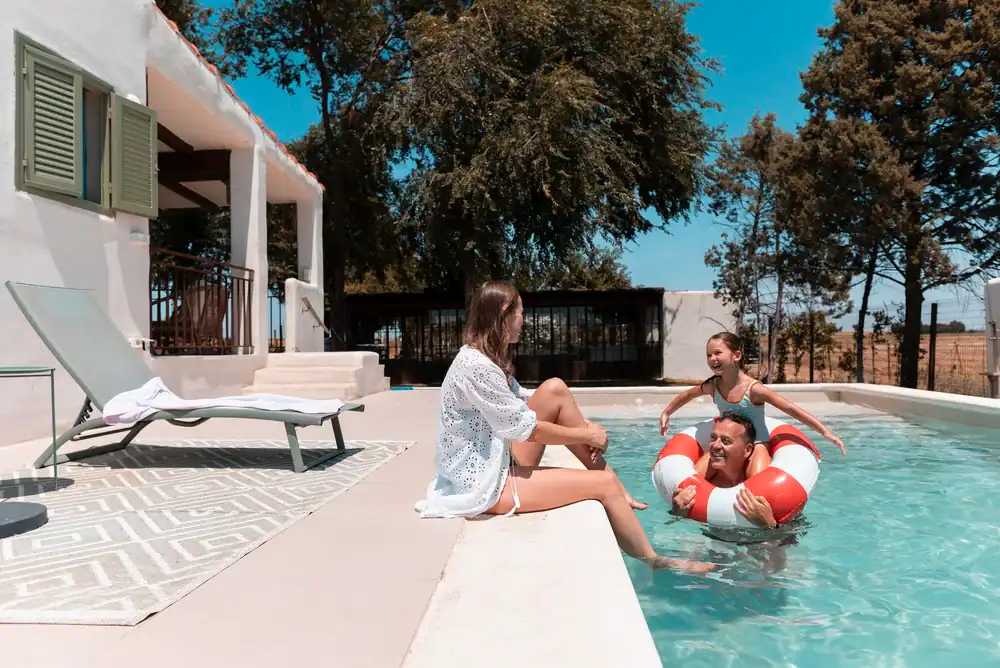

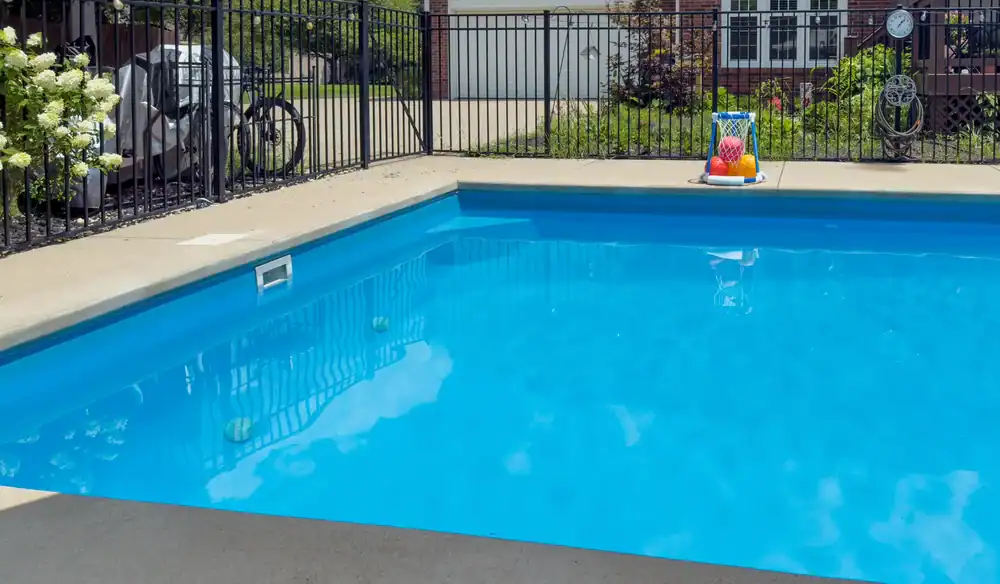
You’re not just adding a pool. You’re creating a space where your family gathers on summer evenings, where your kids learn to swim, where you finally have a reason to stay home on weekends.
But here’s what most in-ground pool builders in Suffolk County won’t tell you upfront: Long Island construction is different. The soil shifts. Clay doesn’t drain. Setback requirements are strict. And if your contractor doesn’t know how to handle Nassau County or Suffolk County permits, your project stalls before excavation even starts.
When your pool is built correctly from day one, you get 8-15% added property value according to the National Association of Realtors. You get a backyard that works through harsh winters and hot summers. You get custom pool coping and tile that looks sharp for years, not seasons. And you get to enjoy it instead of fixing it.
We’ve been handling in-ground pool installation in Massapequa Park, NY and across Nassau County and Suffolk County for years. We’re not general contractors trying to figure out pools. We specialize in complete backyard poolscapes—from excavation and pool structure to custom pool patio masonry, concrete pool surrounds, and pool retaining walls.
We know which villages require variance approvals. We know where water tables sit in different neighborhoods. We know how to grade your yard so water flows away from your foundation, not toward it. And we handle every permit, inspection, and approval so you don’t have to chase down town offices.
You’re hiring local expertise that understands Massapequa Park specifically—not a crew learning on your property.
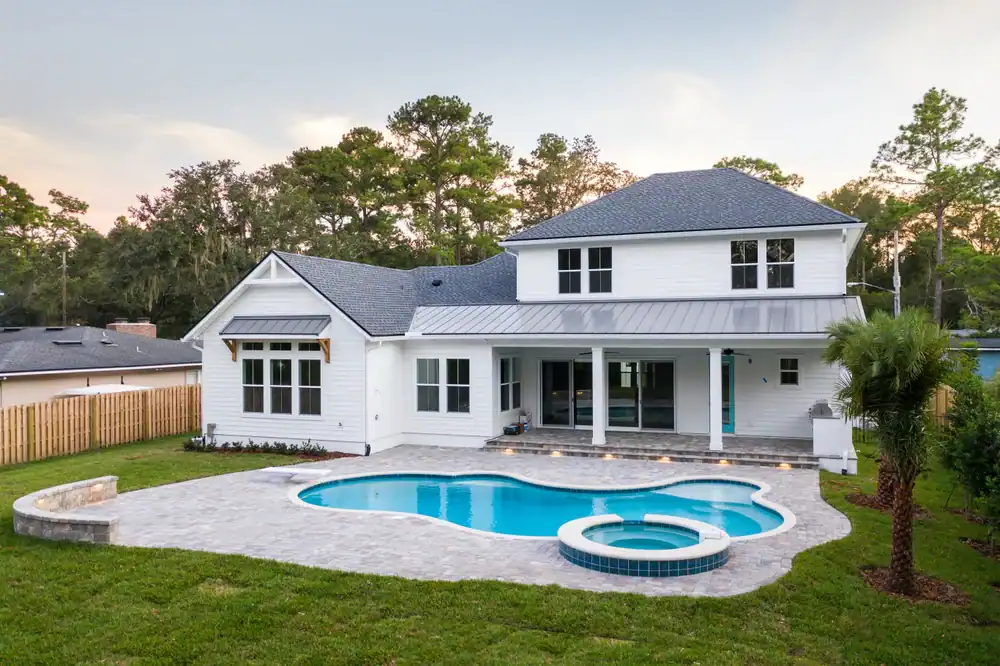
First, we walk your property and talk through what you actually want—not what we want to sell you. We measure setbacks, check access for equipment, and identify any drainage or grading issues before you commit to anything.
Then we handle permits. Nassau County and Suffolk County each have different requirements, and we manage all of it. You don’t call the town. You don’t wait on hold. We do that.
Once permits clear, excavation starts. Our crews know how to dig in sandy soil that shifts and clay that holds water. We install proper drainage systems and grade everything so your pool—and your yard—work correctly long-term.
After the pool structure is in, we move to masonry. Custom pool coping and tile. Concrete pool surrounds. Retaining walls if your yard needs them. This is where your backyard goes from construction site to the space you actually wanted. Most custom in-ground pools in Suffolk County take six to eight weeks from start to finish if weather cooperates and permits don’t stall.
Ready to get started?
You get full in-ground pool installation—excavation, structure, plumbing, and equipment. But you also get the masonry work that most pool companies subcontract out. We handle pool patio masonry in Suffolk County and Nassau County directly, which means better coordination and no waiting on someone else’s schedule.
That includes custom pool coping and tile. Concrete pool surrounds that tie your pool into the rest of your yard. Pool retaining walls and grading if your property has slopes or drainage challenges. And we use porcelain and natural stone materials that hold up to Long Island winters without cracking or fading.
About 70% of pools on Long Island are sand bottom construction, which works well here but requires crews who know how to compact and stabilize properly. We also design around your property’s specific conditions—water table depth, soil type, and yard access. If your driveway is tight or your backyard has limited access, we plan equipment routes before we start digging.
The average cost for in-ground pool installation in Nassau County and Suffolk County runs between $39,000 and $70,000 depending on size, materials, and site complexity. You’ll know your number before we break ground.
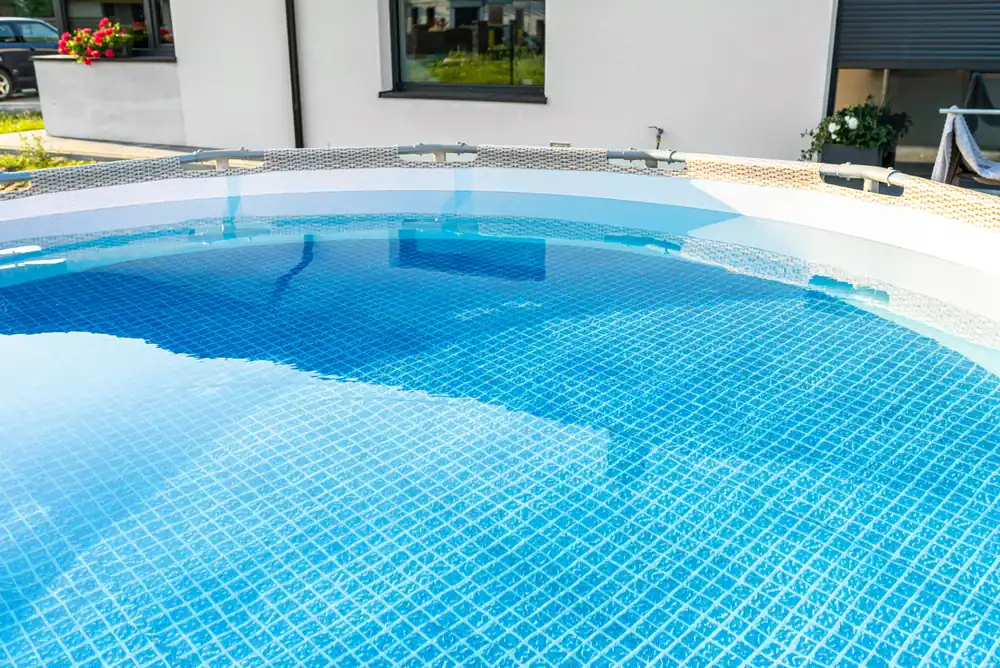
Most custom in-ground pools in Suffolk County take six to eight weeks from excavation to completion, assuming no permit delays or weather issues. That timeline includes digging, setting the pool structure, installing plumbing and equipment, and finishing all masonry work like coping, tile, and concrete surrounds.
The bigger variable is permitting. Nassau County and Suffolk County each have different approval processes, and some villages within those counties add their own requirements. If your property needs a variance—say, because your pool sits closer to a property line than standard setbacks allow—that can add weeks. We handle all of that for you, but it’s worth starting the process in winter if you want to swim by summer.
Weather also matters. If we hit a stretch of heavy rain during excavation or concrete work, the schedule shifts. But once we start, you’ll get regular updates so you know exactly where things stand.
Long Island sits on a mix of sandy soil and clay, and both create challenges. Sandy soil shifts, which means your pool structure needs proper compaction and support. Clay doesn’t drain, so without a real drainage system, you’ll deal with water pooling around your pool or even lifting it out of the ground during wet seasons.
Then there’s the weather. Cold winters stress pool equipment and materials. Hot, humid summers mean your pool gets heavy use, and if the construction wasn’t done right, you’ll see cracks, leaks, or equipment failures within the first few years. About 78% of pools on Long Island need major repairs in their first five years, and most of that comes down to poor installation.
Setback requirements are also strict here. Nassau County and Suffolk County regulate how close your pool can sit to property lines, and every village has its own zoning rules on top of that. If your contractor doesn’t know those regulations, your project gets delayed or rejected. We’ve been working in Massapequa Park and across both counties long enough to know what’s required before we submit plans.
Yes. Every in-ground pool in Nassau County and Suffolk County requires permits, and Massapequa Park has specific zoning requirements you’ll need to meet. That includes setback distances from property lines, fencing regulations, and sometimes drainage or grading approvals depending on your lot.
We handle the entire permit process for you. That means pulling the right applications, submitting plans, coordinating inspections, and making sure everything gets approved before we dig. You don’t need to call the town or figure out which department handles what.
One thing to know: if your property has any zoning complications—like a smaller lot, a pool that sits close to a side yard, or drainage concerns—you may need a variance. That adds time to the approval process, but it’s not uncommon. We’ll tell you upfront if your project needs one and what that means for your timeline.
Porcelain and natural stone are your best options. Porcelain is extremely durable, resists freeze-thaw damage, and holds up to Long Island’s temperature swings without cracking. It also requires almost no maintenance, which matters when you’re dealing with salt, chlorine, and constant sun exposure.
Natural stone—like travertine or slate—is making a comeback because it looks high-end and stays cooler underfoot during summer. The tradeoff is that it needs sealing every few years to prevent water absorption and staining. But if you want that organic, luxury look, it’s worth it.
For 2026, vertical tile placement is trending over traditional horizontal patterns. It’s a small design shift, but it completely changes how the pool’s perimeter looks—more modern, less predictable. We’re also seeing more textured finishes instead of glossy tiles, which helps with slip resistance and gives the pool a more natural feel.
On average, you’re looking at $39,000 to $70,000 depending on size, materials, and site conditions. A basic pool with standard finishes and minimal masonry work sits closer to $39,000. A larger pool with custom coping, natural stone surrounds, retaining walls, and high-end tile pushes toward $70,000 or more.
Site access also affects cost. If your backyard has tight access and we need smaller equipment or hand-digging in certain areas, that adds labor. Same with grading—if your yard has slopes or drainage issues, we’ll need to do more prep work before the pool goes in.
The best way to get an accurate number is to have us walk your property. We’ll measure everything, talk through what you want, and give you a clear estimate that accounts for your specific lot and any potential complications. No surprises once we start digging.
We handle all of it—pool patio masonry, custom pool coping and tile, concrete pool surrounds, and pool retaining walls. You’re not coordinating multiple contractors or waiting on someone else’s schedule to finish your backyard.
That matters because most pool companies subcontract masonry work, which means delays, miscommunication, and sometimes lower-quality results. When we do everything in-house, your project moves faster and the finished product looks cohesive—not like different crews worked on different parts.
We also design the masonry to match your home and yard. If you want a modern look with clean lines and porcelain tile, we do that. If you prefer natural stone with a more organic feel, we do that too. And if your yard needs retaining walls or grading to manage slopes or drainage, we build those as part of the project so everything works together.
Other Services we provide in Massapequa Park