
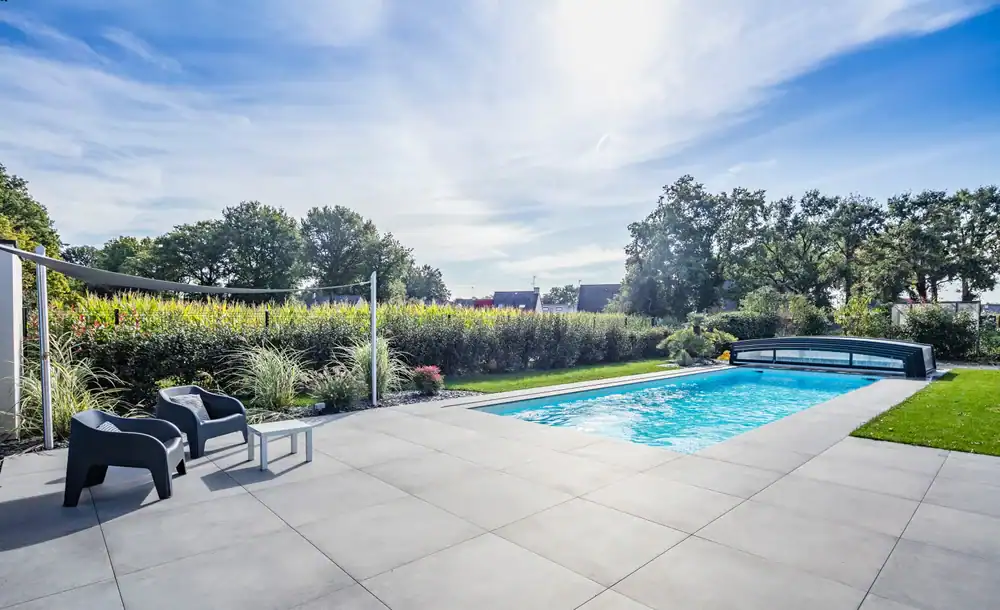

No more slippery surfaces after every splash. No more standing water that won’t drain. No more cracked, uneven decking that makes your backyard look tired.
You get a pool deck that handles Long Island’s clay soil and weather extremes. One that stays cool under your bare feet even on 90-degree days. Where water flows away instead of pooling up, and where every paver stays level and secure.
Your family can actually use the pool area safely. Your guests notice the difference immediately. And you stop worrying about expensive repairs down the road.
We understand what works in Massapequa Park, NY. We’ve seen what happens when contractors ignore the clay soil conditions here – shifting pavers, drainage problems, and expensive do-overs within a few years.
That’s why we take extra time with soil preparation and drainage planning. We know the local permit requirements and building codes that trip up inexperienced installers.
Our team has been serving Long Island homeowners for years, handling everything from simple paver repairs to complete pool deck renovations. We’re properly licensed and insured, and we use proven installation methods that prevent the common problems that plague pool decks in our area.
First, we evaluate your existing pool deck and soil conditions. Massapequa Park’s clay soil requires specific preparation techniques that many contractors skip – we don’t.
We remove damaged materials and properly grade the base with the right slope for drainage. This isn’t just about being level – water needs to flow away from your pool and your home’s foundation.
Then we install your chosen pavers with proper spacing and joint filling. We use polymeric sand that locks everything in place and prevents weed growth. Every step is done to manufacturer specifications because cutting corners leads to callbacks.
The final result is a pool deck that handles moisture changes, stays slip-resistant when wet, and looks exactly like you envisioned. No surprises, no shortcuts, no problems later.
Ready to get started?
You get professional-grade materials designed specifically for pool areas. We work with trusted brands like Cambridge, Techo-Bloc, and Unilock that offer slip-resistant textures and proven durability against pool chemicals.
Your project includes proper base preparation, drainage planning, and coping installation where needed. We handle all the details that matter – from soil compaction to final sealing – so your deck performs correctly from day one.
In Massapequa Park, we pay special attention to drainage because of our local soil conditions and weather patterns. Poor drainage doesn’t just create safety hazards – it can damage your pool structure and home foundation. We install systems that direct water where it belongs, not where it causes problems.
Every installation comes with startup guidance and maintenance recommendations specific to your materials and local conditions. You’ll know exactly how to keep your investment looking and performing its best.
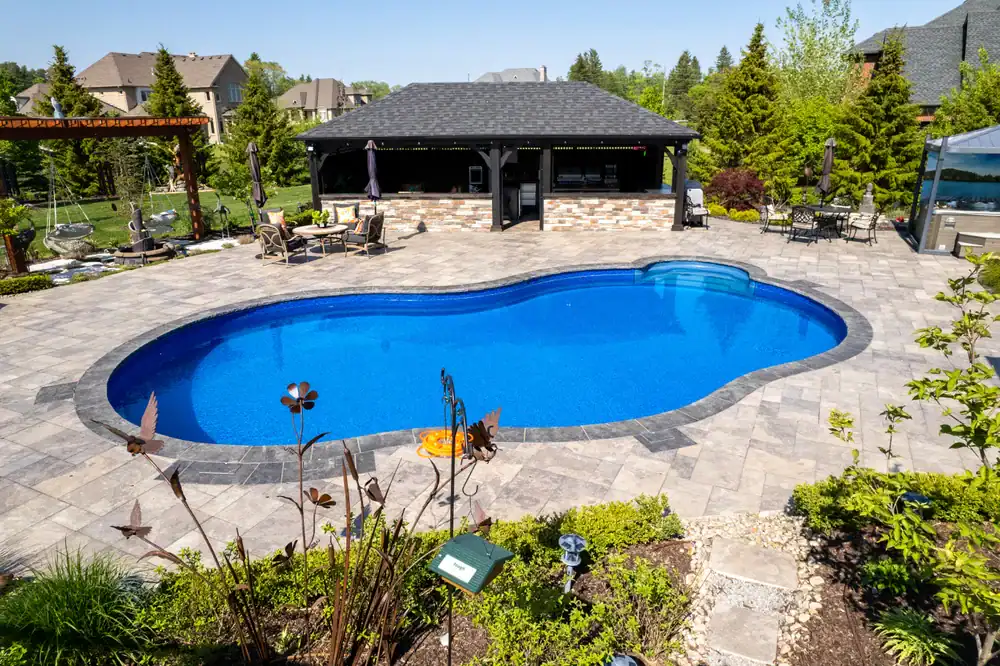
The key is surface texture and material choice. Materials like travertine, textured concrete, and specially finished porcelain have natural or manufactured textures that provide grip even when wet.
Unlike smooth surfaces that become slick with water, these textured pavers create friction that helps prevent slips and falls. The texture also helps water drain away faster instead of sitting on the surface.
We select pavers specifically rated for pool deck applications. These materials are tested for slip resistance and meet safety standards for wet environments. It’s not just about looks – it’s about keeping your family safe around the pool.
Clay soil is tricky because it expands when wet and contracts when dry. This movement can crack pool decks and create drainage problems if not handled properly during installation.
We start with proper soil analysis and base preparation. This includes adding drainage layers and grading the surface with the right slope – typically about 1/4 inch per foot away from the pool. We also install drainage systems where needed to handle water runoff.
The base preparation is critical. We compact everything properly and use materials that won’t shift with soil movement. Many contractors rush this step, but it’s what prevents expensive problems later. Taking extra time here saves you money and headaches down the road.
It depends on what caused the cracking and how extensive the damage is. Individual pavers can often be replaced if the base is still solid and the problem is isolated.
But if the cracking is due to poor drainage, inadequate base preparation, or soil movement, spot repairs won’t solve the underlying issue. You’ll just see more problems pop up in other areas.
We evaluate the entire deck to determine the root cause. Sometimes a section can be repaired, but other times it’s more cost-effective to address the whole area properly. We’ll give you honest recommendations based on what will actually fix the problem long-term, not just make it look better temporarily.
Pool coping is the cap or edging that goes around the pool’s perimeter, right at the water line. It’s specifically designed to handle constant water contact and provide a finished edge for the pool structure.
Coping needs to be slip-resistant but not too rough on bare skin. It also needs to direct water away from the pool shell to prevent damage. Materials like natural stone, specially designed concrete, or porcelain work well for coping applications.
Regular patio pavers make up the deck area around the pool. While they need to be slip-resistant too, they don’t have the same water contact requirements as coping. The key is choosing materials that work well together and complement your overall design while meeting the specific needs of each area.
Most pool deck projects take 5-10 days, depending on size, complexity, and weather conditions. Massapequa Park’s clay soil sometimes requires extra base preparation time, which can add a day or two to the schedule.
Weather plays a big role in timing. We can’t install pavers in freezing conditions or during heavy rain, so spring and summer projects typically move faster than fall installations.
The permit process with the Village of Massapequa Park usually adds 2-3 weeks before we can start work. We handle all the paperwork and coordinate inspections, but the approval timeline is set by the village. Planning ahead helps ensure your project gets completed when you want to use your pool.
It depends on the material you choose. Dark-colored concrete and some synthetic materials can get uncomfortably hot in direct sunlight. But natural stone materials like travertine and limestone stay much cooler.
Travertine is particularly popular for pool decks because it reflects heat rather than absorbing it. Even on 90-degree days, it stays comfortable for bare feet. Light-colored pavers also help keep surface temperatures down.
The installation method matters too. Proper base materials and joint spacing help with heat dissipation. We recommend materials and colors that work well in our Long Island climate, so you can enjoy your pool area even during the hottest summer days without burning your feet.
Other Services we provide in Massapequa Park