

You’re not looking for the cheapest option. You’re looking for something that won’t fail when the next storm rolls through or when winter freeze-thaw cycles start doing their damage.
Living on Barnum Island means your driveway faces conditions most contractors don’t think about. Salt air. Occasional flooding. Drainage that can’t just go anywhere. If it’s not built right from the start, you’re looking at cracks within two years, standing water that threatens your foundation, and a complete redo that costs twice as much.
The driveways we install here use materials rated for coastal exposure and flood recovery. Paver systems that let water drain through instead of pooling on top. Proper grading that directs runoff away from your foundation, not toward it. Belgian block borders set in concrete foundations that won’t shift when plows come through. These aren’t upgrades—they’re requirements if you want something that actually lasts.
We started with chimney and masonry work across Nassau County, and we’ve been serving Barnum Island homeowners for nearly two decades. When you live in a flood zone, you need contractors who understand what Hurricane Sandy taught everyone about building near water.
We’re not a crew that shows up, pours concrete, and disappears. Every job has an owner on site. Every installation gets a site evaluation that factors in your property’s elevation, drainage patterns, and proximity to water.
You’ll work with people who know that cutting corners on a waterfront driveway means you’re back to square one in five years. We’d rather do it right once than see you deal with the same problems again.
First, we evaluate your property. That means looking at how water moves across your lot, where it pools, and what your current driveway is doing wrong. If you’ve got drainage issues or foundation concerns, we’ll tell you exactly what’s causing them.
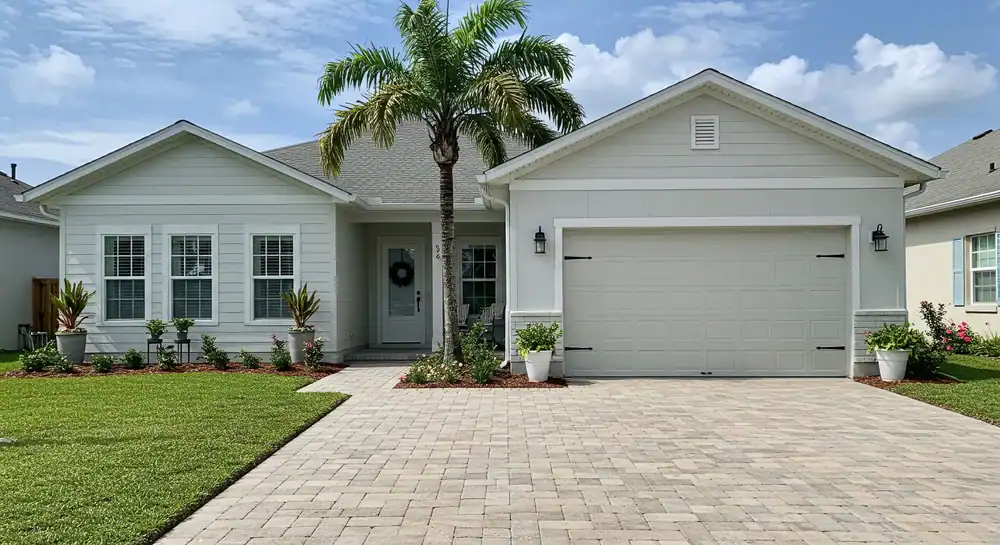
Next, we talk materials. For Barnum Island, that usually means pavers or reinforced concrete—both chosen based on how your property sits and what kind of traffic you’re dealing with. Pavers handle flooding better because water drains through the joints instead of sitting on the surface. Concrete works if your base is solid and drainage is already handled. We’ll explain what makes sense for your situation.
Then we prep the site. Poor base work is why most driveways fail early, so we excavate to the right depth, install proper drainage if needed, and compact the base in layers. This is the part that determines whether your driveway lasts five years or thirty.
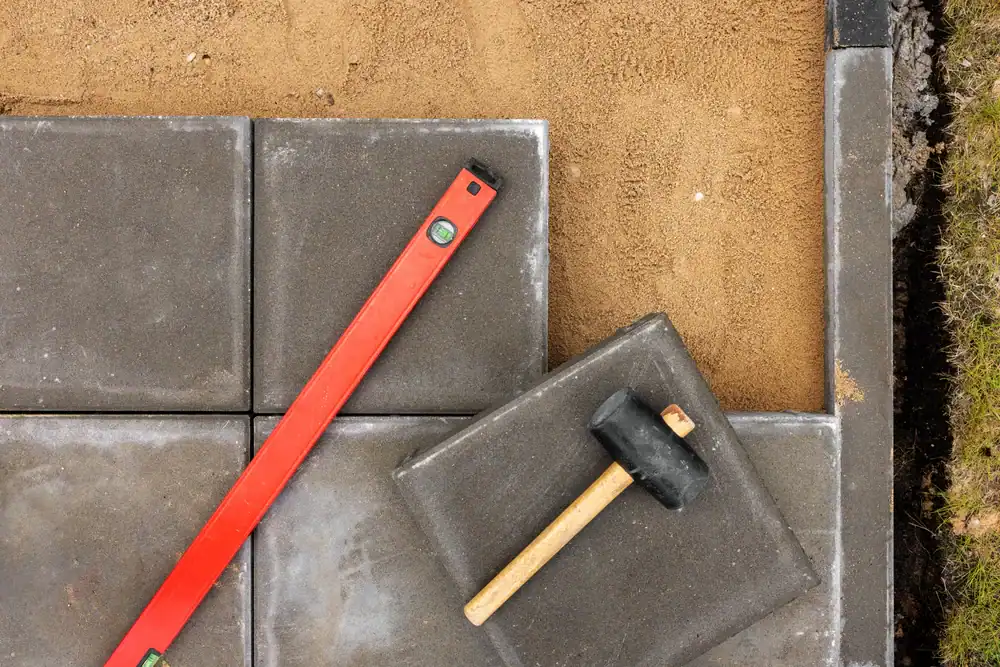
Installation comes next—setting pavers or pouring concrete, installing Belgian block borders if you want them, and making sure everything slopes correctly. After that, cleanup and a walkthrough so you know exactly what was done and how to maintain it.
Ready to get started?
You get a full site evaluation that measures drainage, elevation, and how water currently moves across your property. That’s not optional here—Barnum Island sits in a flood zone, and ignoring drainage means you’re setting yourself up for foundation damage that costs five times what the driveway did.
Material selection comes next, and it’s based on your specific conditions. Commercial-grade pavers designed for freeze-thaw cycles and salt exposure. Concrete mixes that cure properly in coastal humidity. Belgian block borders that won’t shift under snow plow pressure. These aren’t luxury add-ons—they’re the difference between a driveway that handles Long Island weather and one that cracks after the first winter.
You also get proper base preparation, which most homeowners never see but determines how long everything lasts. We excavate to the correct depth, install drainage systems where needed, and compact the base so it won’t settle unevenly. Then we install your driveway with the right slope to move water away from your house.
After the job, you get a warranty on the installation and a clear explanation of what maintenance looks like. For pavers, that’s occasional joint sand replacement. For concrete, it’s sealing every few years. Nothing complicated, but it matters.
Pavers handle flooding better than solid concrete or asphalt because water drains through the joints instead of pooling on the surface. When flooding happens, paver driveways typically need cleaning and joint sand replacement rather than full reconstruction.
That said, concrete can work if your property has good natural drainage and proper grading. The key is making sure water has somewhere to go that isn’t your foundation or your neighbor’s yard. We’ll look at your specific lot and tell you what makes sense.
The worst choice for Barnum Island is standard asphalt. It doesn’t handle salt exposure well, cracks easily in freeze-thaw cycles, and needs replacement every 10-15 years even with perfect maintenance. You’re better off spending more upfront for materials that actually last in coastal conditions.
We grade your driveway so water flows away from your foundation, not toward it. That sounds obvious, but you’d be surprised how many driveways are installed without considering where runoff goes. Poor drainage is the leading cause of foundation issues in this area, and foundation repairs run $10,000 to $40,000.
If your property has drainage challenges—like a low spot where water collects or soil that doesn’t absorb well—we’ll install a drainage system. That might mean French drains, channel drains at the driveway edge, or catch basins that redirect water to the street. It depends on what your property needs.
The goal is making sure water never sits against your foundation or pools on your driveway. Standing water freezes in winter, and that expanding ice causes cracks that get worse every year. Fix the drainage right the first time, and you avoid those problems entirely.
A well-installed paver driveway lasts 25-30 years in coastal conditions if you maintain it. That means adding joint sand when needed and occasionally cleaning salt residue. Pavers actually get more stable over time as the sand settles and locks everything together.
Concrete driveways last 20-25 years if they’re installed with the right mix and sealed every few years. The key is using concrete designed for coastal humidity and freeze-thaw cycles. Standard mixes crack faster here because of salt exposure and temperature swings.
The driveways that fail early—within 5-10 years—usually have base problems or drainage issues that weren’t addressed during installation. That’s why site prep matters more than the surface material. If the base settles unevenly or water undermines it, even premium materials won’t save you.
It depends on what’s causing the problem. If your driveway is sinking because the base wasn’t compacted properly or drainage is washing material away, repairs won’t fix it long-term. You’re better off replacing it and addressing the underlying issue.
If you’ve got minor cracks in concrete that haven’t spread, we can seal them and prevent water from getting in and making things worse. For pavers, individual stones can be lifted and reset if the base underneath is still solid.
The honest answer is that most sinking driveway repair in Barnum Island requires replacement because the original installation didn’t account for soil conditions or drainage. Trying to patch a failing driveway just delays the inevitable and costs you more in the long run. We’ll assess what’s happening and tell you whether repair makes sense or if you’re throwing money away.
Belgian block borders are hand-cut granite stones set in a concrete foundation along your driveway edges. They create a clean border that defines your driveway and prevents pavers or gravel from spreading into your lawn. They also hold up against snow plows better than plastic edging or thin curbing.
Installation means excavating along the driveway edge, pouring a concrete footing, and setting each block by hand so they’re level and properly aligned. It’s more labor-intensive than other edging options, which is why it costs more upfront.
Are they worth it? If you’re installing a paver driveway and want something that lasts as long as the pavers themselves, yes. Belgian block borders won’t shift, crack, or need replacement. They also add to your property’s curb appeal in a way that plastic edging never will. For concrete driveways, they’re less necessary unless you want the aesthetic or need a clear edge for plowing.
Basic drainage solutions—like regrading your driveway or adding a channel drain at the edge—typically run $1,500 to $3,500 depending on your property size and how much work is needed. That’s usually included in a new driveway installation if drainage is part of the plan from the start.
More complex systems—like French drains, catch basins, or underground piping to redirect water—can add $3,000 to $8,000 to your project. That sounds like a lot until you compare it to foundation repair costs, which start at $10,000 and go up from there.
The cost depends entirely on what your property needs. Some lots drain naturally and just need proper grading. Others have low spots, poor soil absorption, or runoff from neighboring properties that require engineered solutions. We’ll assess your situation during the site evaluation and give you an accurate number based on what actually needs to happen.
Other Services we provide in Barnum Island