
Your asphalt driveway cracks every winter. Water seeps in, freezes, expands, and by spring you’re looking at new damage that’s worse than last year.
Seal coating and crack filling are band-aids. They buy you a season, maybe two, but the problem keeps coming back because the material itself can’t handle what Long Island throws at it.
Pavers and properly installed concrete work differently. Individual pavers flex with freeze-thaw cycles instead of cracking apart. Concrete poured with the right base and drainage doesn’t pool water or sink into soft spots. You’re not patching the same problems every year—you’re done with it.
That’s what matters when you’re planning to stay in your home. Not the cheapest option, but the one that actually lasts and stops costing you money every spring.
We started with chimneys and masonry, but Long Island homeowners kept asking us to handle their driveways too. After 15 years of building trust with proper work, that made sense.
Every job gets an owner on-site—either Bobby Bruno or Sherwood Adams. Not just a crew, but someone who’s accountable if something isn’t right. We’re A-rated with the BBB and Angie’s List for six straight years because we don’t cut corners on excavation, base prep, or drainage.
Greenport West sits right on the water, which means your driveway deals with salt air, freeze-thaw cycles, and soil conditions that require specific installation methods. We’ve handled hundreds of driveways across Nassau and Suffolk County. We know what works here and what fails in five years.
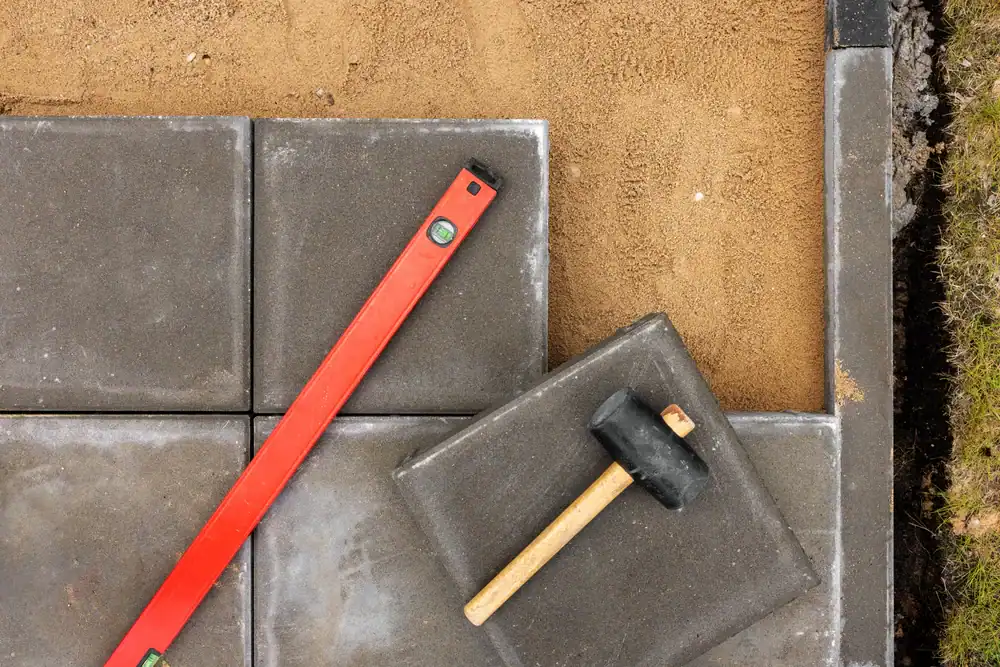
First, we excavate to the right depth—at least 12 inches in most Long Island locations because of frost line requirements and soil conditions. Skipping this step is where most driveway problems start, and it’s the first thing cheaper contractors cut to save time.
Next comes the base material. We install compacted gravel in layers, not all at once, because proper compaction prevents settling and sinking. This is also when we address drainage—grading the base so water moves away from your foundation instead of pooling on the surface or seeping underneath.
Then we install your pavers, concrete, or Belgian block borders. For pavers, each one is set individually with proper spacing and edge restraints. For concrete, we pour in sections with control joints to manage any minor movement. The surface material is only as good as what’s underneath it, which is why we spend most of our time on prep work you’ll never see.
After installation, we clean up completely. No piles of dirt left in your yard, no debris in the street. You get a driveway that’s ready to use and built to handle decades of Long Island weather.
Ready to get started?
You’re getting a driveway contractor in Greenport West, NY who understands that your home isn’t going on the market next year. Suffolk County homeowners are sitting on record equity but can’t access it by selling, so you’re improving what you have instead of moving. That changes what matters—you need durability and quality, not just curb appeal for a listing photo.
We install paver driveways that last 50+ years with minimal maintenance. We pour concrete with proper thickness, rebar reinforcement, and control joints. We add Belgian block borders that create clean transitions and structural support. And we handle sinking driveway repair by addressing the real problem—poor base prep and drainage—not just resurfacing over a bad foundation.
Long Island’s freeze-thaw cycles are brutal. Morning frost melts during sunny afternoons, then refreezes overnight. That cycle repeats all winter, and it destroys driveways that weren’t built for it. We use installation methods designed specifically for coastal Suffolk County conditions, not generic approaches that work fine in other climates but fail here.
This is about fixing cracked concrete driveways and drainage problems permanently, not kicking the problem down the road another three years.
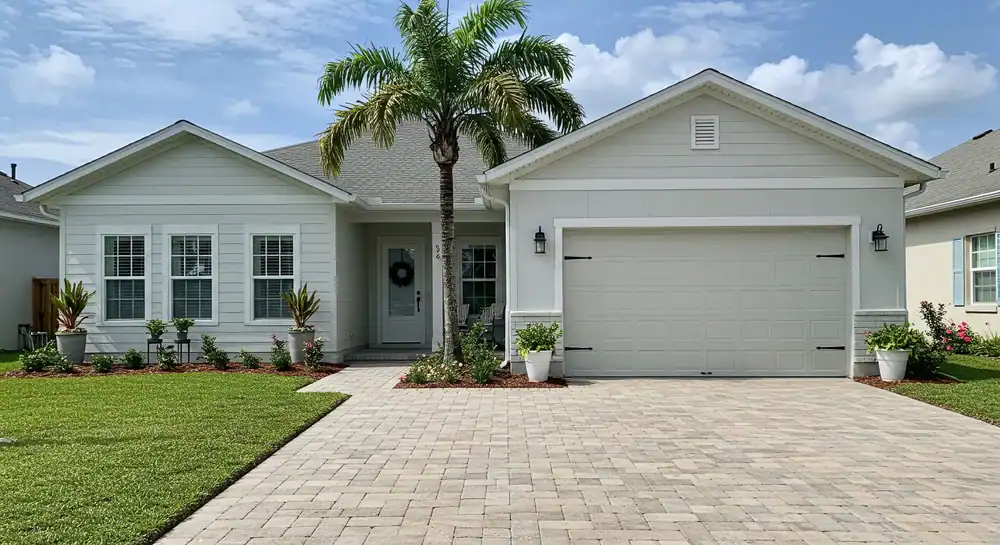
Pavers last 50+ years when installed correctly, which makes them one of the longest-lasting driveway materials you can choose. The key is proper installation—excavating to the right depth, installing a compacted gravel base in layers, and ensuring drainage moves water away from the surface.
Individual pavers handle freeze-thaw cycles better than asphalt or even concrete because they can flex slightly without cracking. If a paver ever gets damaged—say a tree root pushes one up or you need to access a utility line underneath—you can replace that single paver without redoing the entire driveway.
Compare that to asphalt, which needs major work every 10-15 years, or concrete that cracks and requires full replacement once the damage spreads. Pavers cost more upfront, but you’re not paying for repairs and replacements every decade. For homeowners in Suffolk County who are staying put, that math works out significantly better over time.
Sinking happens when the base underneath your driveway wasn’t installed properly. If the contractor didn’t excavate deep enough, didn’t compact the gravel base in layers, or didn’t account for Long Island’s soil conditions, the ground underneath settles unevenly over time. Water accelerates this—it seeps into gaps, softens the soil, and creates voids that let sections of your driveway drop.
Drainage problems start the same way. If the base wasn’t graded correctly during installation, water pools on the surface instead of running off. That standing water finds cracks, seeps underneath, and freezes during winter. When it expands, it pushes your driveway apart from below.
Fixing a sinking driveway means addressing the base, not just the surface. You have to excavate the problem area, reinstall a proper compacted base with correct drainage grading, and then replace the surface material. Resurfacing over a bad base just hides the problem temporarily—it’ll sink again within a few years because the underlying issue is still there.
Yes, Belgian block aprons and borders add structural support, not just visual appeal. They create a solid edge that prevents your driveway material from spreading or shifting over time, which is especially important for paver installations where edge restraint keeps everything locked in place.
Belgian block also creates a smooth, durable transition from the street to your driveway. That transition point takes heavy impact every time a vehicle enters or exits, and it’s one of the first areas to crack or crumble on driveways without proper edging. The block distributes that weight more evenly and holds up to repeated stress better than asphalt or concrete edges.
From a practical standpoint, Belgian block makes snow removal easier because you have a clear, defined edge that won’t chip or break when a plow scrapes along it. And if you ever need to repair or replace part of your driveway, the block border stays intact—you’re not redoing the entire perimeter just to fix one section. It’s an upfront cost that prevents multiple smaller repairs down the road.
Drainage starts during excavation and base prep, not after the driveway is installed. We grade the base so water naturally flows away from your foundation and toward the street or a drainage area. That means creating a slight slope—usually about a quarter inch per foot—that’s enough to move water but not so steep that it’s noticeable or uncomfortable to walk on.
In areas where drainage is particularly challenging, we install additional solutions like French drains, channel drains, or permeable pavers that let water pass through instead of pooling on top. Suffolk County’s soil and coastal location mean some properties deal with higher water tables or clay-heavy soil that doesn’t absorb water quickly. Those situations need specific approaches, not generic grading.
Poor drainage doesn’t just create puddles—it undermines your entire driveway. Water that sits on the surface seeps into cracks, freezes during winter, and expands. That cycle destroys driveways from the inside out, which is why so many Long Island homeowners end up replacing driveways that are only 10-15 years old. Proper drainage from the start prevents that damage and protects your investment for decades.
The difference is in what you don’t see—excavation depth, base material quality, and compaction. Cheap contractors skip or rush these steps because they’re time-consuming and expensive, but they’re also what determines whether your driveway lasts 10 years or 50 years.
Proper excavation in Long Island means going at least 12 inches deep to get below the frost line and remove unstable topsoil. The base gets installed in layers—usually 6 inches of larger stone, then 4-6 inches of finer gravel—and each layer gets compacted with heavy equipment before the next one goes down. That creates a stable foundation that won’t shift, settle, or allow water to pool underneath.
Cheap driveways use thinner bases, skip proper compaction, or don’t address drainage at all. They look fine for the first year or two, but once a few freeze-thaw cycles hit them, cracks appear and sections start sinking. By year five, you’re looking at major repairs or full replacement. The “savings” you got upfront cost you significantly more in the long run because you’re paying to fix the same driveway multiple times instead of building it right once.
Yes, driveway extensions are possible, but they require careful planning to match elevation, drainage, and material transitions. The new section needs to tie into your existing driveway seamlessly so water doesn’t pool at the seam and the surface stays level across both areas.
For paver extensions, we can often match your existing pavers or choose complementary colors that blend naturally. The base prep is the same as a new installation—proper excavation, compacted gravel layers, and drainage grading. The edge where old meets new gets special attention to ensure a smooth transition without lips or gaps.
Concrete extensions are trickier because new concrete rarely matches the color of old concrete perfectly, even if you use the same mix. We can add control joints or decorative borders to create intentional visual breaks that make the extension look planned rather than patched. The key is making sure the new section’s base is as solid as the original so you don’t end up with one part of your driveway settling while the other stays level. If your existing driveway already has drainage or settling issues, extending it without fixing those problems first just spreads the damage to a larger area.