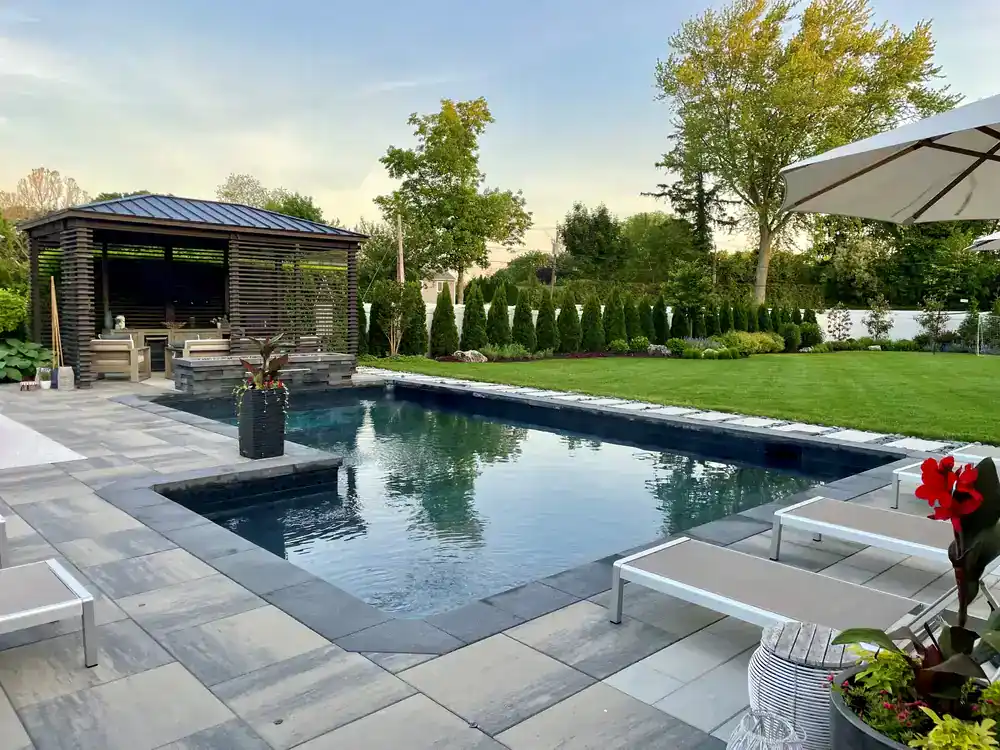
Your complete guide to choosing, designing, and installing patio and pool pavers that actually handle Long Island weather.
Share:
Living on Long Island means enduring humid summers, snowy winters, and constant freezing thaw cycles. Your paver choice needs to handle this reality without falling apart in a few years.
Frequent freeze thaw cycles make pavers a more weather resilient choice for Long Island homeowners, reducing the risk of heaving and uneven surfaces compared to poured concrete. The flexibility built into paver systems lets them move slightly with ground changes instead of cracking like solid surfaces.
Unlike asphalt, which fades and cracks over time, pavers withstand Long Island’s seasonal temperature swings and are easier to repair since individual units can be replaced without disturbing the entire surface.
Whether you’re looking for timeless natural stone, the enduring strength of concrete, or the rustic charm of brick, pavers cater to all tastes and needs with endless possibilities in various shapes, sizes, and colors.
Concrete pavers offer consistency and cost-effectiveness. Premium Cambridge pavers are chosen for their strength, color retention, and versatile design options, resulting in surfaces that require minimal maintenance and deliver strong visual appeal. They’re manufactured to specific standards, so you get predictable performance and appearance.
Natural stone brings character but requires more consideration. Bluestone is perfect for patios, walkways, pool decks, and driveways, known for its strength in withstanding heavy foot traffic and weathering, with proper sealing offering long-lasting protection against stains and wear. The trade-off is higher cost and more variation in individual pieces.
Long Island homeowners are increasingly choosing eco-friendly pavers made from recycled materials or permeable stones that reduce stormwater runoff and blend seamlessly into the natural environment. Permeable pavers allow water to flow through gaps, reducing stormwater runoff and promoting better drainage while preventing flooding and erosion.
The key is matching material choice to your specific situation. Pool areas need different considerations than general patio spaces, and your budget affects which premium options make sense.
The texture of pavers is among the most critical considerations for pool areas since the area is often exposed to wetness, making non-slippery pavers with coarse textures the best option.
With pavers that have a rough surface, you won’t have to worry about pool users slipping and hurting themselves, as the texture provides enough traction for safety, comfort and peace of mind. This isn’t just about liability—it’s about actually being able to use your pool area without constantly worrying about someone getting hurt.
Concrete and stone pavers are some of the best options when it comes to texture. Pavers are naturally textured and often slip resistant, better suited for poolside patios or shaded areas where water can collect, with the tactile and aesthetic difference being one of the main reasons Long Island homeowners lean toward pavers when enhancing curb appeal.
There’s also the matter of absorbency when choosing pool patio pavers , since the pool area is exposed to wetness, making it a great idea to opt for pavers that offer high absorbency. This helps water clear from the surface instead of sitting there creating ongoing slip hazards.
Beyond safety, pool pavers need to handle constant water exposure, pool chemicals, and the reality that people will be walking on them barefoot. Strength and durability are essential since swimming pool deck pavers protect the pool against damaging elements like surface runoff, making it recommendable to choose pavers that will stoically weather the test of time.
Most Long Island homeowners spend somewhere between $30 and $45 per square foot to have a paver patio professionally installed, including both materials and labor. That’s the reality of getting it done right the first time.
Installing a paver patio yourself can cut costs to $20-25 per square foot, not counting tool rentals or extra materials, but mistakes during base prep or leveling can cause drainage and long-term performance issues, which is why most Long Island homeowners choose professional crews for peace of mind.
The installation process involves more than just laying pavers on the ground. Proper drainage is critical for Long Island patios, requiring grading so water moves away from your house, building a compacted gravel base and installing edge restraints to prevent pooling, shifting and frost heave.
Simple shapes and patterns take less time to install, while curved edges, decorative inlays, or borders with contrasting colors increase labor cost—that doesn’t mean you should avoid them, just understand the cost implications upfront.
The pattern you choose also affects maintenance, with more complex patterns requiring more attention to keep weeds out and sand in place, but they also tend to hide normal settling better than simpler layouts. So there’s a trade-off between upfront cost and long-term appearance.
Some towns on Long Island require permits for patios, especially if you’re building close to the property line or adding drainage—it’s not a huge cost, but it’s something to keep in mind, and a good contractor should know what’s needed and handle it for you. This is where local experience matters.
Long Island’s unique climate with freeze-thaw cycles, coastal moisture, and shifting soil requires specific materials and construction methods, with contractors selecting freeze-resistant pavers, durable natural stone, and implementing best-in-class drainage techniques for long-term performance and coastal durability.
The base preparation is where corners often get cut, but it’s critical for Long Island conditions. The most important part is ensuring a good thick base, with contractors using pulverized blue stone instead of sand for the layer immediately under pavers, and knowing how many inches of RCA they’ll use since many contractors cut the base short.
Your property’s specific conditions affect cost too. Existing landscaping that needs removal, drainage issues that need addressing, or access challenges for equipment all factor into the final price.
Installing a concrete patio involves framing the layout, pouring concrete, leveling the surface, and allowing proper curing, with the actual pouring process being relatively fast but curing taking several days during which the surface must remain untouched, with weather conditions affecting curing time.
Paver installation is more labor-intensive and time-consuming, involving detailed steps such as excavation, compacting a base layer, laying individual pavers in a pattern, and sealing joints with polymeric sand. But the advantage is you can use the space immediately once installation is complete.
The duration of patio installation depends on various factors such as project size, chosen materials, and weather conditions, with contractors striving to complete installation efficiently without compromising quality. Typical timelines run 3-7 days for standard residential patios, longer for complex designs or challenging site conditions.
Weather plays a bigger role than many homeowners expect. Rain can halt work completely since proper base compaction requires dry conditions. Outdoor living on Long Island deserves a foundation that handles freeze-thaw cycles, salt air, and heavy use, which means contractors can’t rush critical steps just to meet deadlines.
With over 1,000 patio installations, experienced contractors use a variety of methods based on soil conditions and property layout. This experience translates to realistic timelines and fewer surprises during installation.
The permitting process can add time too. Navigating zoning laws, permits, and HOA rules is part of the construction process, with experienced Long Island contractors managing these logistics to avoid delays and ensure compliance, our familiarity with local styles helping projects blend naturally with surrounding neighborhoods.
The real value of a paver patio isn’t just about price per square foot—it comes from how the space works with your home, how well it handles Long Island weather, and how often you’ll actually use it. Getting the materials right matters, but so does working with contractors who understand our local conditions.
Whether you’re planning to sell or want to enjoy your home more fully, investing in quality installations like outdoor living spaces delivers immediate and long-term benefits, elevating everyday comfort and outdoor enjoyment while boosting your home’s value and marketability.
The key is finding contractors who’ve handled Long Island projects before and can show you examples of work that’s held up over time. Professional work adds long-term value, visual appeal, and outdoor function to your Long Island home, and whether you’re improving curb appeal, expanding outdoor living space, or preparing for resale, now is the time to start. When you’re ready to move forward, we bring the local experience and quality workmanship that makes the difference between a project you’re proud of and one that creates problems down the road.
Article details:
Share:
Continue learning: