Learn the real causes behind fireplace odors and proven solutions to eliminate downdrafts, soot smells, and negative pressure problems in your Long Island home.
Share:
Your fireplace develops odors for specific reasons, and understanding these causes helps you choose the right solution. The most common culprit is creosote buildup – that tar-like substance that forms when wood smoke cools and condenses inside your chimney.
But creosote alone doesn’t create the odor problem you’re experiencing. The real issue happens when moisture mixes with this buildup, creating compounds that smell terrible and can actually be harmful to breathe. Summer humidity in Nassau and Suffolk County makes this exponentially worse.
The other major factor is air pressure in your home. When your house has negative pressure, it literally sucks air down through your chimney instead of letting odors escape upward like they should.
Every time you burn wood, creosote forms inside your chimney. This sticky, tar-like substance clings to chimney walls and, over time, penetrates porous surfaces like clay flue tiles or masonry. Even after professional cleaning, some creosote remains embedded in these materials.
When humidity rises or moisture enters your chimney, it reacts with this embedded creosote. The result is often described as a campfire smell, but it’s actually much more complex. The chemical reaction can produce sulfuric compounds that are not only unpleasant but potentially harmful to your family’s health.
This explains why many Long Island homeowners notice their fireplace smells worse in summer, even though they haven’t used it in months. The warm, humid air is activating creosote deposits that have been dormant during cooler, drier weather.
The problem compounds over time. Each season of use adds more creosote layers, and each summer reactivates more odor-producing compounds. Without proper intervention, the smell gets progressively worse and harder to eliminate.
Water is creosote’s worst enemy – and your nose knows it. When rainwater enters through a damaged chimney cap or crown, or when humid air condenses inside your flue, it creates the perfect conditions for intense odors.
Moisture doesn’t just activate existing creosote deposits. It also creates an environment where mold and mildew can grow on organic debris in your chimney. Dead leaves, bird nests, or other organic matter become breeding grounds for microorganisms that produce their own unpleasant smells.
The combination is particularly potent: creosote odors mixed with musty, dank smells from biological growth. This explains why some homeowners describe their fireplace odor as “like a wet campfire” or “musty smoke.”
Water damage also affects your chimney’s structure. As moisture penetrates masonry, it can cause spalling, cracking, and deterioration that makes odor problems even harder to resolve. The porous, damaged surfaces hold more odor-producing compounds and become increasingly difficult to clean effectively.
Your chimney is designed to create an upward draft that carries smoke and odors out of your home. But when this system works in reverse, you get downdraft – air flowing down your chimney instead of up. This brings all those odors directly into your living space.
Negative air pressure in your home is often the culprit. Modern homes are built tighter for energy efficiency, but this creates pressure imbalances. When exhaust fans, clothes dryers, or HVAC systems remove air from your home, replacement air has to come from somewhere.
If your chimney offers the path of least resistance, air gets pulled down through it, bringing odors with it. This is why some homeowners only notice fireplace smells when certain appliances are running.
You can test for negative pressure and downdraft issues with a simple procedure that takes just a few minutes. This diagnostic test helps you understand whether air pressure problems are contributing to your odor issues.
Start by closing all windows and doors in your home. Turn on your clothes dryer, bathroom exhaust fans, and kitchen range hood – anything that removes air from your house. This artificially creates the negative pressure conditions that might be causing your problem.
Next, take a smoke pencil, incense stick, or even a just-blown-out match and hold it near your fireplace opening. Watch the smoke carefully. If it gets pulled into the fireplace instead of rising naturally, you have a downdraft problem caused by negative air pressure.
For comparison, try the same test with a window cracked open in another room. If opening the window stops the downdraft, you’ve confirmed that negative pressure is the issue. This simple test can save you time and money by identifying whether your odor problem is related to air pressure rather than just chimney cleaning needs.
Your home’s mechanical systems can unknowingly contribute to fireplace odor problems. Bathroom exhaust fans, kitchen range hoods, clothes dryers, and even whole-house ventilation systems all remove air from your home. When they operate, they create negative pressure that has to be balanced by air entering from somewhere else.
If your fireplace damper doesn’t seal tightly, or if you have glass doors that aren’t perfectly airtight, your chimney becomes an easy entry point for makeup air. As this air flows down your chimney, it picks up and carries odors from creosote, moisture, or other sources directly into your living space.
This explains why some Nassau and Suffolk County homeowners only notice fireplace smells when doing laundry, cooking with the range hood on, or after long showers with the bathroom fan running. The timing isn’t coincidental – these activities are literally pulling odors out of your chimney.
The solution isn’t to stop using these necessary appliances, but to address the underlying chimney sealing issues and ensure your home has adequate makeup air sources that don’t include your fireplace flue.
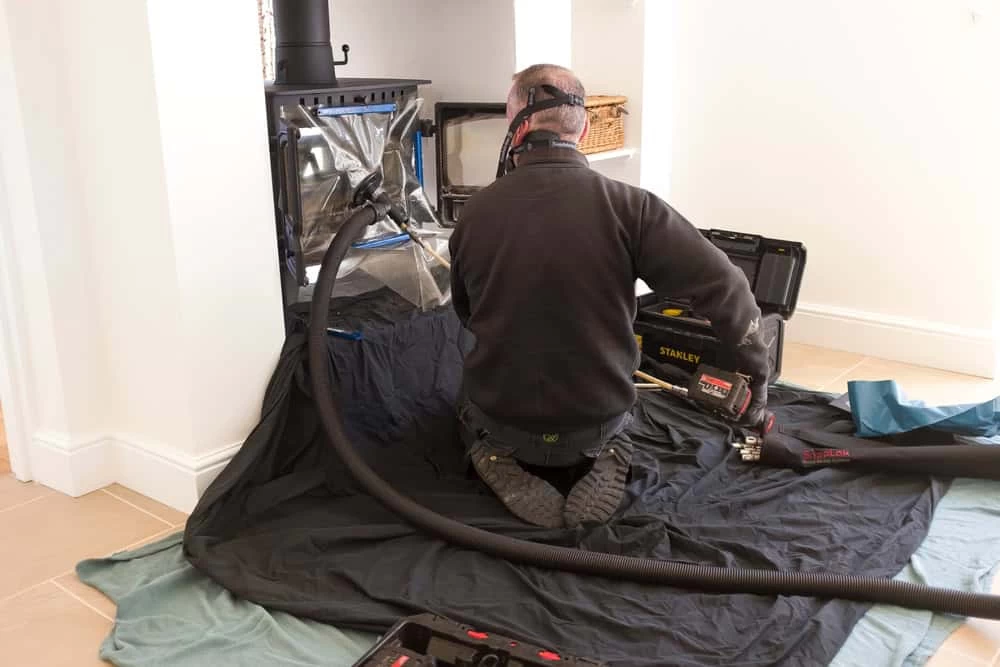
Effective odor elimination requires addressing root causes, not just symptoms. Professional chimney cleaning Long Island can identify whether your problem stems from creosote buildup, moisture intrusion, negative pressure, or a combination of factors.
A thorough inspection reveals the specific conditions in your chimney and home that are creating odor problems. From there, solutions might include specialized cleaning techniques, moisture control measures, improved sealing, or addressing air pressure issues.
When you’re ready to solve your fireplace odor problem for good, we have the expertise and proven solutions to restore your home’s comfort and your family’s enjoyment of your living space. At Ageless Chimney, we understand that eliminating odors means addressing the underlying causes, not just masking the symptoms.
Article details:
Share:
Continue learning: