
When your driveway is installed correctly from the start, you stop dealing with the same problems every few years. No more water pooling near your foundation. No more cracks spreading across the surface every winter. No more uneven sections that scrape your car or trip your family.
The right base preparation and drainage design means water flows away from your home instead of toward it. Materials selected for Nassau County’s climate—pavers, concrete, or brick—flex with ground movement instead of fighting it. That’s how you get 25-30 years of performance instead of constant repairs.
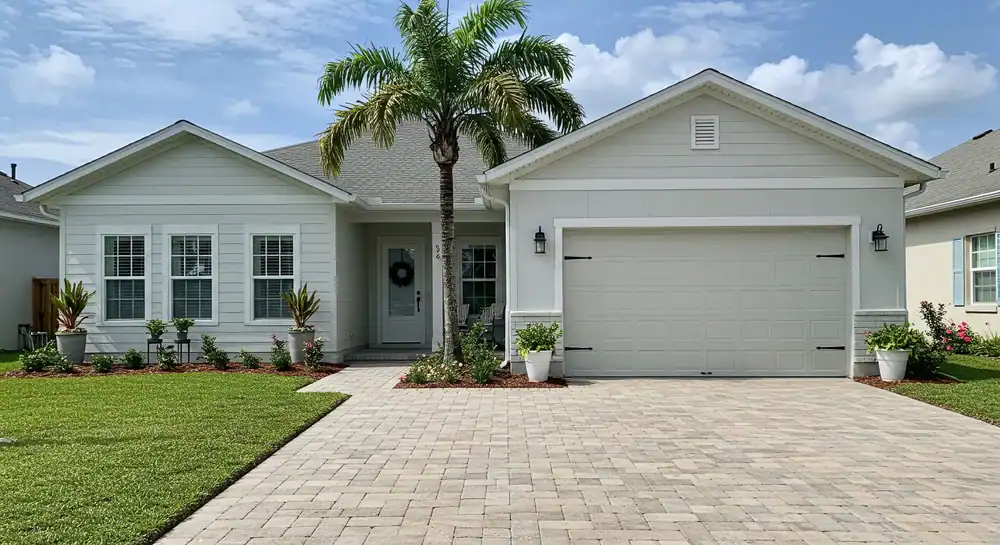
You also get a driveway that actually improves your property value. Buyers notice curb appeal immediately, and a well-installed driveway signals that the home has been maintained. It’s one of the first things people see, and it sets the tone for everything else.
We started in 2006 when two childhood friends, Bobby Bruno and Sherwood Adams, decided to bring commercial-grade installation standards to residential projects across Nassau County. We’re not a crew that shows up, finishes the job, and disappears. We live and work in the same communities we serve.
Every project gets owner involvement from estimate to completion. You’re not handed off to a subcontractor who doesn’t know your property or your concerns. We’re licensed, insured, and bonded, and we back our work with a 2-year warranty.
Massapequa Park’s homes were built primarily in the 1950s and 60s, and we understand what those properties need. The soil conditions, the drainage challenges, the architectural styles—we’ve worked with them all. You’re hiring people who know this area, not a company trying to apply a one-size-fits-all approach.
First, we assess your property’s drainage, soil conditions, and how you actually use your driveway. If you’re dealing with sinking driveway repair or fixing cracked concrete driveways, we identify why it’s happening so the new installation doesn’t repeat the problem.
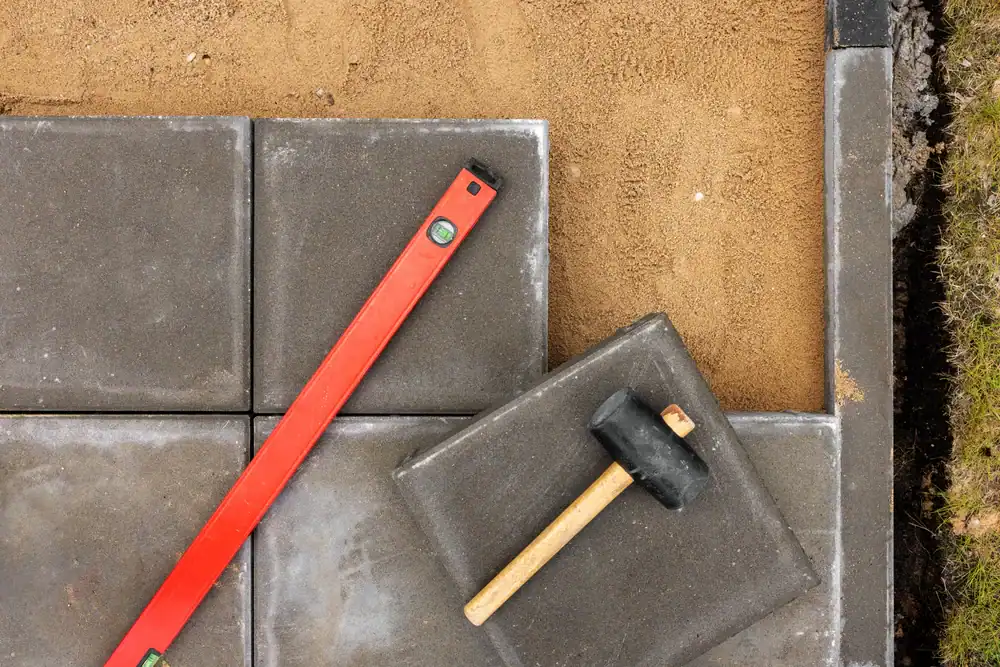
Next, we excavate to the proper depth and prepare a stable base. This step determines whether your driveway lasts 10 years or 30. We’re not cutting corners on base material or compaction because that’s where most failures start. For paver installations, this means ensuring each layer is compacted correctly before moving forward.
Then we install your chosen material—pavers, concrete, or brick—with attention to pitch and drainage. If you’re adding Belgian block borders or cobblestone driveway aprons, those get integrated to manage water flow and define property lines. We finish with a thorough cleanup and a walkthrough so you know exactly what was done and how to maintain it.
Ready to get started?
You’re getting a complete driveway drainage solution, not just a new surface. That means proper grading, base preparation, and material selection based on Long Island’s freeze-thaw cycles and coastal moisture. We handle everything from excavation to final grading.
For paver installations, you get individual units that flex with ground movement instead of cracking like solid concrete. Brick driveway replacement offers the same durability with a classic look that matches Massapequa Park’s established neighborhoods. Concrete installations are reinforced and poured with control joints to manage expansion.
We also handle driveway widening if your family’s vehicle needs have changed, or if you want to add parking space. Belgian block borders provide a clean transition between your driveway and lawn while managing water runoff. Cobblestone aprons create a durable connection to the street that handles snow plow contact.
Every installation comes with a 2-year warranty. We’re not disappearing after the job because we’re part of this community. If something needs attention, you know exactly who to call.
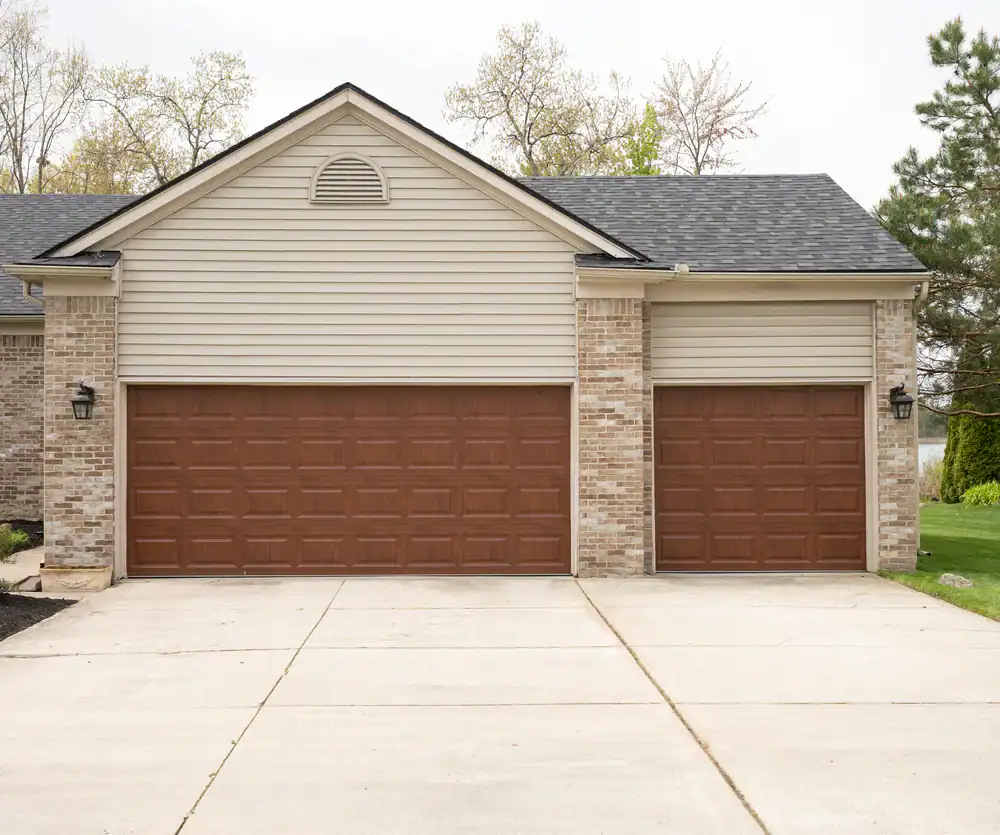
A properly installed paver driveway in Massapequa Park typically lasts 25-30 years with minimal maintenance. The key is in the base preparation and drainage design, which need to account for Nassau County’s soil conditions and freeze-thaw cycles.
Pavers actually perform better in harsh winter conditions than solid concrete because individual units flex with ground movement. When the ground freezes and expands, pavers adjust without cracking. Concrete, on the other hand, fights that movement and eventually loses.
The lifespan also depends on the quality of materials and installation standards. Cheap pavers or inadequate base compaction will cut that lifespan significantly. You’re looking at an investment that should outlast most other driveway materials when done correctly.
Water infiltration and freeze-thaw cycles cause most driveway damage on Long Island. Water seeps into small cracks, saturates the base material, then freezes and expands during winter. That expansion creates pressure that turns hairline cracks into significant structural damage.
Poor drainage makes this worse. When water doesn’t flow away from your driveway, it pools on the surface and works its way down to the base. Once the base material gets saturated and unstable, you see settling and sinking. That’s why proper grading and drainage design matter more than the surface material.
Inadequate base preparation is the other major cause. If the base wasn’t compacted correctly or the wrong materials were used, the driveway will settle unevenly over time. You can’t fix that with sealcoating or patching—you need to address the foundation.
Brick or paver driveway installation in Nassau County typically runs $18 to $23 per square foot for professional work. For a standard two-car driveway (around 480 square feet), you’re looking at $8,640 to $11,040. That includes excavation, base preparation, material, and installation.
Concrete installation costs less upfront—usually $5 to $9 per square foot—but requires more maintenance over time. Asphalt is the cheapest option at $4,700 to $8,300 for a two-car driveway, but you’ll need to reseal it every 3-5 years and replace it sooner than pavers or concrete.
The price also depends on site conditions. If we’re dealing with poor drainage, unstable soil, or significant grading work, that adds to the cost. But addressing those issues during installation prevents expensive repairs later. You’re better off doing it right once than paying for fixes every few years.
Belgian block borders aren’t required, but they solve two common problems: defining property lines and managing water flow. The blocks create a clean edge between your driveway and lawn, which prevents asphalt or pavers from spreading over time and keeps grass from encroaching.
More importantly, Belgian block borders help direct water runoff. When installed correctly, they channel water away from your foundation and toward proper drainage areas. That’s especially valuable in Massapequa Park, where many properties deal with drainage challenges due to flat lots and older infrastructure.
They also add a finished look that increases curb appeal. Buyers notice the attention to detail, and it signals that the property has been maintained. The upfront cost is modest compared to the long-term benefits in drainage management and property value.
We can widen existing driveways if the current installation is structurally sound and the base is stable. This works well when you need extra parking space or your family’s vehicle situation has changed. We match the existing material and integrate the new section so it looks cohesive.
However, if your current driveway has drainage issues, settling, or significant cracking, widening it doesn’t make sense. You’d be adding new work to a failing foundation. In those cases, complete replacement is the better investment because you’re addressing the underlying problems at the same time.
The decision comes down to the condition of what’s already there. During the estimate, we’ll assess whether widening is viable or if you’re better off with a full replacement. We’re not going to recommend work that won’t hold up just to get the job.
Proper drainage design starts with grading the driveway so water flows away from your home and toward appropriate drainage areas. That means establishing the right pitch during installation—usually a minimum 1-2% slope—so water doesn’t pool on the surface.
We also address the base layer. The base needs to be permeable enough to let water drain through while remaining stable enough to support vehicle weight. Crushed stone compacted in layers creates that balance. If water can’t escape through the base, it saturates the soil underneath and causes settling.
For properties with significant drainage challenges, we add solutions like Belgian block borders to channel water, or we integrate the driveway design with existing yard drainage systems. The goal is to move water away from your foundation and off your property before it causes problems. That’s how you avoid the freeze-thaw damage that destroys driveways on Long Island.
Other Services we provide in Massapequa Park