
When a boiler is running with a season’s worth of soot built up inside it, you feel it in your fuel bill before you ever notice it anywhere else. A layer of soot just one millimeter thick on your boiler’s heat transfer surfaces can drop efficiency by three to four percent. At North Fork heating oil prices which have been hovering around $4.60 per gallon that’s real money leaving your pocket every single month of the heating season.
For Cutchogue homeowners specifically, this isn’t theoretical. Over sixty percent of homes here heat with oil, which means heavier soot accumulation than communities where natural gas is the norm. Oil combustion leaves behind more carbon and sulfur residue, and it builds up faster. An annual professional boiler cleaning restores that lost efficiency, which means your system runs the way it was designed to and you stop overpaying to heat your home.
There’s also the matter of what sits between your boiler and the outside air. The flue, the liner, the chimney itself that entire exhaust pathway needs to be clear and intact for your boiler to vent safely. If you’re in a waterfront area like Nassau Point or anywhere close to Peconic Bay, salt air and coastal exposure accelerate corrosion in metal flue components in ways that most homeowners don’t see coming. Getting the full system inspected and cleaned each year means you catch those issues before they become a safety problem.
We’ve earned an “A” rating with the BBB and an Angie’s List award for six consecutive years. That’s not a one-time snapshot it’s a consistent track record built on showing up, doing the work right, and giving homeowners honest assessments instead of inflated repair lists. When our technician walks through your door in Cutchogue, they’ll tell you what your system actually needs. If it doesn’t need something, we’ll tell you that too.
We’re licensed for Suffolk County, which means every job on the North Fork is covered by the specific credentials required for this county not a generic statewide blanket. We carry full liability insurance and workers’ compensation, and every material we install is UL listed and up to code. For homeowners along Main Road, out on Nassau Point, or anywhere in the Town of Southold, that combination of credentials and accountability matters.
What sets us apart from local plumbing and HVAC contractors is scope. Most heating companies stop at the mechanical unit. We clean and inspect the entire system burner, heat exchanger, flue liner, and chimney because that’s the only way to know the whole thing is actually working safely.

When we arrive at your Cutchogue home, the first thing that happens is a full visual inspection the boiler itself, the piping, the connections, and the exhaust pathway. This isn’t a formality. It’s where problems get caught before they turn into emergency repairs. Older homes on the North Fork, some of which date back to the early 1900s, can have aging flue liners, original masonry chimneys, and systems that have been quietly accumulating wear for decades. The inspection accounts for all of that.
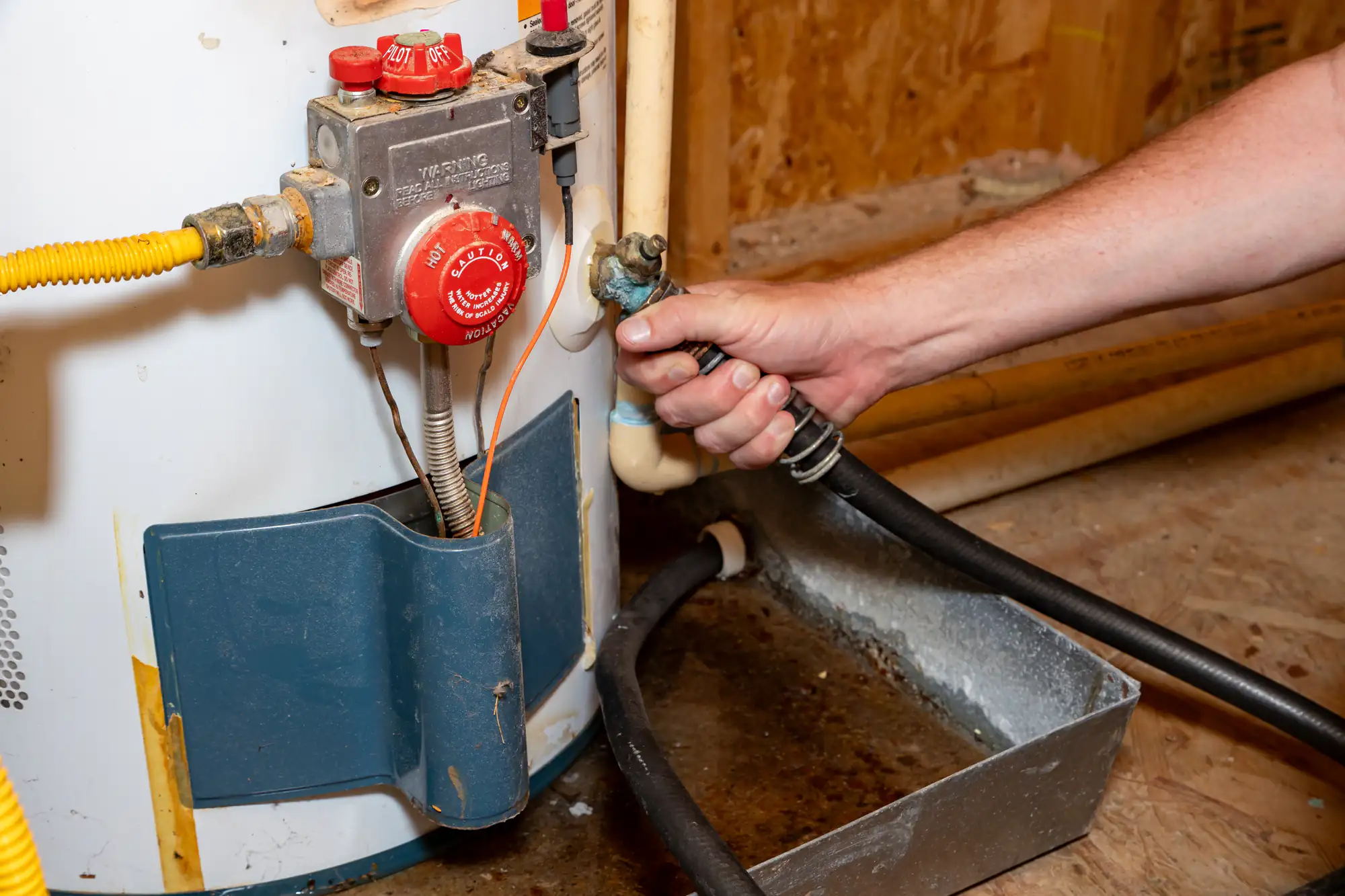
From there, the cleaning covers the heat exchanger, the burners, and the ignition system removing the soot and carbon deposits that reduce efficiency and strain the equipment. The flue gets cleaned and checked for blockages, cracks, and proper venting. A combustion analysis measures the air-to-fuel ratio and confirms the system is burning cleanly and efficiently. Safety controls pressure valves, thermostats, seals, and shutoffs are all tested. If there’s a nest or debris blocking the chimney, that gets cleared too.
For seasonal property owners on the North Fork, the best time to schedule this service is late summer or early fall, before the heating season starts. That way, if anything needs attention, there’s time to address it before the first cold night. The whole visit typically takes around one to two hours, and we leave your property exactly as we found it.

Ready to get started?
Most heating contractors in the Cutchogue area including local plumbing and HVAC companies service the boiler as a standalone mechanical unit. They check the burner, maybe adjust the settings, and move on. What they don’t do is clean and inspect the chimney flue, the liner, and the exhaust pathway that connects your boiler to the outside. We do all of it, because a boiler that’s mechanically sound but venting through a cracked or soot-clogged flue is still a problem waiting to happen.
Our service covers boiler cleaning and inspection, flue and chimney cleaning, combustion analysis, safety control testing, and nest or obstruction removal if needed. For homes near the water Nassau Point, the Peconic Bay shoreline, or anywhere in the coastal portions of Cutchogue the inspection pays particular attention to salt-air corrosion on metal components, which is a real and accelerated wear factor in this environment that inland Long Island homeowners simply don’t deal with at the same rate.
All work is performed under our Suffolk County license, with liability insurance and workers’ compensation in place. Every component we install liners, caps, or any replacement hardware is UL listed. If your system needs additional repair beyond the cleaning, you’ll get a straight, honest assessment of what’s actually required and what it will cost, before any additional work begins.

Once a year is the standard recommendation, and for most Cutchogue homeowners that means scheduling before the heating season starts ideally in late summer or early fall. You want to know the system is clean and functioning before you actually need it. If something needs repair, you want to find that out in September, not in January when it’s below freezing and you’re without heat.
For homes in Cutchogue that run on heating oil which accounts for over sixty percent of the hamlet annual cleaning is especially important. Oil combustion produces heavier soot deposits than natural gas, so the buildup happens faster and the efficiency loss is more pronounced. Skipping a year doesn’t just mean double the soot the following year; it means cumulative corrosion and wear that compounds over time. Most boiler manufacturers also require annual professional maintenance to keep the warranty valid, so there’s a practical financial reason to stay on schedule beyond just the efficiency and safety benefits.
This is one of the most common misunderstandings among Long Island homeowners, and it’s worth clearing up directly. When your heating oil company sends a technician to service your burner, they’re focused on the mechanical combustion unit the nozzle, the pump, the ignition system. That’s their specialty, and they do it well. What they don’t do is clean the chimney flue, inspect the liner, or clear the exhaust pathway that runs from your boiler up through the chimney.
That part of the system is a completely separate service, and it requires chimney expertise not HVAC expertise. Soot, creosote, and debris accumulate in the flue independent of how well the burner is tuned. A blocked or damaged flue can cause combustion gases to back up into the living space, and it can reduce draft efficiency even when the boiler itself is running perfectly. If you’ve been relying solely on your oil delivery company for annual service, there’s a good chance the chimney side of your system hasn’t been professionally cleaned in years.
A few things are worth paying attention to between annual cleanings. If your heating bills are noticeably higher than the same period last year without a corresponding change in fuel prices, reduced boiler efficiency from soot buildup is a likely contributor. A boiler running harder to produce the same amount of heat will burn more oil, and that shows up in your fuel costs before it shows up anywhere else.
Other signs include unusual odors when the boiler fires up particularly a sooty or smoky smell that wasn’t there before visible soot around the boiler or flue connections, or a system that takes longer than usual to bring the house up to temperature. For older homes in Cutchogue, where some heating systems have been in place for decades, these signs can develop gradually and get normalized over time. If anything feels off, it’s worth getting a professional inspection rather than waiting for the scheduled annual visit. Catching a blockage or a cracked flue liner early is significantly less expensive than dealing with the consequences of ignoring it.
Yes, and in some ways the case for annual service is even stronger for seasonal properties. A boiler that sits idle for an extended period isn’t immune to problems it’s just developing them quietly. Sediment settles in the system, moisture can infiltrate the flue and chimney, and metal components are subject to corrosion whether the equipment is running or not. When you restart a system that’s been sitting for months without an inspection, you’re firing it up without knowing its actual condition.
For North Fork seasonal homeowners who are managing their Cutchogue property remotely spending most of the year elsewhere and coming out on weekends or for the season a pre-season boiler cleaning and inspection gives you a current, accurate picture of the system before you need it. It also means that if something does need attention, you find out during a planned service visit rather than during an unplanned emergency on a cold night. We offer 24/7 emergency service, but no one wants to use it if a scheduled annual visit could have prevented the problem.
The terms get used interchangeably, but they don’t always mean the same thing depending on who’s doing the work. A tune-up, as offered by many HVAC and plumbing contractors, typically focuses on the mechanical side of the boiler adjusting the burner, checking pressures, testing safety controls, and making sure the combustion settings are dialed in. That’s valuable work, but it’s only part of the picture.
A full boiler cleaning, as we perform it, includes all of that plus the physical removal of soot and carbon deposits from the heat exchanger, the firebox, and the flue. It also includes a chimney inspection and cleaning the part that most HVAC contractors skip entirely because it’s outside their area of expertise. For Cutchogue homeowners with oil-fired systems, where soot accumulation is heavier and faster than with gas, the cleaning component is what actually restores efficiency. A tune-up that adjusts the burner but leaves a soot-coated heat exchanger in place is only doing half the job.
Yes. We hold a Suffolk County license, which is the specific credential required for contractor work in Cutchogue. New York doesn’t operate on a single statewide contractor license for this type of work each county has its own licensing requirements, and Suffolk County is where Cutchogue sits. That distinction matters because it means we’re legally authorized to perform this work in your area, not just operating under a general business registration.
In addition to the county license, we carry full liability insurance and workers’ compensation coverage. That protects you as the homeowner if anything were to go wrong during the visit you’re not left holding the liability for an uninsured contractor working on your property. For homeowners in the Town of Southold, where Cutchogue falls under local jurisdiction, routine boiler cleaning and maintenance doesn’t require a separate building permit, but any replacement components or new installations like a flue liner or chimney cap must meet current code requirements. Every part we install is UL listed and up to code, so that’s already covered.
Other Services we provide in Cutchogue