
You’ve probably noticed the cracks getting worse each winter. Water pools near your foundation. The asphalt you resealed three years ago already looks terrible again.
Here’s what changes when your driveway is done right: water drains away from your home instead of toward it. You’re not scheduling repairs every few years. Your property value goes up instead of looking like the neglected house on the block.
The difference comes down to foundation work and drainage planning. Most driveway contractors in Cutchogue, NY skip the boring stuff because you can’t see it. We don’t install anything until the base is compacted correctly and water has somewhere to go. That’s why our paver driveways last 25 to 75 years while standard asphalt needs replacement every 15 to 20.
Ageless Chimney is a family-owned driveway installation company serving Cutchogue, NY and the rest of Long Island for over 20 years. We’ve worked on more than 200 homes across Nassau County and Suffolk County.
Every project is handled by an owner, not a crew you’ll never see again. We’re licensed, insured, and bonded. We’ve earned an A+ rating with the BBB and multiple Angie’s List awards because we show up, do what we say, and leave your property cleaner than we found it.
Cutchogue homeowners deal with unique challenges: coastal moisture, freeze-thaw cycles that crack poorly installed driveways, and drainage issues that send water straight into basements. We’ve seen what works here and what fails in five years.
We start with a site evaluation. That means looking at drainage patterns, checking the existing base, and figuring out where water goes when it rains. If your current driveway has problems, we’ll tell you why and what it takes to fix it permanently.
Next comes excavation and base prep. This is the part most contractors rush because you’ll never see it. We remove the old material, compact the soil, and install a proper stone base—usually 6 to 8 inches depending on your soil conditions and traffic load. If drainage is an issue, we install French drains or adjust grading before anything else goes down.
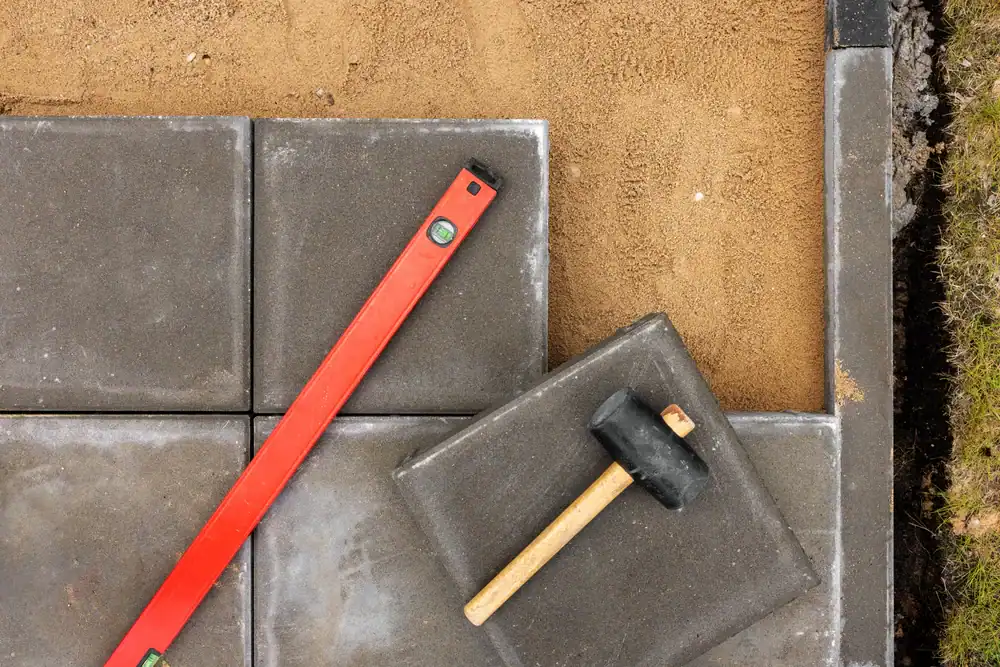
Then we install your chosen material: pavers, concrete, brick, or asphalt. Pavers get laid on a sand bed with polymeric sand in the joints. Concrete gets poured with control joints and proper curing time. Each material has a process, and we follow it.
You can use your new driveway immediately if it’s pavers. Concrete needs a few days to cure. Asphalt needs 24 hours minimum. We’ll walk you through maintenance requirements before we leave, but honestly, if the base is right, you won’t be doing much.
Ready to get started?
We handle full driveway installations and repairs: paver driveways, concrete driveway installation in Suffolk County, brick driveway replacement in Cutchogue, NY, cobblestone driveway aprons, and Belgian block borders. If your driveway is sinking, cracked, or draining poorly, we fix that too.
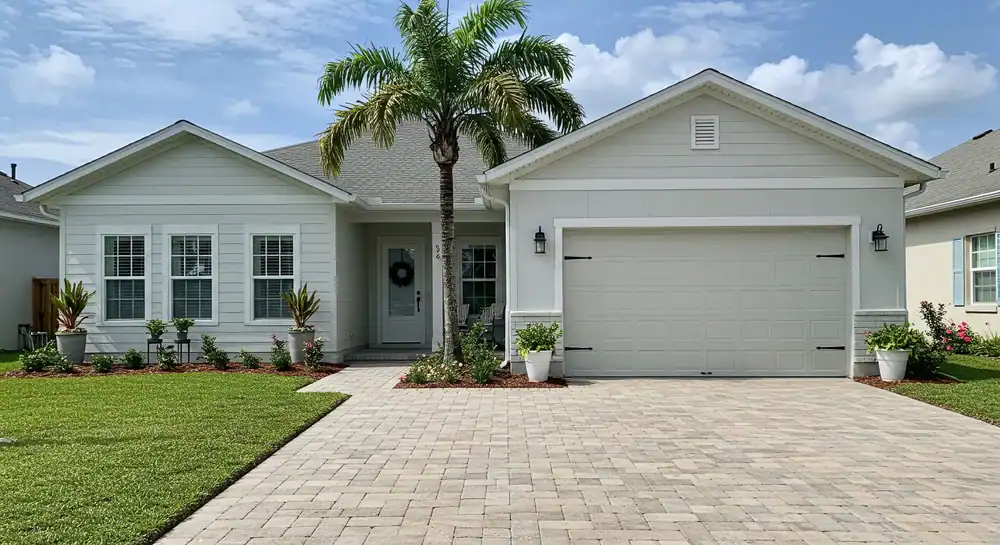
Paver driveways are popular in Cutchogue for good reason. They don’t crack from freeze-thaw cycles like concrete. If one paver gets damaged, you replace that piece instead of cutting out a section and patching it. They’re available in dozens of colors and patterns, so your driveway doesn’t look like every other one on the block.
Concrete works well if you want a clean, modern look and lower upfront cost. It lasts 25 to 30 years with minimal maintenance if it’s installed correctly. The key is proper base prep and control joints to manage cracking.
Brick and cobblestone give you that historic East End aesthetic. They’re more labor-intensive to install, but they last forever and add serious curb appeal. Belgian block borders are a nice touch if you want definition without going full cobblestone.
Drainage solutions are part of every job we do. Long Island’s biggest threat to driveways is water damage—pooling, seepage, freezing, expansion. We install French drains, adjust grading, and make sure water moves away from your foundation and driveway base.
A properly installed paver driveway lasts 25 to 75 years in Cutchogue, NY. The range depends on base preparation, material quality, and how much traffic it sees.
The foundation matters more than the pavers themselves. If the base isn’t compacted correctly or drainage isn’t addressed, pavers will shift and sink within a few years. We excavate 8 to 12 inches, install compacted stone base, and make sure water drains away from the driveway before any pavers go down.
Long Island’s freeze-thaw cycles are brutal on driveways, but pavers handle them better than concrete or asphalt. They flex slightly instead of cracking. If one paver does crack, you replace that single piece instead of cutting out a section and trying to match the patch.
Water is the main culprit. When water seeps into cracks, it freezes and expands with 25,000 psi of pressure. That’s enough force to break apart concrete and asphalt.
Sinking happens when the base wasn’t compacted properly or when water washes away the foundation material under your driveway. You’ll notice low spots where puddles form, and those spots get worse every year because the water keeps eroding the base.
Poor drainage makes everything worse. If water doesn’t have anywhere to go, it sits on your driveway, seeps into cracks, and undermines the base. Fixing cracked concrete driveways or sinking driveway repair in Cutchogue, NY means addressing drainage first. Otherwise, you’re just patching symptoms.
Asphalt runs $3 to $7 per square foot installed. Concrete costs $8 to $15 per square foot. Pavers range from $10 to $30 per square foot depending on material and pattern complexity.
For a standard two-car driveway (about 600 square feet), you’re looking at $1,800 to $4,200 for asphalt, $4,800 to $9,000 for concrete, or $6,000 to $18,000 for pavers. Brick and cobblestone cost more because they’re more labor-intensive.
Price depends on site conditions too. If we need to remove old material, fix drainage issues, or deal with difficult access, that adds to the cost. We’ll give you an exact number after looking at your property. The cheapest option isn’t always the smartest one—asphalt needs resealing every 3 to 5 years and replacement every 15 to 20 years, while pavers can last 50+ years with almost no maintenance.
Yes, most driveway work in Cutchogue, NY requires a permit from the Town of Southold. The permitting process ensures contractors are licensed, insured, and following local codes.
You’ll need a permit if you’re installing a new driveway, expanding an existing one, or changing the drainage pattern. Repairs and resurfacing usually don’t require permits, but it’s worth checking with the building department before starting work.
We handle permit applications as part of our service. The town wants to see site plans, drainage details, and proof that the contractor is properly licensed and insured. Processing typically takes a few weeks, so factor that into your timeline. Skipping permits might seem easier, but it can cause problems when you sell your home or if a neighbor complains.
Pavers handle Long Island’s freeze-thaw cycles better than any other material. They don’t crack when water freezes because they’re individual units that can flex slightly. Concrete and asphalt are solid slabs that crack under pressure.
Pavers also handle road salt better. Salt accelerates freeze-thaw damage in concrete and asphalt by lowering the freezing point of water. That means more freeze-thaw cycles and more cracking. Pavers aren’t immune to salt, but they’re more resistant.
Concrete is a solid second choice if it’s installed with proper control joints and a good base. It costs less than pavers upfront and lasts 25 to 30 years. Asphalt is the budget option, but it needs resealing every few years and replacement every 15 to 20 years. For driveway drainage solutions in Long Island’s climate, pavers give you the longest lifespan with the least maintenance.
Most driveway installations take 3 to 7 days depending on size, material, and site conditions. A standard two-car paver driveway usually takes 4 to 5 days from excavation to final compaction.
Day one is excavation and hauling away old material. Days two and three are base prep—installing and compacting the stone foundation and setting up drainage. Days four and five are paver installation, cutting edge pieces, and filling joints with polymeric sand.
Concrete driveways are faster—usually 2 to 3 days for demo, base prep, and pouring. But then you wait 3 to 7 days before driving on it. Asphalt is similar: 2 to 3 days for installation, then 24 hours before you can use it. Weather delays things, especially rain during base prep or concrete pours. We’ll give you a realistic timeline when we look at your property.
Other Services we provide in Cutchogue