

There’s a version of boiler cleaning where a technician shows up, pokes around the burner unit, hands you a receipt, and leaves. And then there’s what actually needs to happen in a place like Port Jefferson where oil heat dominates, homes skew older, and the air rolling in off Long Island Sound is doing real damage to your exhaust system year-round.
When your boiler’s flue is caked with soot and your chimney liner is corroding from salt moisture, your system is working harder than it should to push heat through your house. That translates directly to higher fuel bills every single month, not just a vague inefficiency you’ll deal with someday.
A proper annual boiler cleaning restores what the buildup has taken away. Your system runs at the efficiency it was designed for, your combustion gases vent the way they’re supposed to, and the components that salt air attacks caps, liners, flashing get assessed by someone who actually knows what to look for. For homeowners in the village, in Belle Terre, or anywhere close to the harbor, that kind of comprehensive inspection isn’t optional maintenance. It’s the minimum required to keep pace with what your environment takes from your system every year.
The other thing that changes is peace of mind. Knowing your boiler and its full exhaust pathway have been cleaned and checked by a professional not just eyeballed means you’re not sitting in the back of your mind wondering if something’s been missed. That matters a lot more when January hits and Port Jefferson is dealing with a nor’easter.
We’ve been serving Long Island homeowners including Port Jefferson and Port Jefferson Station with boiler and chimney cleaning services that cover the full system, not just the parts that are easy to reach. We hold an “A” rating with the BBB and have been an Angie’s List award winner for six consecutive years. Those aren’t one-time ratings. They reflect a consistent track record across hundreds of real customer experiences.
What stands out about the way we work is the honesty. There are documented reviews where our technician showed up, assessed the system, and told the homeowner they didn’t actually need the service they called about. In an industry where upselling is the norm, that kind of straightforwardness is genuinely rare and it’s exactly what a Port Jefferson homeowner, especially one with an older home and a complex chimney system, needs from a service provider they’re letting into their house.
We’re licensed for Suffolk County, carry full liability insurance and workers’ compensation, and use only UL-listed materials on every installation. If you’re in Port Jefferson and want to verify any of that before you call, you can and you should.
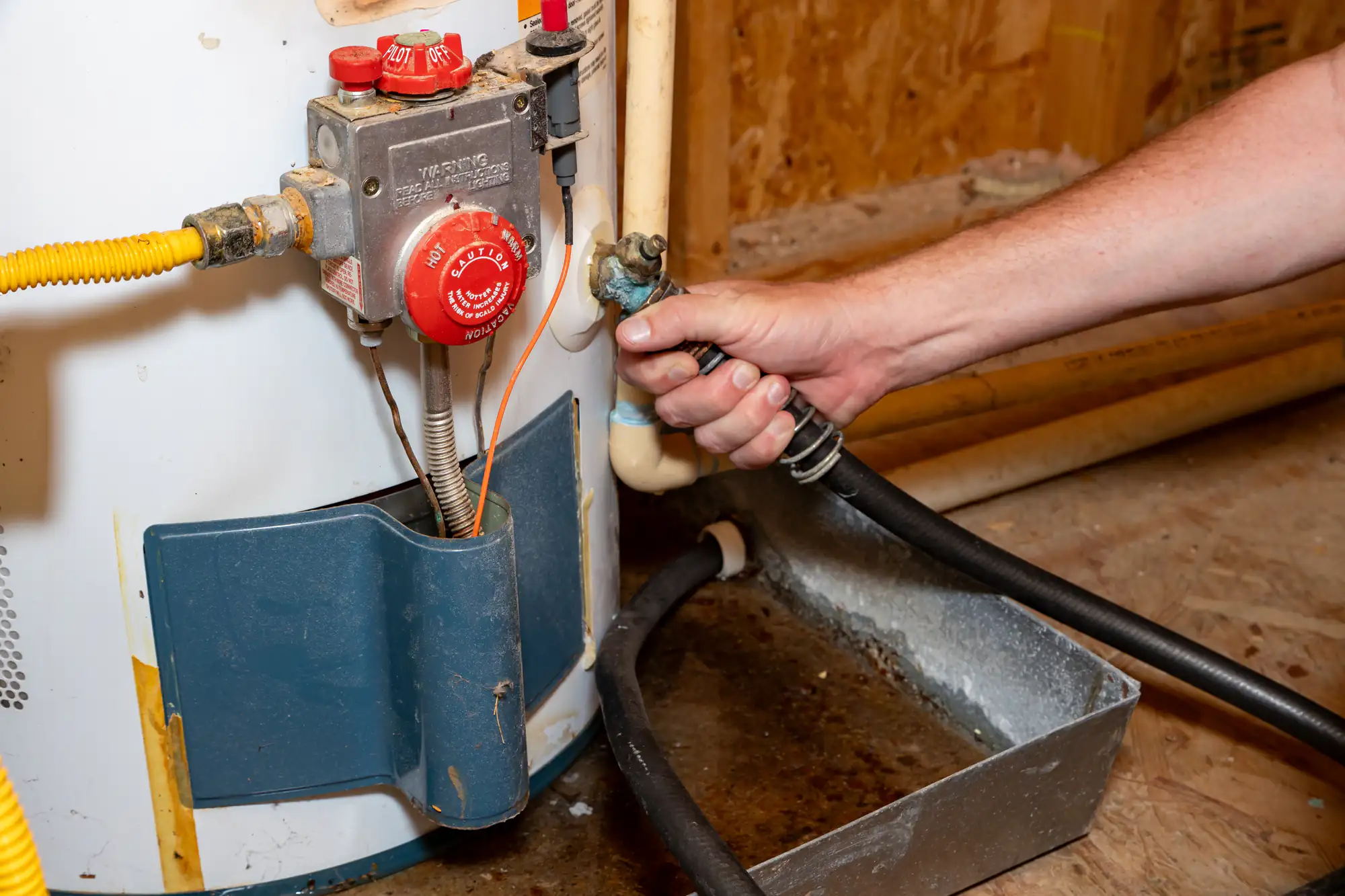
The process starts with a full visual inspection of your boiler, piping, and connections checking for corrosion, leaks, and anything that’s deteriorated since the last service. In Port Jefferson, that inspection carries extra weight because salt air off the Sound accelerates corrosion on metal components in ways that don’t show up in inland towns. Our technicians understand that and catch things that a general HVAC tech might walk right past.
From there, the heat exchanger, burners, and ignition system get cleaned removing the soot and debris that reduce heat transfer efficiency and drive up your fuel consumption. A combustion analysis follows, measuring the air-to-fuel ratio and adjusting it so your system is burning cleanly and efficiently.
Then comes the flue inspection and cleaning: checking for blockages, cracks, and proper venting, and removing whatever has accumulated in the exhaust pathway. For oil-fired systems, which are the dominant fuel type in Port Jefferson Station and throughout the village, this step is especially important because oil combustion produces more soot per cycle than gas.
Safety controls get tested pressure valves, seals, thermostats, electrical connections, and safety shutoffs. If there’s a nest or obstruction in the chimney, that gets cleared. At the end of the visit, you get a clear explanation of what was found and what, if anything, needs attention. No pressure, no invented problems. If everything looks good, you’ll hear that too.

Ready to get started?
We handle both residential and commercial boiler cleaning in Port Jefferson, NY. On the residential side, that means the Victorian and Colonial homes in the village core, the large-lot properties in Belle Terre, the mid-century builds closer to Port Jefferson Station all of them with their own chimney configurations, their own age-related wear patterns, and their own exposure to the coastal conditions that come with sitting on Long Island Sound.
Older homes with unlined or partially lined flues get a different level of attention than newer construction, because the risks are different and the stakes are higher.
On the commercial side, Port Jefferson’s active waterfront economy the restaurants along the harbor, the inns, the hospitality businesses that run year-round and not just in summer creates a real need for professional commercial boiler cleaning that most providers in the area don’t focus on. We serve both.
Every job, residential or commercial, uses UL-listed materials on any components that need replacement. Suffolk County licensing applies to all work we perform in Port Jefferson. And because we cover the full system from the burner through the flue to the chimney cap you’re not left with a cleaned boiler and an unchecked exhaust pathway. The whole thing gets done in one visit, by a team that knows what salt air, older masonry, and Long Island winters actually do to these systems.
For most Port Jefferson homeowners, once a year is the right interval and the reasoning is pretty straightforward. Oil-fired boilers, which are the dominant heating system throughout the village and Port Jefferson Station, produce more soot per combustion cycle than gas systems. That soot accumulates in the heat exchanger, the burners, and the flue, and it compounds over time. A year’s worth of buildup is manageable. Two or three years’ worth starts to create real efficiency losses and, depending on the condition of your chimney liner, real safety concerns.
The coastal environment adds another layer to this. Salt air off Long Island Sound accelerates corrosion on chimney caps, flue liners, and metal components in ways that don’t apply to homes ten miles inland. Annual service gives our technicians the chance to catch that corrosion early before it becomes a liner replacement or a structural repair. If your home is in Belle Terre or anywhere close to the harbor, that annual check is doing double duty: cleaning the system and assessing what the environment has done to it since the last visit.
This is one of the most common points of confusion for Long Island homeowners, and it’s worth being clear about. When your oil delivery company sends a technician for a tune-up or burner service, they’re focused on the mechanical boiler unit the burner, the nozzle, the ignition system, the fuel delivery components. That’s their area of expertise, and it’s legitimate work. But it stops at the boiler itself.
The chimney flue connected to your boiler the exhaust pathway that carries combustion gases out of your home is a separate system, and it’s one that most oil company technicians don’t clean or even fully inspect. Soot, debris, and moisture damage accumulate in that flue independently of what’s happening at the burner. A blocked or deteriorating flue doesn’t just hurt efficiency; it can allow carbon monoxide to back up into your living space. That’s the part of the system that we cover at Ageless Chimney, and it’s why a boiler cleaning from a chimney specialist is a different service than what your oil company provides not a replacement for it, but a necessary complement to it.
A few things are worth paying attention to. If your heating bills have gone up noticeably without a clear explanation no colder winter than usual, no change in how you’re using the heat that’s often a sign that soot buildup is reducing your boiler’s efficiency. Your system is burning more fuel to produce the same amount of heat. A 1mm layer of soot on the heat transfer surfaces can reduce efficiency by 3 to 4 percent, and that adds up fast when you’re buying heating oil at Long Island prices.
Other signs include unusual smells when the heat kicks on, visible soot or debris around the boiler or chimney base, a boiler that’s cycling on and off more frequently than it used to, or a carbon monoxide detector that’s been tripping. If your oil delivery company flagged a chimney or exhaust issue during their last visit which happens fairly often in Port Jefferson and Port Jefferson Station that’s a direct signal to schedule a boiler chimney cleaning with us. Don’t wait for something to break. By the time the boiler fails, the cleaning has already cost you more in fuel than it would have to just schedule it.
Port Jefferson is an incorporated village within the Town of Brookhaven in Suffolk County, and Suffolk County has its own licensing requirements for chimney and boiler service contractors separate from Nassau County and distinct from a general New York State business license. Any company doing chimney or boiler flue work in Port Jefferson should hold Suffolk County-specific licensing, not just a statewide registration.
Beyond licensing, contractors should carry both liability insurance and workers’ compensation coverage. These aren’t just formalities. If a technician is injured on your property and the company doesn’t carry workers’ comp, the liability can fall on you as the homeowner. We hold the Suffolk County licensing that applies to Port Jefferson, carry both forms of insurance, and use only UL-listed materials on any components installed during a job. Before you hire anyone for this work, ask for proof of all three licensing, liability insurance, and workers’ comp. A reputable company will hand that over without hesitation.
Summer is the industry’s recommended window, and the reasoning is practical. Your boiler isn’t running, so the work can be done without interrupting your heat supply, and any issues that turn up a cracked liner, a corroded cap, a flue that needs attention can be repaired before the heating season starts. Scheduling in July or August means you’re not scrambling in October when appointment slots are filling up fast and every chimney company on Long Island is suddenly busy.
That said, fall is when most Port Jefferson homeowners actually get around to it and that’s fine, as long as you’re not waiting until December. The stretch from September through mid-November is the realistic window before the heating season is fully underway. What you want to avoid is the January emergency: a boiler that’s been running on a dirty system all fall, a nor’easter rolling in off the Sound, and no heat. At that point you’re not scheduling a cleaning you’re calling for emergency service, and the urgency and the timing work against you. Annual boiler cleaning scheduled before the season is always the better version of this story.
It’s a real factor, and it’s one that doesn’t get enough attention from general HVAC providers who aren’t thinking about the chimney side of the system. Salt-laden air from Long Island Sound is corrosive. Over time, it attacks the metal components of your chimney system caps, flue liners, flashing, and the exhaust venting connected to your boiler. Homes in the Port Jefferson village core, in Belle Terre, and in Poquott are particularly exposed because of their proximity to the harbor and the Sound. The closer you are to the water, the faster this corrosion progresses.
What this means practically is that components that might last many years in an inland town can show significant deterioration in a fraction of that time in a coastal environment. A chimney cap that’s been sitting through Long Island winters with salt air and moisture cycling through it may look intact from the ground but be corroded enough to allow water intrusion into the flue. That water accelerates liner deterioration, which creates both efficiency and safety problems. Annual boiler cleaning and inspection by a chimney specialist someone who’s looking at the full exhaust system, not just the burner unit is how you catch that deterioration before it becomes a structural repair.
Other Services we provide in Port Jefferson