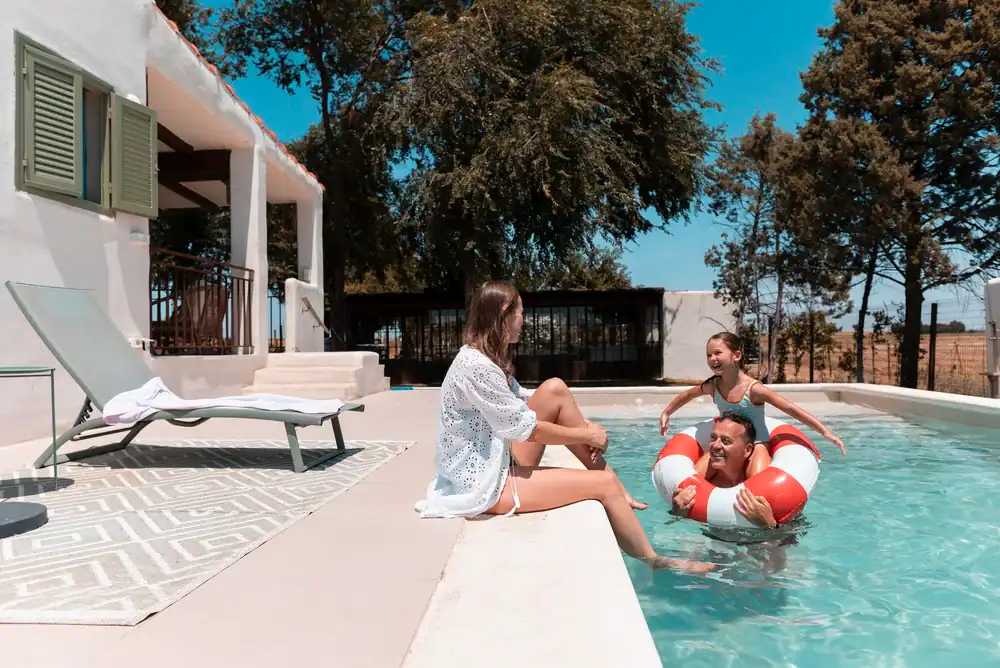

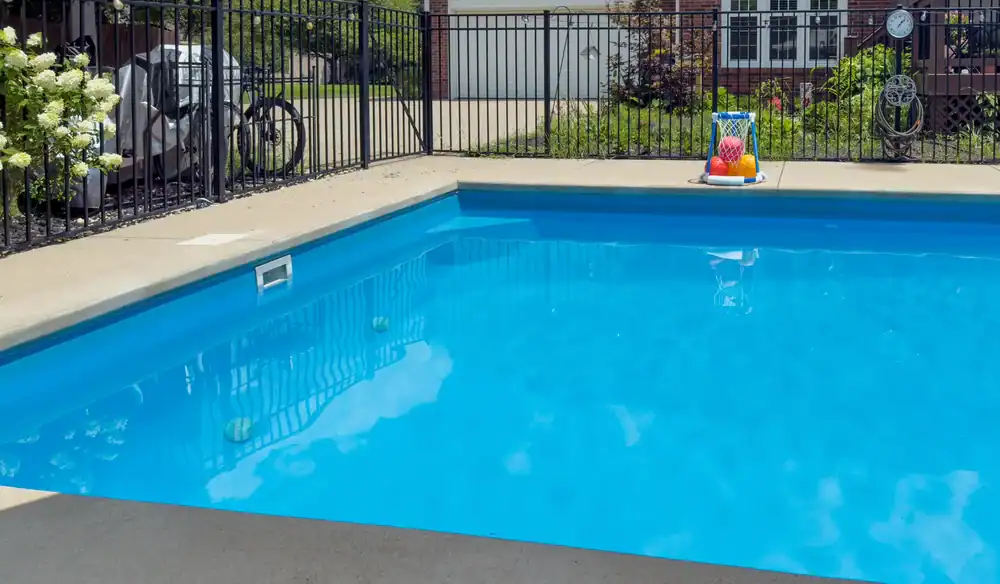
You’re not just adding water to your yard. You’re creating the place your family gravitates to on summer evenings, where neighbors ask for the name of your contractor, and where your property value climbs 8-15% according to the National Association of Realtors.
But here’s what most people don’t realize until they’re halfway through a bad project: the pool itself is only part of it. The coping, the patio, the grading around the perimeter, the way water drains during a storm—that’s where most companies cut corners. That’s also where most regret starts.
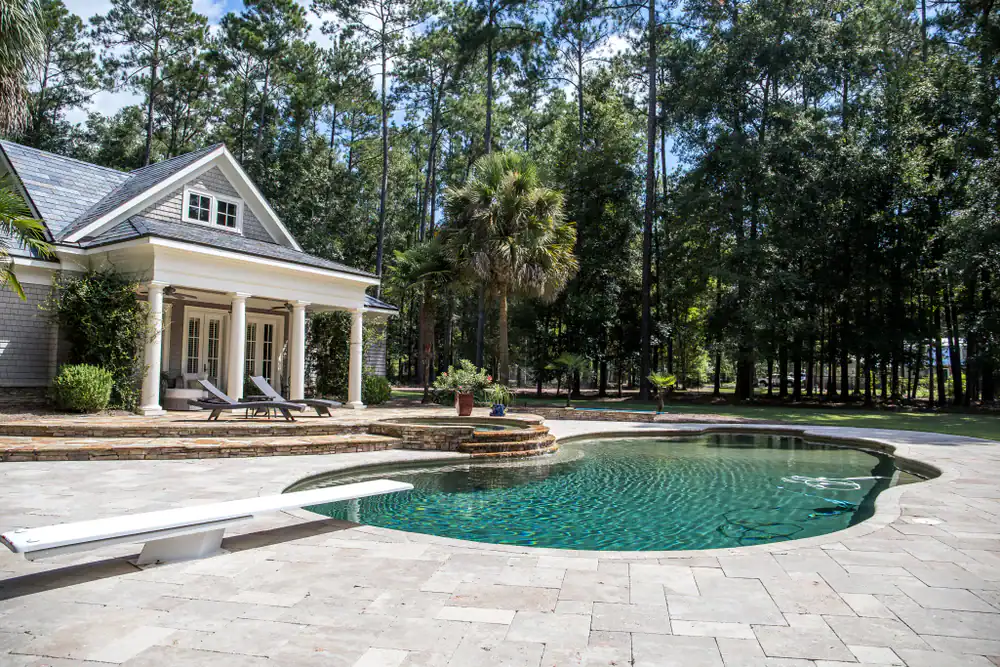
When you work with in-ground pool builders in Suffolk County who actually understand masonry, hardscaping, and coastal construction, you get a backyard that works as a system. Everything slopes correctly. The materials hold up against freeze-thaw cycles. The tile doesn’t crack in year two. You’re not calling someone back to fix what should’ve been done right the first time.
We started with masonry and hardscaping, which means we’ve been pouring foundations, building retaining walls, and installing patio pavers in Port Jefferson, NY long before we expanded into complete backyard poolscapes. That foundation matters because pool construction isn’t just about the basin—it’s about what surrounds it.
Every project has an owner on-site. Not a foreman you’ve never met, not a rotating crew—someone who’s accountable and who’s been doing this for years. We’re licensed, insured, and we’ve earned an A+ rating with the BBB and multiple Angie’s List awards because we show up and do what we say we’re going to do.
Port Jefferson homeowners deal with coastal regulations, soil challenges, and permit requirements that don’t exist elsewhere. We’ve navigated Suffolk County’s wetland restrictions and building codes enough times to know what actually delays a project and how to avoid it.
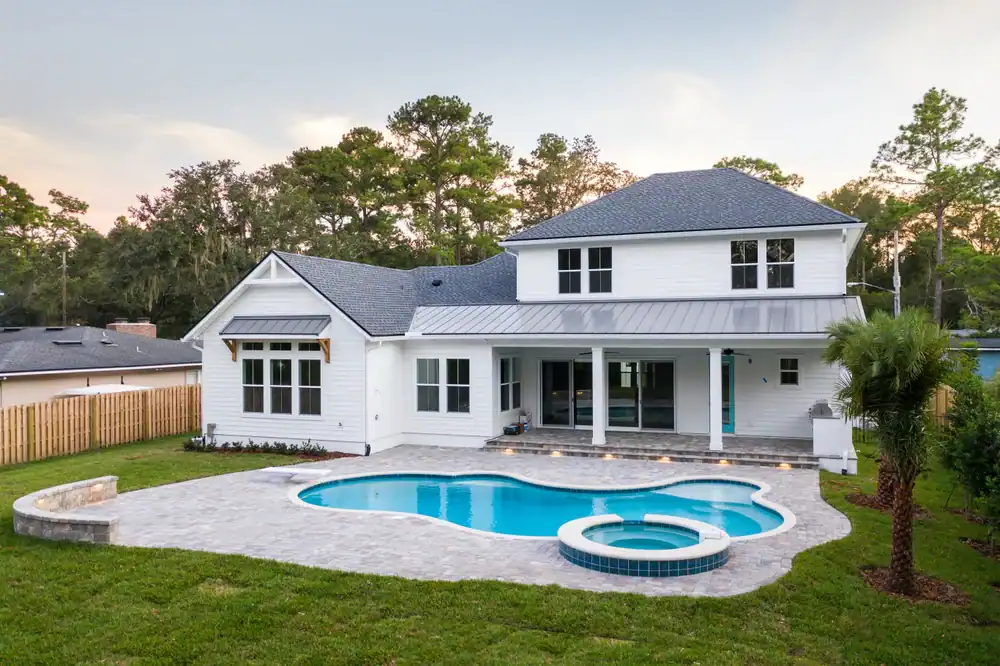
You start with a design consultation where we talk through size, shape, materials, and budget. No pressure, no upselling—just a realistic conversation about what fits your property and your goals. If your yard has grading issues or if ledge rock is likely, we’ll tell you up front.
Once the design is set, we handle permits. In Nassau County and Suffolk County, that means building, electrical, and plumbing permits, which typically take two to three weeks. While that’s processing, we finalize material selections—everything from the pool wall construction type (gunite, fiberglass, or steel vinyl liner) to the coping stone and patio pavers.
Excavation comes next. This is where you find out what’s actually under your yard—soil stability, rock, drainage issues. Our crews have seen it all, and we adjust as needed without derailing your timeline. Then comes plumbing, electrical, and the pool shell installation, followed by the masonry work: custom pool coping and tile, concrete pool surrounds, any retaining walls or grading work to manage water flow.
The final phase is finishing the deck and patio, integrating landscaping, and doing a full system check on filtration, heating, and lighting. Most projects wrap in 8-10 weeks, assuming weather cooperates and inspections stay on schedule.
Ready to get started?
You’re getting design services, permit coordination, excavation, all plumbing and electrical installation, the pool structure itself, and the masonry and hardscaping that ties it all together. That means custom pool coping and tile, concrete pool surrounds or paver patios, any necessary pool retaining walls and grading to handle drainage, and final landscaping to complete the look.
In Port Jefferson and across Suffolk County, soil conditions vary wildly. Some properties have sandy, easy-to-excavate soil. Others hit rock or unstable fill that requires additional engineering. We price projects honestly based on what we expect to encounter, and we don’t hide change orders in fine print.
Material quality matters more than most people realize. About 70% of Long Island pools are sand-bottom vinyl liner construction because gunite has become prohibitively expensive for most budgets. We work with all three types—gunite, fiberglass, and vinyl—and we’ll walk you through the pros and cons of each based on your budget and how you plan to use the pool.
The trend right now is toward complete outdoor living spaces: pools integrated with outdoor kitchens, fire pits, pergolas, and natural landscaping that makes your backyard feel like a private resort. We’ve built plenty of those, but we’ve also built plenty of straightforward rectangular pools with clean concrete surrounds. What matters is that it fits your life, not someone else’s Instagram feed.
Most in-ground pool projects in Suffolk County take 8-10 weeks from excavation to completion, but that timeline depends on a few variables you need to know about up front.
Permitting usually adds 2-3 weeks before construction even starts. Nassau County and Suffolk County both require building, electrical, and plumbing permits, and if your property is near coastal wetlands, you may need additional environmental review. Weather is the other wildcard—heavy rain can delay excavation and concrete work, especially in spring.
The complexity of your project also affects timing. A simple rectangular pool with a basic concrete surround moves faster than a custom freeform design with integrated spa, waterfalls, and extensive hardscaping. If we hit ledge rock during excavation, that adds time. If inspections get delayed or if you change material selections mid-project, that pushes things back. We give you a realistic timeline during the design phase and keep you updated if anything changes.
Long Island’s freeze-thaw cycles, coastal humidity, and soil conditions mean you need construction that holds up to environmental stress, not just something that looks good in year one.
Gunite pools are the most durable and offer unlimited design flexibility, but they’re expensive—now mostly reserved for luxury builds. Fiberglass pools install quickly and require less maintenance, but you’re limited to pre-manufactured shapes and sizes. Vinyl liner pools with steel or polymer walls make up about 70% of Long Island installations because they balance cost, durability, and customization. The liner needs replacement every 7-10 years, but the upfront cost is significantly lower than gunite.
What matters more than the pool type is the quality of the surrounding masonry and grading. Poor coping installation leads to water infiltration and freeze damage. Inadequate drainage causes settling and cracks. We’ve seen plenty of expensive gunite pools fail because the deck work was done poorly, and we’ve seen vinyl pools last decades because everything around them was built correctly. Focus on the whole system, not just the basin.
Yes, and the permitting process in Suffolk County is more complex than most homeowners expect, especially if your property is anywhere near coastal zones or wetlands.
At minimum, you need a building permit, electrical permit, and plumbing permit. The building department reviews your site plan, setbacks, and drainage. If you’re within 300 feet of tidal wetlands—which includes much of Port Jefferson and the surrounding North Shore—you may also need review from the Department of Health Services or even the Army Corps of Engineers. That can add weeks to your timeline.
Suffolk County also has specific requirements for pool fencing, barrier protection, and alarm systems to meet safety codes. Your contractor should handle all of this, but you need to ask up front who’s responsible for permit applications and whether they’ve successfully navigated the local approval process before. We’ve been doing this since 2006, so we know which departments to contact, what documentation they require, and how to avoid the delays that come from incomplete applications.
Most residential in-ground pools in Nassau County and Suffolk County run between $30,000 and $70,000 depending on size, construction type, and how much hardscaping and custom work you’re adding around the pool itself.
A basic vinyl liner pool with standard coping and a simple concrete surround sits at the lower end of that range. A gunite pool with custom tile, natural stone coping, integrated spa, and extensive paver patio work can easily exceed $100,000. Fiberglass pools typically fall somewhere in the middle. The construction type is only part of the cost—excavation challenges, retaining walls, drainage solutions, and high-end finishes all add up quickly.
Here’s what most people underestimate: the ongoing costs. Pool maintenance, chemical balancing, heating, and equipment repairs add a few thousand per year depending on how you use it. Eco-friendly options like variable-speed pumps and saltwater chlorination systems cost more upfront but reduce your monthly operating costs. We price projects transparently and break down where your money is going so you can make informed decisions about where to invest and where to save.
You need a contractor who’s licensed and insured, who has verifiable experience with Suffolk County permitting and coastal construction, and who can show you completed projects similar to what you’re planning.
Ask how long they’ve been building pools on Long Island. Ask if an owner or project manager will be on-site, or if you’ll be dealing with rotating subcontractors. Ask who handles permits and what happens if you encounter rock or soil issues during excavation. If they can’t give you clear answers, that’s a red flag.
Check their BBB rating and online reviews, but also ask for references you can actually call. Drive by a few of their completed projects if possible. Look at the quality of the coping and tile work, the grading around the pool, and whether the patio materials are holding up. A good pool builder doesn’t just install a basin—we build a complete backyard poolscape that functions as a system and lasts for decades. That requires masonry expertise, not just pool installation experience.
According to the National Association of Realtors, an in-ground pool can increase your home’s value by 8-15%, but that range depends heavily on your neighborhood, the quality of the installation, and how well the pool integrates with your overall property.
In Port Jefferson and surrounding North Shore communities where outdoor living is highly valued and lot sizes support it, a well-designed pool is a strong selling point. In areas where most homes don’t have pools, or where yards are small, the return on investment drops. The quality of the installation also matters—a pool with cracked coping, poor drainage, or outdated equipment can actually hurt your resale value because buyers see it as a liability.
The real value isn’t always financial. You’re creating a space your family will use for years, eliminating the need to join a beach club or community pool, and turning your backyard into the place everyone wants to be. If you plan to stay in your home for a decade or more, the lifestyle return often outweighs the resale calculation. Just make sure you’re working with a Nassau County pool installation company or Suffolk County contractor who builds it right the first time.
Other Services we provide in Port Jefferson