Selling the house, changing the heating appliance, or had a chimney fire? The safety standard calls for a Level 2 inspection in all three cases.
Nassau County · Suffolk County · Queens · Monday to Friday, 8 to 4
Chimney Inspection on Long Island, NY
Know What Is Actually Up There
Most of the inspections we run start with a reason. A house going to closing. A new liner or appliance going in. Smoke coming back into the room, or a draft that reversed and nobody can say why. An inspection settles it: you get photographs of what is actually inside the flue, and a written estimate if something needs doing, so the next decision rests on the condition of the chimney instead of a guess.
A chimney inspection is a documented check of the flue, the firebox, the connector and the reachable parts of the structure, carried out to establish whether the system is safe to use. The industry works to three defined levels, set out in NFPA 211 and used by the Chimney Safety Institute of America. Which one applies depends on why you are asking.
The baseline, and what an annual check normally means. It applies to the readily accessible portions of the chimney exterior and interior and the accessible portions of the appliance and the connector. Nothing is taken apart. Under NFPA 211 this is the right level when the system is staying as it is and nothing about it has changed.
Level 2 chimney inspection
What the standard calls for on a sale or transfer of the property, on a change of fuel or appliance, and after a malfunction or an event that could have damaged the chimney. It adds accessible attics, crawl spaces and basements, and an inspection of the flue interior by video scanning or other means. Still nothing demolished.
Level 3 chimney inspection
Used only when a Level 1 or Level 2 points to a hazard that cannot be evaluated any other way. It permits removal of part of the structure or the appliance, a crown or a section of wall for instance, so it is an exception rather than something you would book up front.
Chimney inspection in Nassau and Suffolk County
Older Houses, Older Flues
Much of the housing stock here went up before the current standards, and each chimney was built for the appliance of its day. An unlined or clay-tile flue now serving a modern high-efficiency boiler is the pairing we meet most often, and it is better found in the fall than in February.
An exterior chimney on the cold side of a house gives condensation more chance to form, which makes position one contributor among several rather than an answer on its own. Working out which contributor is actually causing your problem is what the inspection is for.
When a chimney inspection is needed
Once a year for any chimney in regular use, before the heating season starts. Past that baseline the standard names specific triggers. These are the six that come up most often on Long Island, and any one of them on its own is reason enough.
Six reasons to book a chimney inspection
Any One Of These Is Enough
Before the heating season
An annual check before first use is the baseline for any chimney that gets used.
Selling or buying
A sale or transfer of the property is one of the cases where the standard calls for a Level 2.
After a chimney fire
A fire can crack tiles and open gaps that are invisible from the room, so this one is a Level 2 too.
New appliance or fuel
Change the appliance or the fuel and you change what the flue has to carry, so it gets reassessed.
Smoke coming into the room
Smoke or odor pushing back into the house means the draft is not doing what it should.
Water where it should not be
Staining on a ceiling or damp on the chimney breast usually starts at the crown, the cap or the flashing.
Chimney inspection and cleaning
Two Jobs, One Visit
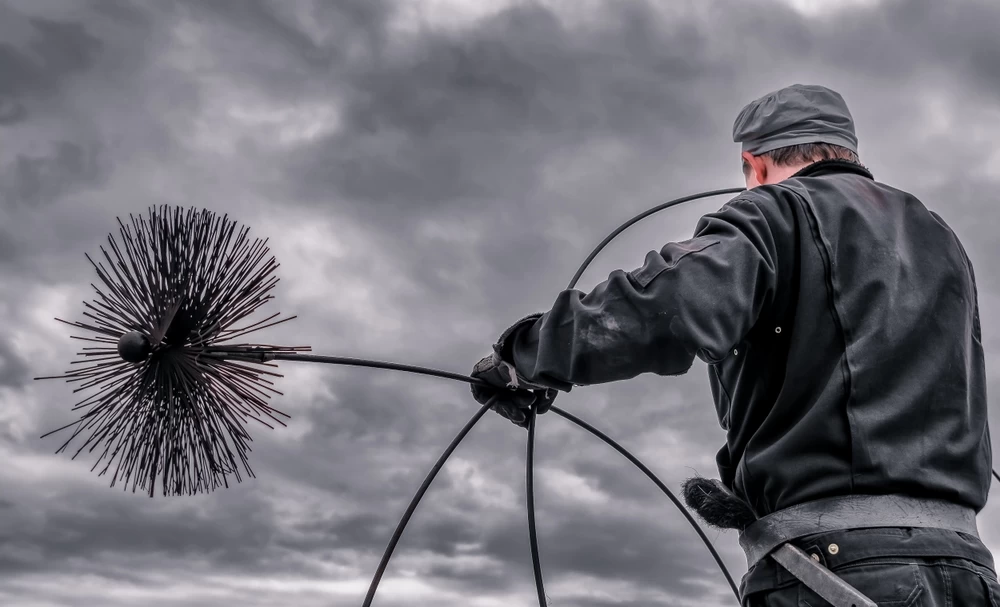
An inspection establishes the condition. A sweep removes what has built up. They are different jobs, and on a chimney in regular use they usually belong in the same visit, because a flue packed with creosote cannot be assessed properly until it is clear.
A fireplace inspection looks at the parts you actually use, not only the parts on the roof: the firebox and its joints, the damper, the smoke chamber, and the hearth extension and the clearances around it. Depending on access and on the level of inspection, the smoke chamber is assessed with a light, a camera, or both.
On a gas fireplace or a set of gas logs the flue still gets checked. Gas produces very little creosote, but a blocked flue on a gas appliance is not a smaller problem than one on a wood fire.
What a technician is looking for
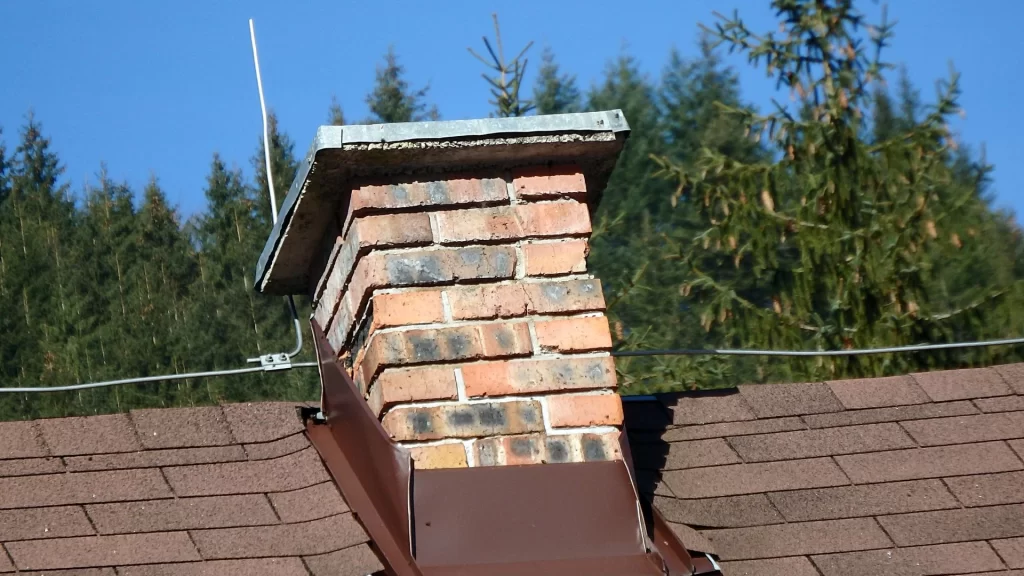
Clearance between the flue and anything that can burn. The liner, and whether it suits the appliance now connected to it. The crown and the cap, which is where most water gets in. The flashing where the chimney meets the roof. The firebox joints. And draft, because a chimney that will not draw is telling you something about its height, its size or what is blocking it.
Booking an inspection before heating season
September through November is the busiest stretch of our year, and by the first properly cold week we are usually booking a week or more out. If you want it done before the first fire of the season, earlier in the fall is easier than later. The office is on 516-613-5450, Monday to Friday, 8 to 4.
What our clients say
Bill S
I highly recommend these guys. (Bob/Christian)They came right on time and were extremely neat and professional. They did a great job at a reasonable price.
Tommy Glenn
I have been using Bobby and Sherwood for years. I highly recommend them. They did chimney repair and chimney sweep. Great work, great guys.
Ingrid V.
Highly recommend Ageless chimney. They were polite, professional and got the job done in one day, left my property as clean as they found it. Very happy!
Brian Nolin
Outstanding work, great service, and extremely reliable!!
Chimney inspection questions
How much does a chimney inspection cost?
It depends on which level you need and on how reachable the chimney is. A routine annual check on a straightforward single flue is not the same job as a Level 2 with a flue scan on a chimney with offsets, and a roof that cannot be worked from safely adds time. Call the office on 516-613-5450, describe the chimney and why you are asking, and you will get a figure for your own situation instead of a range that may not fit it.
What is the difference between a Level 1 and a Level 2 inspection?
A Level 1 covers the readily accessible portions of the chimney and the accessible portions of the appliance and the connector. A Level 2 adds accessible attics, crawl spaces and basements, plus an inspection of the flue interior by video scanning or other means. NFPA 211 calls for a Level 2 on a sale or transfer of the property, on a change of fuel or appliance, and after an operating malfunction or an event that could have damaged the chimney, a chimney fire included.
How long does a chimney inspection take?
A Level 1 on a single flue in reasonable condition is usually under an hour. A Level 2 takes longer, because of the flue scan and the extra spaces to get into. Heavy creosote, more than one flue, or difficult roof access all add to it.
What happens if you find a problem?
You are told what it is, shown photographs of it, and given a written estimate. There is no obligation to have the work done by us. If what is found means the chimney should not be used until it is repaired, you will be told that at the time rather than in a report that arrives a week later.
Do I need an inspection if I never use the fireplace?
If that flue also serves a boiler, a furnace or a water heater, then yes, because the flue is in use whether or not anyone lights a fire. A genuinely disused fireplace on a flue of its own is lower priority, although a crown or cap in poor condition will still let water into the structure.
Do gas fireplaces need an inspection?
Yes, annually. Gas produces very little creosote, but flues still block with debris and nesting material, liners still fail, and the appliance still depends on that flue to carry its combustion products out of the house.
Areas we cover for chimney inspections
We cover Nassau County, Suffolk County and Queens for chimney inspections, including the North and South Shore and the East End. For the full list of towns and the service pages that go with them, see our chimney services. For an inspection in Manhattan or elsewhere in New York City, start at chimney services in Manhattan.
What happens after the chimney inspection
Findings, Then Your Decision
Inspection photographs
You see the conditions that were found, so the report is not a description you have to take on trust.
Written estimate
If something needs doing, it comes with a written estimate for the work and what it puts right.
No obligation
There is no obligation to use us for the repair. Plenty of people take the findings away and think about it.