Discover why your chimney leaks during heavy rain and how professional inspection prevents costly water damage in Nassau County's challenging coastal environment.
Share:
You heard it during the last storm—water dripping inside your fireplace. Maybe you noticed stains spreading across your ceiling near the chimney, or caught that musty smell that wasn’t there before. Water leaking from your chimney when it rains isn’t just annoying. It’s a warning sign that something’s failing, and in Nassau County’s coastal climate, small problems don’t stay small for long.
Salt air corrodes metal components. Freeze-thaw cycles crack masonry. Heavy rain finds every weakness in your chimney’s defenses and exploits it. The question isn’t whether the damage will get worse—it’s how much it’ll cost you if you wait. This guide walks through what’s actually happening when your chimney leaks, what you can do about it, and when professional help stops being optional.
Water coming down your chimney during heavy rain tells you that at least one protective component has failed. Your chimney relies on multiple barriers working together—the cap, crown, flashing, and masonry itself. When water gets past these defenses, it doesn’t just create a mess in your firebox.
It saturates the masonry. It rusts metal components. It seeps into your roofline and walls where you can’t see it spreading. Nassau County homeowners face an additional challenge that inland properties don’t: coastal moisture prevents full drying between weather events, meaning damage compounds faster here than it would fifty miles inland.
The cost difference between catching this early and waiting is substantial. A $300 inspection identifies the problem while repairs still run $200 to $800. Wait until water stains cover your ceiling or your chimney crown crumbles, and you’re looking at $2,000 to $5,000 in emergency work—plus whatever it costs to fix the interior damage.
When homeowners say “my chimney is leaking when it rains,” they’re usually describing water in the firebox or stains on nearby walls. The actual source could be any of five common failure points, and identifying which one matters because the fix is different for each.
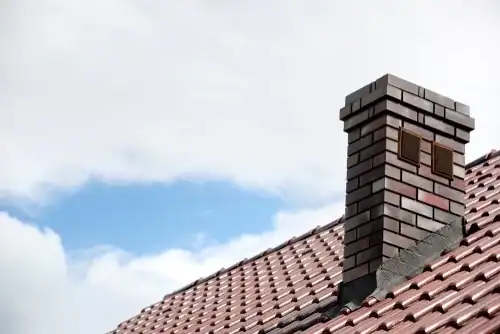
The chimney cap sits at the very top, covering the flue opening. It’s your first line of defense against direct rainfall. Caps rust out, get knocked loose by wind, or go missing entirely after storms. Without one, rain pours straight down your flue. If you can see daylight when you look up your chimney, you’re missing this critical protection.
Just below the cap, the chimney crown is the concrete or mortar slab that seals the top of your chimney structure. Cracks develop from thermal expansion—the crown heats up during summer and contracts during winter. Nassau County’s freeze-thaw cycles make this worse. Water seeps into small cracks, freezes, expands by about 9%, and turns hairline cracks into serious openings.
Flashing is the metal barrier where your chimney meets the roof. It’s supposed to create a waterproof seal, but it doesn’t last forever. The sealant dries out. The metal corrodes—especially in salt air. The flashing pulls away from either the chimney or the roof, creating gaps where water flows right into your home’s structure. This is one of the most common leak sources, and it’s often invisible from the ground.
Your chimney’s masonry —the bricks and mortar—looks solid, but it’s actually porous. Brick absorbs water. During normal conditions, it dries out between rains. But during heavy downpours or extended wet periods, the masonry becomes saturated. Once it can’t hold any more water, moisture starts seeping through to the interior. Long Island’s maritime climate means your chimney stays damp longer than it would inland, accelerating this process.
Finally, the chimney liner protects the interior chimney walls. When liners crack or deteriorate, water penetrates the chimney structure through gaps you can’t see without specialized camera equipment. Damaged liners are particularly dangerous because they also compromise your chimney’s ability to safely vent smoke and gases.
Metal chimneys—also called prefab or factory-built chimneys—leak for different reasons than masonry chimneys, and Nassau County’s coastal environment is particularly hard on them. These systems use metal flue pipes, chase covers, and caps that all corrode faster when exposed to salt air.
The chase cover is a metal sheet that sits on top of the chimney chase (the box that surrounds the metal flue). It’s supposed to be sloped so water runs off, but many are installed flat or with inadequate slope. Water pools on top, finds its way through seams or fastener holes, and leaks into your home. Rust makes this worse—once the metal starts corroding, the deterioration accelerates.
Metal flashing around prefab chimneys often fails because it wasn’t installed correctly to begin with. The flashing needs to move independently from both the chimney and the roof because these structures expand and contract at different rates. When the installation is rigid, thermal movement creates gaps. Wind-driven rain—common during Nassau County’s coastal storms—forces water through these openings.
Storm collars are rubber boots that seal the area where the metal flue pipe penetrates the chase. They crack from UV exposure and temperature extremes. Once cracked, they’re worthless. Water runs down the outside of the flue pipe and into your home.
The metal flue pipe itself can develop holes from corrosion, especially if you’re burning wood. The combination of creosote, moisture, and salt air creates an aggressive environment. Gas appliances aren’t immune either—condensation from gas combustion is acidic and eats through metal over time.
Prefab chimney leaks often show up as water stains on the ceiling or walls around the chimney chase, not in the firebox itself. The water is getting in around the flue, not down through it. This makes diagnosis trickier because the obvious place to look—down the chimney—might appear fine while water is actually entering through failed flashing or chase covers.
Water damage from chimney leaks doesn’t stay confined to your chimney. It spreads. The longer you wait, the more expensive the fix becomes, and some of the damage creates safety hazards that go beyond just costing money.
Masonry deterioration accelerates once water gets inside. The freeze-thaw cycle is brutal. Water seeps into brick and mortar, temperatures drop below freezing, the water expands, and the masonry cracks. This happens repeatedly through Nassau County’s winter, with each cycle making the damage worse. Bricks start spalling—the surface flakes off, exposing the softer interior to even more water penetration.
Mortar joints deteriorate faster than the bricks themselves. Once the mortar fails, the structural integrity of your entire chimney is compromised. A chimney that’s losing mortar can actually become unstable. We’re talking about thousands of pounds of brick potentially becoming unsafe.
A professional chimney inspection is how you find out what’s actually wrong before you’re dealing with an emergency. There are three levels of inspection, and understanding which one you need matters.
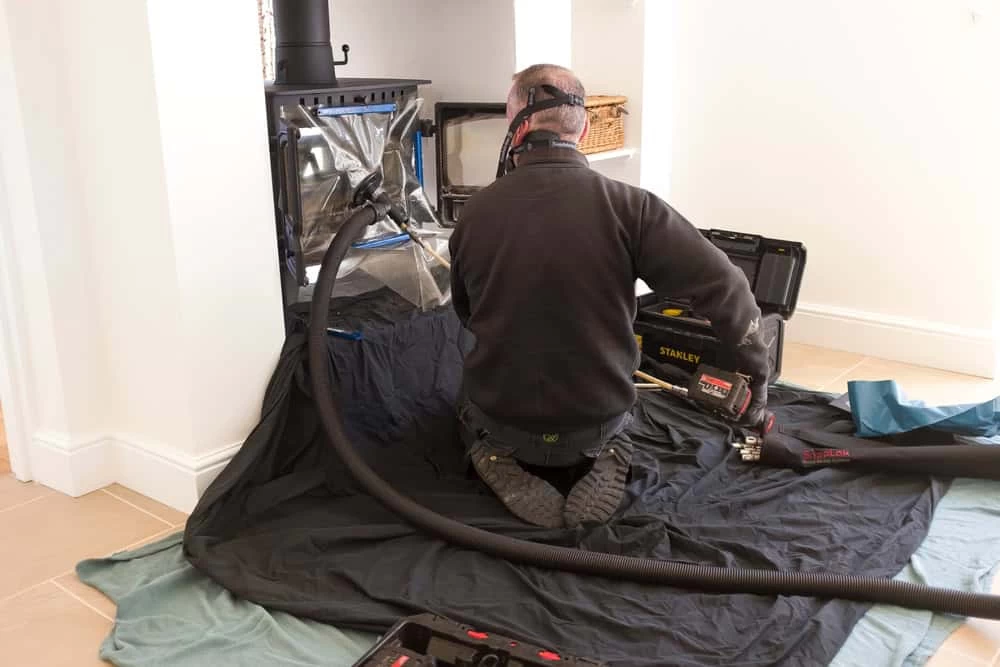
Level 1 inspection is the annual checkup. It covers all the readily accessible parts of your chimney—the parts you can see from the roof, from the ground, and from inside your home. The technician examines your chimney cap, crown, exterior masonry, flashing, firebox, damper, and as much of the flue as they can see. This level is appropriate when nothing has changed about your chimney system and you’re just maintaining it. Cost typically runs $80 to $200 in Nassau County.
Level 2 inspection goes deeper. It includes everything in Level 1 plus a video camera inspection of the entire flue interior, examination of attics and crawl spaces where the chimney passes through, and verification that there’s proper clearance from combustible materials. This level is required when you’re buying or selling a home, after any chimney fire or severe weather event, or when you’re changing how you use the chimney—like switching from wood to gas. The camera inspection reveals cracks, gaps, and deterioration that’s invisible to the naked eye. Expect to pay $100 to $500.
Level 3 inspection is invasive. It involves opening walls or removing parts of the chimney to access hidden areas when there’s evidence of serious damage. This level is rare and only happens when Level 2 inspection suggests major problems that can’t be fully assessed any other way. Costs vary widely depending on what needs to be opened up.
For Nassau County homeowners dealing with water leaks, Level 2 inspection is usually the right call. The camera inspection shows exactly where water is getting in and what damage it’s already caused inside the flue. You get photo and video documentation of the problem, which is valuable both for understanding what needs to be fixed and for insurance claims if applicable.
The inspection process typically takes 45 minutes to two hours. A thorough technician checks every component systematically. They’re looking for the obvious stuff—missing caps, visible cracks, rust stains. But they’re also checking for the subtle signs that indicate developing problems: efflorescence (white chalky deposits that indicate moisture movement through masonry), mortar that’s starting to soften, flashing sealant that’s losing flexibility, and metal components showing early corrosion.
In Nassau County specifically, inspectors familiar with coastal conditions know to check for salt air damage. Metal components corrode faster here. Mortar chemistry breaks down differently when exposed to salt. Maritime moisture creates deterioration patterns that inland chimneys don’t show. A local inspector who understands these factors catches problems that a generic checklist might miss.
Some chimney leak problems are straightforward enough for capable homeowners to address temporarily. Others require professional expertise and equipment. Knowing the difference keeps you safe and prevents making problems worse.
You can temporarily address a missing or obviously damaged chimney cap yourself. Chimney caps are available at home improvement stores, and installation involves securing them to the top of the flue. But “temporarily” is the key word—getting on your roof carries risk, and a properly fitted cap needs to be sized correctly for your specific chimney. A cap that’s too small won’t fit. Too large, and it won’t seal properly. Professional installation ensures you get the right cap installed correctly the first time.
Small cracks in the chimney crown can be sealed with specialized masonry caulk as a temporary measure. This might buy you time until you can schedule professional crown repair, but it’s not a permanent solution. Crown cracks indicate that the crown itself is failing, and temporary sealant doesn’t address the underlying problem. Professional crown repair involves removing the failed crown and rebuilding it with proper slope, reinforcement, and materials that can handle thermal cycling.
Flashing repairs are not DIY-friendly. Flashing needs to be installed in a specific way to create a waterproof seal while allowing for independent movement between the roof and chimney. The materials matter—you need the right type of metal and the right sealants for Long Island’s climate. Improper flashing repair often makes leaks worse by trapping water in places it wasn’t going before. This is one area where professional expertise prevents expensive mistakes.
Masonry repairs—repointing mortar joints, replacing spalled bricks, rebuilding deteriorated sections—require specialized skills. The mortar needs to match the original in composition and strength. If you use mortar that’s harder than the original, it causes the bricks to deteriorate faster. Too soft, and the mortar itself fails prematurely. Professional masons know how to match mortar correctly and apply it using techniques that ensure proper bonding and weather resistance.
Interior water damage requires professional assessment even if the chimney repair itself seems straightforward. Water that’s been leaking into your walls or attic can cause mold growth, wood rot, and insulation damage that isn’t visible from the outside. A thorough inspection identifies all the damage, not just the obvious parts.
The real decision point is this: if you’re seeing active leaks, water stains, or obvious damage, professional inspection and repair is the smart move. The cost of getting it wrong—either by missing hidden damage or by making repairs that don’t actually solve the problem—far exceeds the cost of having it done right the first time.
Nassau County’s coastal climate makes professional expertise even more valuable. The materials that work inland don’t always hold up to salt air and maritime moisture. Contractors experienced with Long Island conditions know which products actually last here and which ones fail prematurely. They understand that your chimney needs different care than your cousin’s chimney in Pennsylvania.
Water leaking from your chimney when it rains is telling you something’s failed. The cap, crown, flashing, masonry, or liner—maybe more than one—isn’t doing its job anymore. Nassau County’s coastal environment accelerates this deterioration through salt air corrosion and freeze-thaw cycles that inland chimneys never face.
The difference between a $300 inspection with minor repairs and a $5,000 emergency comes down to timing. Catch the problem while it’s still contained, and you’re looking at straightforward fixes. Wait until water damage spreads through your roofline and walls, and you’re paying for both chimney repairs and interior restoration.
Professional chimney inspection identifies exactly what’s failing and what it’ll take to fix it permanently. You get documentation showing the problem, a clear explanation of your options, and repairs done with materials that actually hold up in Long Island’s demanding climate. If you’re dealing with water leaks, strange stains, or just want to know your chimney’s condition before problems start, we provide the expertise Nassau County homeowners need to protect their homes and avoid expensive surprises.
Article details:
Share:
Continue learning: