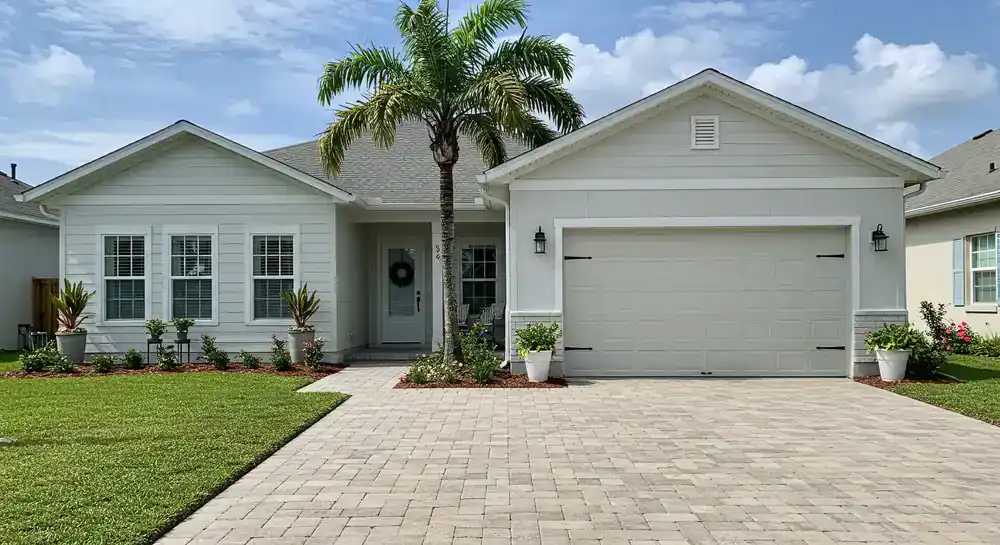
Complete guide to upgrading your Long Island home with driveway pavers and pergolas for enhanced curb appeal and outdoor living.
Share:
Quick answer
Concrete driveways fail here because Long Island’s freeze-thaw cycles are brutal. Water gets into tiny cracks, freezes, expands, and creates bigger cracks. Repeat this cycle for a few winters and you’ve got a mess.
Driveway pavers solve this problem completely. Individual pavers move independently with ground movement and temperature changes. When the ground shifts, pavers adjust without cracking. When water freezes, it has space to expand between the joints without damaging anything.
This isn’t just about avoiding repairs. It’s about having a driveway that actually looks better over time while requiring virtually no maintenance beyond occasional power washing.
Quick answer
Not all pavers handle Long Island’s climate equally. You need materials that can take repeated freeze-thaw cycles, salt exposure from winter road treatments, and heavy traffic without showing wear.
Concrete pavers are the most popular choice for good reason. They’re engineered specifically for durability, come in dozens of colors and textures, and cost less than natural stone while lasting just as long. The manufacturing process creates pavers that are actually stronger than poured concrete because they’re formed under intense pressure.
Natural stone pavers like granite and bluestone offer unmatched beauty and last generations. They’re more expensive upfront but never go out of style and can handle anything Long Island weather throws at them. Granite especially performs well because it’s non-porous and resists salt damage.
Brick pavers bring classic charm but require more careful selection. Look for pavers rated for severe weather exposure, not standard building brick. Clay pavers that are kiln-fired at high temperatures develop the density needed to resist moisture penetration and freeze damage.
The key is choosing pavers with low water absorption rates. This specification matters more than color or style because it determines how well your driveway will perform long-term. Quality pavers absorb less than 5% of their weight in water, while cheaper options can absorb 10% or more, leading to freeze damage.
Quick answer
The pavers you see are only half the story. What happens underneath determines whether your driveway lasts five years or fifty years. This is where many homeowners get burned by choosing the wrong contractor or trying to cut costs in the wrong places.
Proper excavation goes down at least 12 inches in Long Island because our soil conditions and frost line require deep preparation. The excavated area gets filled with specific layers: geotextile fabric to prevent weeds and settling, then 6-8 inches of crushed stone base, then 1-2 inches of leveling sand. Each layer gets compacted with heavy equipment to create a rock-solid foundation.
Edge restraints keep everything in place over time. Without proper edging, pavers gradually spread apart and the whole driveway fails. Professional installations use concrete or metal edging that’s invisible once complete but critical for long-term stability.
The sand between pavers isn’t regular sand. Polymeric sand hardens when wet, locking pavers together while still allowing for slight movement. This prevents weeds, stops ants from making homes in your driveway, and keeps everything tight and level.
Drainage planning prevents the water problems that destroy other driveways. Proper grading directs water away from your foundation while the paver joints allow some water to percolate through instead of creating runoff. This natural drainage is one reason paver driveways perform so much better than concrete in our climate.
Quick answer
Pergolas transform unused backyard space into your favorite room of the house. They define outdoor areas, provide partial shade, and create the framework for outdoor entertaining that Long Island’s summers are perfect for.
The key is understanding that pergolas aren’t just decorative. They’re functional structures that extend your living space outdoors while adding significant property value. A well-designed pergola creates the outdoor room you didn’t know you needed.
Location matters more than style. The right spot takes advantage of natural breezes, provides the right amount of sun and shade throughout the day, and connects naturally with your indoor living spaces through doors or windows.
Quick answer
Material choice determines how much you’ll enjoy your pergola versus how much time you’ll spend maintaining it. Long Island’s humidity, salt air near the coast, and temperature swings put outdoor structures through serious testing.
Pressure-treated lumber offers the best value for most homeowners. Modern pressure treatment creates wood that resists rot, insects, and moisture for decades. Cedar and redwood cost more but bring natural beauty and resistance to weather without chemical treatment. Both require periodic staining or sealing to maintain their appearance, but they age gracefully even if you skip maintenance.
Vinyl pergolas eliminate maintenance completely while offering clean, consistent appearance that never needs painting or staining. Quality vinyl systems use thick-walled components that don’t sag or yellow over time. The tradeoff is less natural appearance and higher upfront cost, but zero ongoing maintenance makes vinyl attractive for busy homeowners.
Aluminum pergolas bring modern style with exceptional durability. Powder coating protects against salt air and prevents corrosion while offering dozens of color options. Aluminum doesn’t warp, crack, or require maintenance, making it ideal for coastal Long Island locations where salt air is particularly harsh on other materials.
Composite materials combine the appearance of wood with the durability of synthetic materials. Modern composites resist fading, staining, and moisture damage while offering wood-like texture and appearance. They cost more than lumber but less than premium materials while requiring minimal maintenance.
The key is matching material choice to your maintenance preferences and budget. All quality materials perform well in Long Island’s climate when properly installed, so choose based on the look you want and how much ongoing care you’re willing to provide.
Quick answer
Smart pergola design creates multiple outdoor zones that serve different purposes throughout the day and seasons. This approach maximizes your investment by creating spaces you’ll actually use instead of just admire.
Attached pergolas extend your indoor living space by connecting directly to your home through sliding doors or large windows. This creates seamless indoor-outdoor flow that’s perfect for entertaining and makes your home feel larger. Attached designs also cost less because they use your home’s structure for support.
Freestanding pergolas create destination spots in your yard – outdoor rooms that feel separate and special. Position them over patios, around fire pits, or in garden areas to create defined spaces for different activities. Freestanding pergolas work especially well for larger properties where you want multiple outdoor living areas.
Shade solutions turn pergolas from decorative structures into functional outdoor rooms. Retractable canopies let you control sun exposure throughout the day. Climbing vines like grape or wisteria provide natural shade that changes with the seasons. Fabric panels or outdoor curtains add privacy and wind protection while creating cozy, intimate spaces.
Integration with other outdoor features multiplies your pergola’s impact. Combine pergolas with outdoor kitchens, fire features, or water elements to create comprehensive outdoor living spaces. Adding built-in seating, planters, or storage makes pergolas more functional while maintaining their open, airy feel.
Lighting extends your pergola’s usability into evening hours. String lights create ambiance for entertaining. Built-in LED fixtures provide task lighting for outdoor dining or cooking. Solar options eliminate wiring concerns while providing eco-friendly illumination that automatically turns on at dusk.
Driveway pavers and pergolas work together to transform your property’s curb appeal and outdoor living potential. Pavers solve the maintenance headaches of concrete while creating beautiful, durable surfaces. Pergolas turn unused outdoor space into your favorite gathering spot.
The key is planning both upgrades as part of a comprehensive outdoor improvement strategy. This approach ensures design consistency, maximizes your investment, and creates outdoor spaces that truly enhance your daily life.
Ready to explore what’s possible for your Long Island property? We bring the expertise and local knowledge to help you create outdoor spaces that perform beautifully in our unique climate while adding lasting value to your home.
Article details:
Share:
Continue learning: