
You’re looking at an 8-15% increase in home value when the job’s done right. That’s not marketing talk—it’s what the National Association of Realtors reports for professionally installed pools in Nassau County, NY and Suffolk County, NY markets.
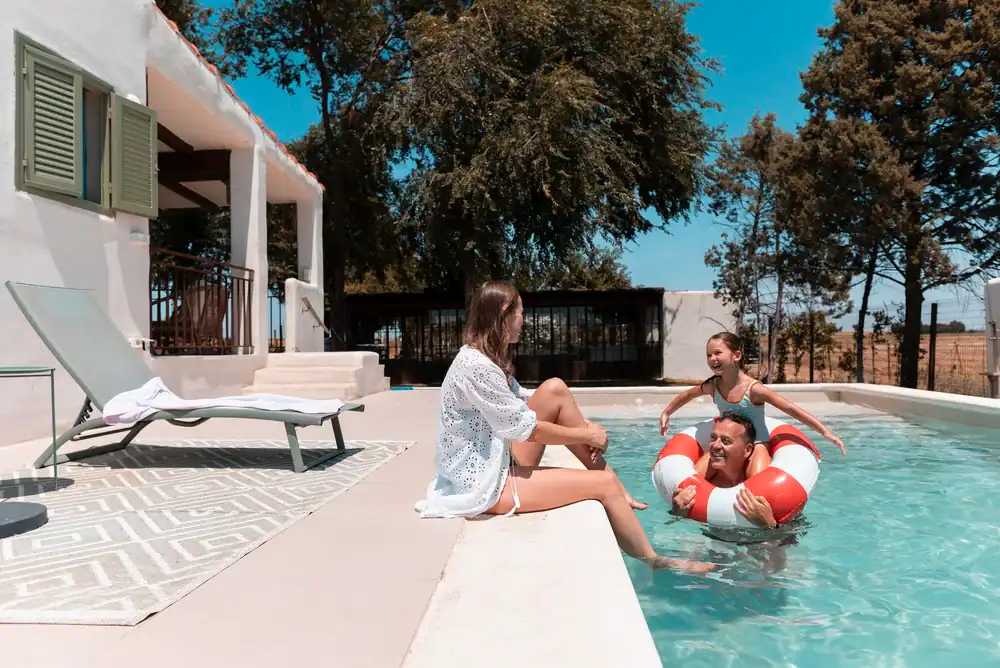
But the real payoff isn’t just financial. It’s having a space where your kids actually want to be home on summer weekends. Where you host Fourth of July without scrambling for parking at the beach. Where you can swim laps in May and still be in the water through October because the heating system was designed for Long Island’s climate, not some generic install guide.
Custom in-ground pools in Nassau County, NY and Suffolk County, NY aren’t just about digging a hole and dropping in a liner. You’re dealing with sandy soil that shifts, clay pockets that don’t drain, and setback requirements that change depending on which village you’re in. The difference between a pool that settles evenly and one that cracks in year three comes down to whether your contractor knows how to handle the ground conditions here.
We’ve spent years working with the brick, stone, and concrete that make up Long Island properties. That foundation in masonry work translates directly into pool construction—especially when it comes to coping, tile work, patios, and the structural elements that most pool companies subcontract out.
We handle pool patio masonry in Suffolk County, NY and Nassau County, NY the same way we approach chimney work or driveway installation: with attention to how materials perform in salt air, freeze-thaw cycles, and the kind of humidity that makes cheap installations fail early. You’re not getting a crew that learned pool construction in Florida and moved north. You’re working with people who’ve navigated these permit offices, dealt with these soil reports, and know which inspectors want to see drainage handled which way.
Long Island isn’t a simple place to build. But it’s the only place we build, and that makes a difference when your project hits the inevitable complication that comes with every ground-up construction job.
The process starts with a site evaluation. We’re looking at your soil composition, drainage patterns, setback requirements for your specific municipality, and how the existing grade affects excavation. This isn’t a quick walk-through—it’s the difference between a pool that needs major repairs in five years and one that’s still solid in twenty.
Once we’ve handled the permit applications for Nassau County, NY or Suffolk County, NY (and yes, we manage that entire process), excavation begins. Depending on your soil type, we’re either dealing with sand that needs proper compaction or clay that requires specific drainage solutions. The base goes in, the shell gets formed, and then we move into the finish work: custom pool coping and tile in Suffolk County, NY and Nassau County, NY that you actually chose, not whatever the supplier had in stock.
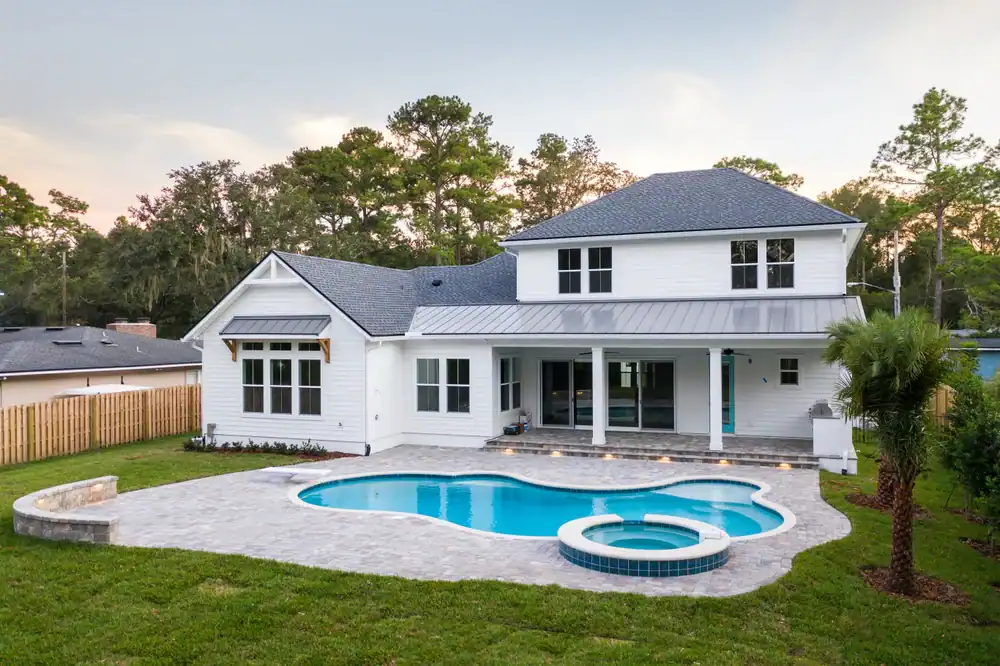
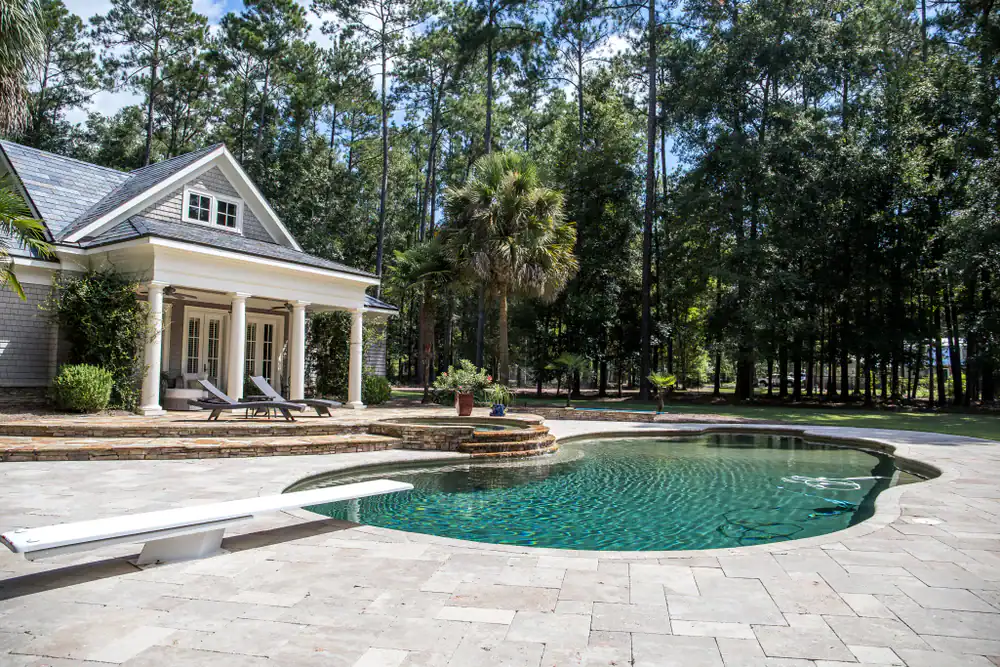
After the pool structure is complete, we build out the surrounding elements. Concrete pool surrounds in Nassau County, NY and Suffolk County, NY get poured with proper pitch for drainage. If your yard has elevation changes, we’re handling pool retaining walls and grading so water moves away from your foundation, not toward it. Patio work, stone features, any masonry elements that complete the space—it all happens in sequence, with the same crew, so there’s no finger-pointing when something needs adjustment.
Ready to get started?
You’re getting the full scope: excavation, structural installation, finish materials, and the masonry work that turns a pool into a complete outdoor space. That means custom pool coping and tile in Nassau County, NY and Suffolk County, NY with actual material options—natural stone, precast concrete, brick, marble pavers that stay cool underfoot even in July heat.
The patio work matters more than most people realize. Concrete pool surrounds in Suffolk County, NY and Nassau County, NY need proper slope, control joints in the right places, and a finish that handles freeze-thaw without spalling. If your property has grade changes, pool retaining walls and grading become part of the structural plan, not an afterthought when water starts pooling where it shouldn’t.
We’re also talking about the elements that make the space usable: heating systems that extend your season from May through October, adding 10-12 weeks of swim time. Proper drainage that keeps your basement dry. Tile work that’s actually waterproofed correctly so you’re not dealing with loose tiles and grout failure three seasons in.
Long Island properties come with specific challenges. About 70% of pools here use sand bottom construction because of our soil composition. We know which construction method works for your specific site conditions—gunite, fiberglass, or vinyl liner—and we’re not pushing you toward whichever one has the best margin.
Plan on 8-12 weeks from permit approval to completion, assuming normal weather and no major site complications. That timeline includes excavation, structural work, finish installation, and surrounding masonry.
Spring installations get you ready for summer, but that’s also when every pool contractor in Nassau County, NY and Suffolk County, NY is slammed. If you’re starting conversations in February or March, you’re competing for crew availability with everyone else who just decided they want a pool. Fall and winter planning gives you better timeline control and often better pricing because you’re not in the rush season.
Weather delays happen. Concrete work can’t happen in freezing temperatures. Heavy rain stops excavation. If your project starts in April, you’re probably swimming by July. If it starts in June, you might be waiting until next season depending on how the schedule shakes out.
You need building permits, electrical permits, and often plumbing permits depending on your heating and filtration setup. Each town and village has specific requirements—what’s allowed in one municipality might be restricted in the next.
Nassau County, NY and Suffolk County, NY are a patchwork of local regulations. Setback requirements, fence height rules, drainage specifications—they all vary. Some areas require engineered drawings. Others want soil reports. A few municipalities have additional environmental reviews if you’re near wetlands or in specific zoning districts.
We handle the permit process completely. That means we’re dealing with the building department, submitting the applications, coordinating inspections, and making sure everything’s approved before excavation starts. You’re not spending your time figuring out which forms go to which office or why the inspector wants to see something done differently.
Coping typically runs $30-75 per linear foot depending on material choice. Tile work varies widely based on whether you’re using standard ceramic, glass mosaic, or specialty patterns—figure $15-50 per square foot for materials and installation.
Natural stone coping (bluestone, travertine, limestone) costs more upfront but handles freeze-thaw cycles better than precast concrete in Long Island’s climate. Marble pavers stay cooler underfoot, which matters when you have kids running around barefoot in August. Brick coping offers a traditional look and holds up well, but it needs proper sealing to prevent water absorption.
Tile choices affect both appearance and maintenance. Glass tile reflects light beautifully but shows calcium buildup more readily in areas with hard water. Porcelain tile offers durability at a mid-range price point. Mosaic patterns add visual interest but increase installation time and cost. The right choice depends on your aesthetic goals, maintenance willingness, and budget—not which option the contractor stocks in their warehouse.
Sandy soil shifts and settles unevenly. Clay soil doesn’t drain and expands when wet. Most Long Island properties have a mix of both, often in unpredictable layers that you don’t discover until excavation starts.
Sand requires proper compaction and often additional base material to create a stable foundation. If the compaction isn’t done correctly, you get settling around the pool perimeter—that’s what causes uneven concrete, stress on the pool structure, and eventual cracking. Clay creates drainage problems. Water doesn’t percolate through clay, so without proper drainage design, you end up with hydrostatic pressure pushing against your pool shell, which can cause structural failure.
About 70% of pools in Suffolk County, NY and Nassau County, NY use sand bottom construction specifically because of these soil conditions. The construction method has to match what’s actually in the ground, not what the installation manual assumes. That’s why site evaluation matters—you need to know what you’re dealing with before the first shovel hits dirt.
They crack when they’re not installed correctly for Long Island’s freeze-thaw cycles. Proper installation includes control joints, adequate base preparation, correct concrete mix design, and appropriate thickness for the application.
Concrete expands and contracts with temperature changes. Control joints give the concrete a predetermined place to crack (in a straight line you planned for) rather than random spider-web cracks across your patio. The base underneath matters just as much—if the ground settles unevenly, the concrete above it will crack regardless of how good the pour was.
Salt air accelerates concrete deterioration if the mix isn’t designed for coastal exposure. Freeze-thaw cycles cause spalling (surface flaking) when water gets into the concrete, freezes, expands, and pops off the surface layer. Proper finishing, adequate curing time, and sealing all affect how long your concrete pool surrounds last. Cheap installations skip these steps. Then you’re looking at replacement in 5-7 years instead of 20-25.
Yes. Sloped properties require retaining walls to create level areas for the pool and surrounding patio space. The grading work also controls water flow so you’re not dealing with runoff problems or erosion around your new pool.
Retaining walls need proper engineering based on the height and soil conditions. A two-foot wall is straightforward. A six-foot wall requires structural design, drainage behind the wall, and often additional permitting. The wall material matters too—poured concrete, concrete block, natural stone, or modular block systems all have different cost points and aesthetic results.
Grading affects drainage patterns across your entire property. We’re making sure water moves away from your pool, away from your house foundation, and toward appropriate drainage points. That might mean reworking existing slopes, adding drainage pipes, or creating swales that redirect water flow. Poor grading causes expensive problems—water infiltration in basements, erosion around pool structures, and saturated soil that creates settlement issues. Getting it right during construction prevents those headaches later.
Other Services we provide in Target Location(S):